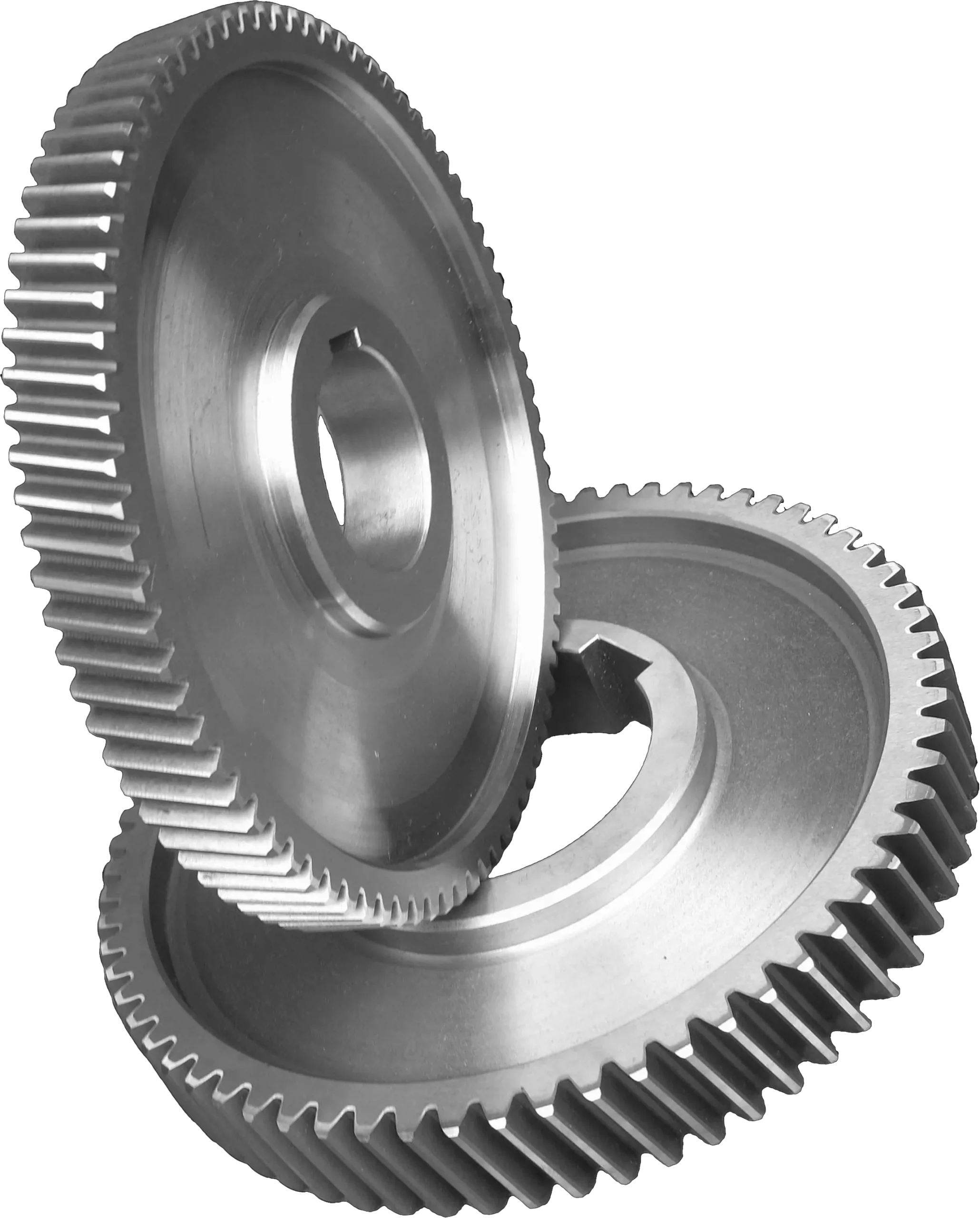
Choosing the wrong gear can cause noise, wear, power loss, and machine downtime. In heavy equipment, transport systems, and factory production, one weak gear can stop the whole job. This guide helps you understand the main gear choices before you buy or design.
The 7 common types of gears are spur gear, helical gear, bevel gear, worm gear, internal gear, planetary gear, and rack and pinion gear. Each type of gear has a different tooth profile, shaft direction, speed range, load capacity, and use case in mechanical gear systems.
Resumen del artículo
- What is a type of gear in mechanical gear design?
- How do gears work in a gear system?
- Why is the spur gear a common type of gear?
- When should you use a helical gear?
- What makes a bevel gear useful for angle transmission?
- How does a worm gear reduce speed and increase torque?
- What is an internal gear and where is it used?
- Why is a planetary gear system compact and strong?
- What does a rack and pinion gear do?
- How do gear material, gear manufacturing, and custom gear design affect performance?
- FAQs about different types of gears
- Puntos clave
¿Qué tipo de engranaje necesitas? Una guía sobre los 7 tipos diferentes de engranajes
What Is a Type of Gear in Mechanical Gear Design?
A type of gear is a gear category based on shape, tooth direction, shaft position, and motion purpose. Some gears are circular gear parts that rotate with another spur gear. Some work with a gear rack. Others transfer motion at an angle, reduce speed, or change rotary motion into straight motion.
In simple words, gears are mechanical parts with teeth. When gear teeth mesh, one drive gear turns a mating gear. This gear transfers speed, torque, or direction from one shaft to another. The gear ratio depends on the number of teeth on two gears. A larger gear usually turns slower but gives more torque.
In heavy-duty industries, gears are essential. They appear in machine tools, lifting systems, mixers, conveyors, winches, steering parts, gearboxes, and production equipment. As a semi-trailer manufacturer, we often see gear used in trailer landing gear, support legs, workshop equipment, hydraulic auxiliary devices, and parts that help load, lift, or adjust heavy transport systems.
How Do Gears Work in a Gear System?
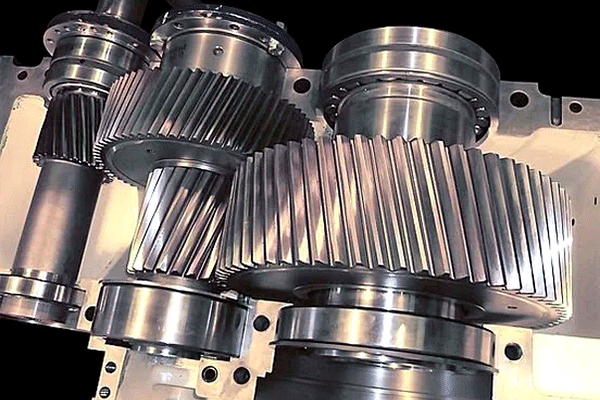
Gears work when the teeth of two or more gears touch in a controlled pattern called gear mesh. One gear drives. The other follows. If both gears are the same size, the speed stays similar. If one gear is larger, the gear ratio changes speed and torque.
A basic gear system may include a drive gear, pinion gear, mating gear, shaft, bearings, housing, and lubrication. Good gear design keeps the gear teeth smooth, strong, and accurate. Poor design causes heat, vibration, noise, and early failure.
Aquí tienes una vista sencilla:
| Gear Design Factor |
What It Controls |
Why Buyers Care |
| Tooth profile |
Contact shape between teeth |
Affects noise and load |
| Relación de transmisión |
Speed and torque change |
Controls output power |
| Material de los engranajes |
Strength and wear life |
Affects service life |
| Gear mesh |
Smoothness of operation |
Reduces vibration |
| Lubricación |
Friction and heat |
Protects gear teeth |
| Gear manufacturing accuracy |
Size and surface quality |
Improves reliability |
For B2B buyers, the lesson is clear. Do not choose a mechanical gear only by price. Check load, speed, shaft angle, working time, dust, moisture, temperature, and maintenance access.
Why Is the Spur Gear a Common Type of Gear?
A engranaje is one of the simplest and most widely used gears. It has straight gear teeth cut parallel to the shaft. Spur gears are circular, easy to produce, and efficient for parallel shaft transmission. They are usually found in simple gear train layouts.
The spur gear is a common type of gear because it is cost-effective, easy to inspect, and easy to replace. It works well in low-speed or medium-speed systems where noise is not the biggest concern. You can find spur gear sets in conveyors, small gearboxes, workshop equipment, packaging machinery, and general industrial drives.
The main weakness is noise at high speed. Because the gear teeth meet all at once, impact can be higher than in a helical gear. Still, when buyers need a simple and strong gear type, the spur gear remains a practical choice.
Best uses of spur gear:
- Simple parallel shaft gear system
- Light to medium industrial machinery
- Low to medium speed gear train
- Cost-sensitive equipment
- Easy maintenance applications
¿Qué tipo de engranaje necesitas? Una guía sobre los 7 tipos diferentes de engranajes
When Should You Use a Helical Gear?
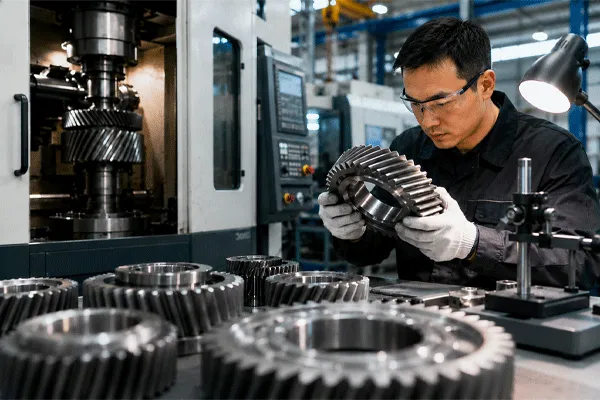
A helical gear looks similar to a spur gear, but its teeth are cut at an angle. This angled tooth profile lets the gear teeth engage more smoothly. A helical gear runs quieter and can carry more load than many spur gear designs.
The helical gear is a strong choice for gearboxes, conveyors, vehicle transmissions, heavy machines, and industrial drive systems. Since the teeth do not hit all at once, the gear mesh feels smoother. This helps reduce vibration and noise. In many modern machines, helical gears come as the standard choice for smoother power transmission.
There are also single helical gears and double helical gear designs. A double helical gear uses two opposite tooth angles. This helps balance thrust forces. A herringbone gear is similar in idea, with a V-shaped tooth layout. In large power systems, double helical and herringbone gear designs can offer strong, smooth transmission.
Spur gear vs helical gear
| Artículo |
Engranaje recto |
Engranaje helicoidal |
| Orientación de los dientes |
Heterosexual |
En ángulo |
| Ruido |
Mayor a velocidad |
Inferior |
| Capacidad de carga |
Bien |
Mejor |
| Manufacturing cost |
Inferior |
Más alto |
| Empuje axial |
Bajo |
Exists |
| Uso habitual |
Simple machines |
Gearboxes and heavier drives |
For buyers, the helical gear is often worth the extra cost when the machine must run longer, smoother, and quieter.
What Makes a Bevel Gear Useful for Angle Transmission?
A bevel gear is used when shafts meet at an angle, often 90 degrees. Instead of a flat circular gear shape, a bevel gear has a cone-like form. This lets power turn a corner inside the gear system.
There are several bevel gear types. A straight bevel gear has straight teeth and works well for simple angle drives. A spiral bevel gear has curved teeth, so it runs smoother and quieter. A miter gear is a special type of bevel gear where two gears usually have the same number of teeth and a 1:1 speed ratio. Bevel gears with a speed ratio other than 1:1 are used when speed and torque must change.
A hypoid gear is similar to a spiral bevel gear, but the shafts do not meet at the same center line. This allows special gear configuration options and is common in vehicle drive systems. Straight and spiral bevel gears are used in machines, power tools, angle gearboxes, and many industrial devices.
Common bevel gear options
| Bevel Gear Type |
Main Feature |
Common Application |
| Straight bevel gear |
Simple teeth |
Low-speed angle drive |
| Spiral bevel gear |
Curved teeth |
Quieter angle drive |
| Miter gear |
Usually 1:1 ratio |
Direction change |
| Engranaje hipoide |
Offset shaft design |
Vehicle and compact drives |
A bevel gear is ideal when you need to turn power from one direction to another without using belts or chains.
How Does a Worm Gear Reduce Speed and Increase Torque?
A worm gear uses a screw-like worm and a gear wheel. The worm turns, and the gear wheel follows. This setup is common when a machine needs large speed reduction in a small space. It is often used for lifting, indexing, and controlled movement.
The worm gear is useful because it can deliver high torque output with compact design. Screw and worm gears are often found in hoists, jacks, gates, conveyors, rotary tables, and support mechanisms. In some cases, a worm gear may resist back-driving, which helps hold position. But this depends on angle, friction, load, and lubrication, so it should not replace a proper brake in safety-critical systems.
Compared with a spur gear or helical gear, a worm gear may create more friction and heat. That means the gear material and lubrication matter a lot. Bronze, steel, cast iron, and engineering plastics are common choices, depending on the load and working condition.
For heavy-duty transport equipment, worm gear principles can appear in landing gear or lifting support devices. Buyers should check rated load, handle force, grease access, sealing, and corrosion protection, especially for trailers used in rain, dust, ports, mines, and long-distance logistics.
¿Qué tipo de engranaje necesitas? Una guía sobre los 7 tipos diferentes de engranajes
What Is an Internal Gear and Where Is It Used?
An internal gear has teeth on the inside of a ring instead of the outside. It works with an external gear or pinion gear placed inside the ring. This design saves space and helps create compact gear systems.
Internal gear designs are often used in planetary gear systems, pumps, compact gearboxes, and special transmission systems. Because the teeth face inward, the layout can keep parts close together. That is why this type of gear is useful when space is limited.
The internal gear must be made with care. The tooth profile, gear mesh, center distance, and material quality all affect performance. If the internal gear is not accurate, the gear train may become noisy or wear quickly.
For industrial buyers, this gear type is not always visible from the outside. It often sits inside a gearbox. Still, it plays a key role in compact power transmission, especially where multiple gears must work in a small housing.
Why Is a Planetary Gear System Compact and Strong?
A planetary gear system usually includes a sun gear in the center, planet gears around it, and a ring gear outside. The planet gears rotate around the sun gear. This design spreads load across multiple gears, so the system can handle strong torque in a compact space.
A planetary gear system is common in automatic transmissions, industrial gearboxes, winches, robotics, electric motors, and construction machinery. It is useful when engineers need high torque, compact size, and balanced load sharing. Multiple gears work together, so the system can be strong without becoming too large.
Planetary gear design can be more complex than a simple spur gear pair. It needs accurate manufacturing, good bearing support, and correct lubrication. If one part wears, the whole system may suffer. That is why professional gear manufacturing and quality inspection are important.
For B2B machinery buyers, planetary gear systems are attractive when space is tight but power demand is high. They are often chosen for heavy equipment, drive units, and lifting applications where compact strength matters.
What Does a Rack and Pinion Gear Do?
A rack and pinion gear changes rotary motion into straight-line motion. The pinion gear is a round gear. The gear rack is a straight bar with teeth. When the pinion turns, the rack moves forward or backward.
This design is widely used in steering systems, CNC machines, sliding gates, lifting tables, machine tools, and linear motion equipment. It is simple, direct, and easy to understand. Unlike many circular gear systems, a rack and pinion gear creates straight motion instead of only rotating motion.
The gear rack must match the pinion gear correctly. Tooth size, pitch, hardness, surface finish, lubrication, and alignment all matter. If the gear teeth are too soft or poorly aligned, the rack may wear fast or move unevenly.
In manufacturing workshops, rack and pinion systems can help move machines, fixtures, and cutting equipment. For trailer production, precision movement systems in cutting, bending, welding, and assembly equipment help improve repeatable quality.
What Other Various Types of Gears Should Buyers Know?
The seven main types cover most needs, but many types of gears exist. Gears include screw gear, herringbone gear, hypoid gear, miter gear, plastic gears, external gear, and special custom gear forms. Each different gear solves a different motion problem.
A screw gear is used for non-parallel, non-intersecting shafts with lower loads. A herringbone gear handles high load with balanced thrust. A hypoid gear works well when shafts are offset. Plastic gears are light, quiet, and corrosion-resistant, but they are not suitable for every heavy-duty load.
Various types of gears are widely used across transport equipment, agricultural machines, factory automation, cranes, reducers, pumps, and production lines. Gears are employed wherever machines need speed control, torque control, direction change, or motion conversion.
Quick selection chart
| Tipo de engranaje |
Shaft Layout |
Punto fuerte principal |
Uso habitual |
| Engranaje recto |
Parallel |
Simple and efficient |
Basic gearboxes |
| Engranaje helicoidal |
Parallel or crossed |
Suave y silencioso |
Industrial drives |
| Engranaje cónico |
Intersecting |
Direction change |
Angle gearboxes |
| Engranaje helicoidal |
Non-intersecting |
High reduction |
Lifting and positioning |
| Engranaje interno |
Internal mesh |
Compact layout |
Planetary systems |
| Engranaje planetario |
Coaxial |
High torque density |
Transmissions and winches |
| Engranaje de piñón y cremallera |
De rotativo a lineal |
Straight motion |
Steering and CNC systems |
This chart gives a simple starting point. The final choice should always match the load, speed, space, noise level, duty cycle, and service environment.
How Do Gear Material and Gear Manufacturing Affect Performance?
Gear material decides strength, wear life, weight, noise, and cost. Steel gears are strong and common in heavy-duty work. Cast iron can reduce vibration in some uses. Bronze is common in worm gear pairs. Plastic gears can be quiet and light, especially in small machines.
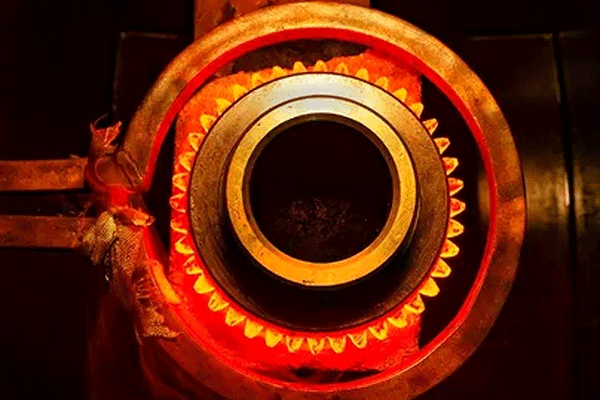
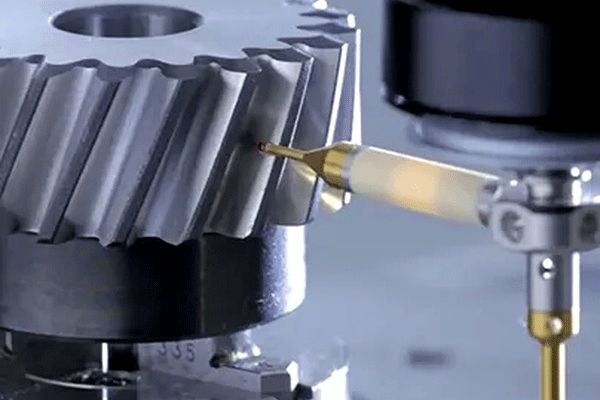
Gear manufacturing also matters. Cutting, hobbing, shaping, grinding, heat treatment, surface finishing, and inspection all affect how long a gear lasts. A good gear manufacturer controls tooth profile, hardness, surface roughness, and dimensional accuracy.
In trailer and heavy equipment manufacturing, we respect the same rule: structure and parts must match the real job. A gear must not only look correct. It must handle load, dust, shock, weather, and long working hours. This is also how we approach semi-trailer production: strong materials, reliable welding, stable quality control, and practical service planning.
Common gear material choices
| Gear Material |
Fuerza |
Ruido |
Uso habitual |
| Acero al carbono |
Alto |
Medium |
General industrial gears |
| Acero aleado |
Muy alto |
Medium |
Heavy-duty gear systems |
| Bronce |
Good with worm |
Inferior |
Worm gear wheels |
| Hierro fundido |
Good damping |
Inferior |
Large housings and gears |
| Engineering plastic |
Light duty |
Bajo |
Small quiet gear systems |
How Should You Choose the Right Gear Type for Your Application?
To choose the right type of gear, begin with the work. Ask: What load must the gear carry? How fast will it turn? Are the shafts parallel, angled, or offset? Does the system need high torque, low noise, compact size, or straight-line motion?
Then look at the environment. Dust, water, heat, cold, shock, corrosion, and poor lubrication can damage gears. A gear used in a clean indoor machine does not face the same stress as a gear used near mines, ports, construction sites, or outdoor transport equipment.
Use this simple buying checklist:
- Choose a spur gear for simple parallel shaft transmission.
- Choose a helical gear when you need smoother and quieter running.
- Choose a bevel gear when shafts meet at an angle.
- Choose a worm gear when you need compact speed reduction.
- Choose an internal gear for compact ring gear systems.
- Choose a planetary gear when high torque must fit in limited space.
- Choose a rack and pinion gear when rotary motion must become straight motion.
- Ask for drawings, material details, hardness data, and test records before bulk purchase.
- Match used gears only after checking wear, cracks, tooth damage, and fit.
For OEM / ODM equipment projects, custom gear design may be needed. A custom gear can match special torque, size, shaft, noise, or housing requirements. But custom parts should be designed with clear drawings, material standards, and quality inspection steps.
Applications of Gears in Heavy Machinery and Semi-Trailer Manufacturing
The applications of gears are very wide. Gears are used in cranes, pumps, mixers, steering systems, reducers, machine tools, agricultural equipment, trailers, loading devices, and factory production lines. Gears are generally small compared with the whole machine, but their job is big.
As a professional semi-trailer manufacturer in China, we focus on heavy-duty transportation solutions such as flatbed semi trailers, skeleton container trailers, side curtain trailers, sidewall trailers, lowbed trailers, lowboy trailers, removable gooseneck trailers, fuel tanker trailers, aluminum tanker trailers, bulk cement tanker trailers, dump semi trailers, car carrier trailers, trucks, and trailer parts.
In our daily work, mechanical gear knowledge supports better equipment selection and better production thinking. Trailer buyers may not buy gears directly from us, but they do care about durable support systems, easy operation, reliable accessories, and strong manufacturing quality. That is why every mechanical detail matters in long-term fleet operation.
FAQs About Different Types of Gears
What are the 7 main types of gears?
The 7 main types are spur gear, helical gear, bevel gear, worm gear, internal gear, planetary gear, and rack and pinion gear. These cover most motion needs, including speed change, torque increase, direction change, and rotary-to-linear movement.
Which type of gear is most common?
The spur gear is often the most common type of gear because it is simple, efficient, and easy to manufacture. It works well for parallel shafts and many basic machines.
What is the difference between spur gear and helical gear?
A spur gear has straight teeth. A helical gear has angled teeth. The helical gear usually runs quieter and carries more load, while the spur gear is simpler and often less expensive.
¿Para qué se utiliza un engranaje cónico?
A bevel gear is used to transfer motion between shafts that meet at an angle, often 90 degrees. Common types include straight bevel gear, spiral bevel gear, miter gear, and hypoid gear.
Why is a worm gear used?
A worm gear is used for high speed reduction and high torque in a compact space. It is common in lifting, positioning, gates, jacks, and reduction gearboxes.
Are plastic gears strong enough?
Plastic gears can work well in light-duty, quiet, and corrosion-resistant applications. They are not ideal for every heavy-duty system. Buyers must check load, temperature, speed, and wear requirements.
What is the best gear type for heavy load?
There is no single best answer. A helical gear, double helical gear, planetary gear, or bevel gear may be suitable, depending on shaft layout, speed, torque, space, and working environment.
Principales conclusiones
- A type of gear is chosen by shaft direction, load, speed, space, and motion need.
- The 7 common gear types are spur gear, helical gear, bevel gear, worm gear, internal gear, planetary gear, and rack and pinion gear.
- A spur gear is simple and cost-effective.
- A helical gear runs smoother and quieter than many spur gears.
- A bevel gear changes motion direction between angled shafts.
- A worm gear offers compact speed reduction and high torque.
- An internal gear helps build compact gear systems.
- A planetary gear system offers strong torque in a small space.
- A rack and pinion gear changes rotary motion into straight motion.
- Gear material, tooth profile, gear mesh, lubrication, and gear manufacturing quality affect service life.
- For heavy-duty machinery and transport equipment, every small mechanical gear choice can affect safety, downtime, and long-term cost.
- If your project involves semi-trailers, heavy transportation, construction machinery movement, mining logistics, or OEM / ODM trailer solutions, choose suppliers who understand real working conditions, not only catalog specifications.












 10:08
10:08