Poor materials handling can slow down warehouse operations, increase labor costs, damage products, and create supply chain delays. Many companies invest in storage space but overlook the importance of choosing the right material handling system.
A material handling system includes equipment, processes, storage solutions, and technologies used to move, store, protect, and control materials and products throughout manufacturing, warehouse, and distribution operations.
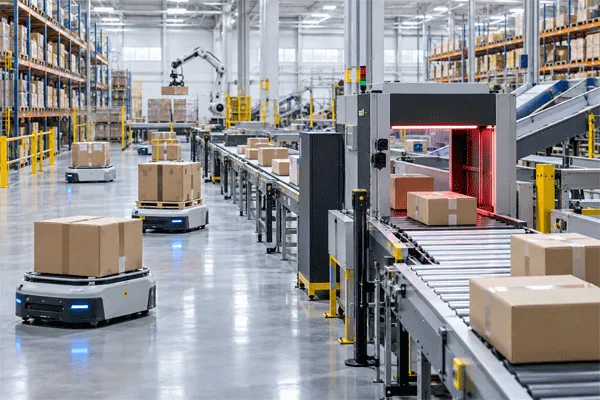
Из каких компонентов состоит система погрузочно-разгрузочных работ? Полное руководство по складскому хозяйству
Конспект статьи
- What Is a Material Handling System and Why Is It Important?
- What Are the Main Components of a Material Handling System?
- What Are the Different Types of Material Handling Equipment?
- How Does Material Handling in Warehouses Improve Logistics Efficiency?
- What Role Does Automation Play in Modern Materials Handling?
- How Do Industrial Trucks Support Material Handling Operations?
- What Are the Benefits of Effective Material Handling Systems?
- How to Choose the Right Material Handling Equipment?
- What Are the Best Material Handling Strategies for Supply Chain Operations?
- Frequently Asked Questions About Material Handling Systems
What Is a Material Handling System and Why Is It Important?
A material handling system is a combination of equipment, processes, and technologies designed to move, store, and manage materials throughout production and distribution environments.
In simple terms, materials handling refers to everything involved in moving goods from one location to another. This includes receiving raw materials, transporting components during manufacturing, storing finished products, and loading goods for delivery.
A complete system normally includes:
| Компонент |
Функция |
| Storage equipment |
Organizes and protects products |
| Конвейерные системы |
Moves materials continuously |
| Industrial trucks |
Transport heavy loads |
| Automated systems |
Improve speed and accuracy |
| Control software |
Monitors material flow |
For companies operating warehouses, factories, and logistics centers, good material handling directly affects productivity. A well-designed system helps reduce unnecessary movement, improve safety, and create a smoother workflow.
As a professional semi trailer manufacturer in China, we understand that materials handling does not stop inside a warehouse. The connection between warehouse operations, loading systems, transportation equipment, and supply chain management determines the efficiency of the complete logistics process.
A trailer transporting containers, bulk materials, construction equipment, or industrial products must work together with efficient warehouse operations. This is why modern logistics companies focus on complete material handling solutions instead of individual equipment.
What Are the Main Components of a Material Handling System?
The main components of a material handling system can be divided into four major categories: transportation equipment, storage systems, automated technology, and control solutions.
These components work together to create efficient movement and storage of materials and products.
1. Transportation Equipment
Transportation equipment helps move materials between different areas.
Common examples include:
- Конвейерные системы
- Forklifts
- Pallet trucks
- Cranes
- Hoists
- Industrial trucks
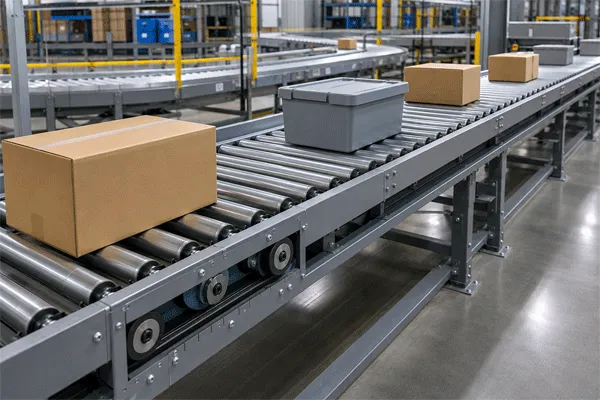
A conveyor is one of the most common components because it allows continuous movement of products in warehouses and production lines.
For heavy loads, industrial trucks and trailers provide flexibility. For example, container transportation requires cooperation between warehouse equipment, loading systems, and container trailers.
2. Storage Systems
Storage systems organize goods and maximize warehouse space.
Common storage solutions include:
| Storage Type |
Применение |
| Pallet racks |
General warehouse storage |
| Automated storage and retrieval systems |
High-density automated warehouses |
| Shelving systems |
Small products |
| Bulk storage |
Raw materials and large quantities |
Proper storage and handling equipment reduces product damage and improves inventory management.
3. Control and Management Systems
Modern warehouses use software and automation technology to control the movement of materials.
These systems help companies monitor:
- Product location
- Inventory levels
- Transportation routes
- Loading schedules
A complete material handling system combines physical equipment with digital management to improve efficiency.
What Are the Different Types of Material Handling Equipment?
Understanding the types of material handling equipment helps companies select suitable solutions for different applications.
Different industries require different equipment because materials vary in size, weight, shape, and transportation requirements.
The major categories include:
| Equipment Type |
Основная функция |
| Conveyor equipment |
Continuous movement of products |
| Industrial trucks |
Flexible transportation |
| Cranes and lifting equipment |
Heavy load handling |
| Storage equipment |
Product organization |
| Automated systems |
High-speed warehouse operations |
Конвейерное оборудование
Conveyors are widely used in warehouses, factories, and distribution centers.
They can transport:
- Boxes
- Поддоны
- Packages
- Components
- Bulk materials
A conveyor system improves workflow by reducing manual handling and maintaining consistent movement.
Из каких компонентов состоит система погрузочно-разгрузочных работ? Полное руководство по складскому хозяйству
Industrial Transportation Equipment
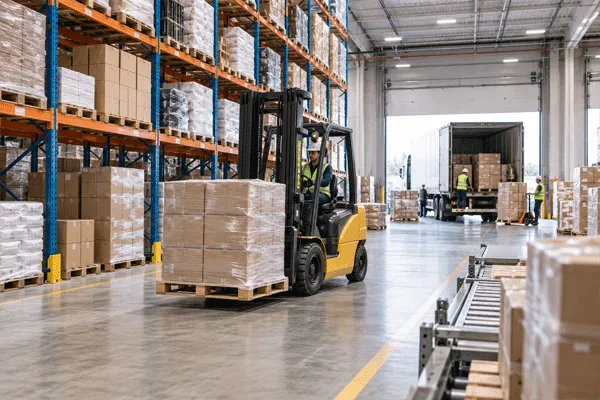
Industrial trucks are essential for moving heavy or large materials.
Common examples include:
- Forklifts
- Reach trucks
- Pallet trucks
- Container handlers
For logistics companies, industrial transportation equipment connects warehouse operations with external transportation such as trucks and trailers.
Bulk Material Handling Equipment
Bulk material handling equipment is designed for materials such as:
- Cement
- Grain
- Minerals
- Powder products
- Aggregates
These systems require strong designs because bulk materials often create high loads and continuous operating pressure.
Choosing suitable equipment types improves safety, productivity, and long-term operating performance.
How Does Material Handling in Warehouses Improve Logistics Efficiency?
Modern material handling in warehouses plays an important role in improving productivity, reducing labor requirements, and creating smoother supply chain operations.
A warehouse is not only a storage location. It is a connection point between suppliers, manufacturers, transportation providers, and customers. Every movement inside the warehouse affects delivery speed and operating costs.
An efficient material handling process helps companies:
- Receive goods faster.
- Store products safely.
- Reduce unnecessary movement.
- Improve order accuracy.
- Speed up loading and shipping.
For example, when a logistics company receives containerized cargo, the unloading process, storage arrangement, and final delivery preparation must work together. The right combination of warehouse equipment, container handling equipment, and transportation solutions creates a more efficient workflow.
As a semi trailer manufacturer serving global logistics customers, we understand that warehouse efficiency is closely connected with transportation efficiency. A well-organized warehouse requires proper loading areas, suitable storage systems, and reliable transportation equipment to maintain continuous cargo movement.
Poor materials handling often creates problems such as:
| Задача |
Результат |
| Incorrect storage layout |
Longer picking time |
| Manual handling overload |
Higher labor cost |
| Poor equipment selection |
Lower productivity |
| Unorganized material flow |
Supply chain delays |
By improving material handling practices, companies can reduce waste and achieve better control of materials and products.
What Role Does Automation Play in Modern Materials Handling?
Automation has changed the way warehouses manage products and transportation. Many companies now use automated material handling technologies to improve speed, accuracy, and safety.
Automated material handling uses machines, sensors, software, and robotics to move materials with limited human intervention.
Common automated solutions include:
- Automated guided vehicles (AGVs)
- Autonomous mobile robots
- Automated storage and retrieval systems
- Robotic picking systems
- Smart conveyor systems
These automated systems are especially valuable in large warehouses where thousands of products move every day.
For example, automated storage and retrieval systems can automatically place products into storage locations and retrieve them when needed. This reduces space usage and improves inventory accuracy.
The advantages of automated material handling include:
| Преимущество |
Description |
| Higher efficiency |
Faster material movement |
| Better accuracy |
Reduced human errors |
| Improved safety |
Less manual heavy lifting |
| Lower labor pressure |
Optimized workforce |
However, automation does not replace every traditional solution. Many businesses combine manual equipment with automated technology to create flexible material handling solutions.
A successful warehouse automation strategy depends on:
- Product type.
- Warehouse size.
- Budget.
- Required speed.
- Future expansion plans.
The goal is not simply to automate everything. The goal is to create the right balance between people, equipment, and technology.
How Do Industrial Trucks Support Material Handling Operations?
Industrial trucks are one of the most important parts of warehouse and industrial materials handling.
They provide flexible movement for heavy loads and allow operators to transport goods between storage areas, production lines, loading zones, and transportation vehicles.
Common industrial trucks include:
| Truck Type |
Применение |
| Forklift trucks |
Pallet and heavy load movement |
| Reach trucks |
High warehouse storage |
| Pallet trucks |
Short-distance transportation |
| Container handlers |
Контейнерная логистика |
| Tow tractors |
Factory material movement |
Different types of industrial trucks are selected according to load capacity, working environment, and transportation requirements.
For example, container logistics operations require specialized equipment to move containers efficiently between ports, warehouses, and transportation vehicles.
A complete logistics system may include:
- Container handling equipment.
- Warehouse storage systems.
- Loading platforms.
- Semi trailers.
- Fleet transportation solutions.
Industrial trucks also improve safety because they reduce the need for manual material handling. Heavy products can be moved more efficiently while reducing physical strain on workers.
For companies handling construction materials, machinery parts, or bulk products, selecting the right equipment improves productivity and reduces operating risks.
Из каких компонентов состоит система погрузочно-разгрузочных работ? Полное руководство по складскому хозяйству
What Are the Benefits of Effective Material Handling Systems?
A well-designed material handling system provides measurable benefits throughout warehouse and supply chain operations.
The main benefits of effective material handling include:
1. Increased Productivity
Efficient systems reduce unnecessary movement and help employees complete tasks faster.
For example, a properly designed conveyor layout can move products continuously without repeated manual transportation.
2. Reduced Operating Costs
Good material handling reduces:
- Labor requirements.
- Product damage.
- Equipment downtime.
- Transportation delays.
Companies can achieve better results with fewer wasted resources.
3. Improved Safety
Heavy lifting and repeated manual movement can create workplace risks.
Using ergonomic equipment and automated systems helps protect workers and improve working conditions.
4. Better Space Utilization
Modern storage systems allow warehouses to use vertical space effectively.
Automated storage solutions can significantly increase storage capacity compared with traditional layouts.
5. Stronger Supply Chain Performance
Efficient material handling supports faster production, accurate inventory control, and reliable delivery.
A connected system helps companies respond quickly to customer demand.
For international logistics companies, material handling efficiency is especially important because products often move through multiple stages:
Supplier → Warehouse → Transportation → Distribution Center → Customer
Every stage depends on smooth material movement.
How to Choose the Right Material Handling Equipment?
Choosing the right material handling equipment requires a detailed understanding of operational needs.
Many companies make the mistake of purchasing equipment based only on price. However, the cheapest option may create higher costs later through maintenance problems, low efficiency, and limited capacity.
Before selecting equipment, companies should evaluate:
| Коэффициент отбора |
Consideration |
| Вес материала |
Определяет грузоподъёмность |
| Product size |
Affects equipment design |
| Warehouse layout |
Influences movement routes |
| Operating frequency |
Determines durability requirements |
| Automation level |
Defines technology needs |
The right equipment should match the actual working environment.
Например:
- A warehouse storing small packages may need conveyors and automated sorting systems.
- A construction material warehouse may require heavy-duty industrial trucks.
- A bulk material facility may require specialized bulk handling equipment.
Companies should also consider future growth. Equipment should support current operations while allowing expansion.
A professional supplier can help customers analyze their handling needs and recommend suitable solutions.
Good material handling depends on three factors:
Right material + Right equipment + Right process
When these elements work together, companies can create reliable and efficient operations.
What Are the Best Material Handling Strategies for Supply Chain Operations?
Modern supply chain operations require more than simply moving products from one location to another. Companies need effective material handling strategies that connect warehouses, transportation systems, production facilities, and distribution networks.
A successful strategy focuses on improving the complete flow of materials and products. This includes receiving raw materials, storage, internal movement, order preparation, and final transportation.
The most important principles include:
| Strategy |
Purpose |
| Optimize warehouse layout |
Reduce unnecessary movement |
| Select suitable equipment |
Improve handling efficiency |
| Use automation where suitable |
Increase speed and accuracy |
| Improve inventory control |
Reduce storage problems |
| Integrate transportation |
Create smoother logistics |
For example, a global logistics company may combine warehouse automation, industrial trucks, loading equipment, and semi trailers to create a complete supply chain solution.
As a China-based semi trailer manufacturer, we work with logistics companies, fleet operators, and industrial customers who understand that transportation efficiency starts before goods leave the warehouse. A properly designed loading area and compatible transportation equipment can significantly improve the entire logistics process.
Good material handling practices also help companies manage different cargo types, including:
- Containerized goods.
- Construction materials.
- Machinery equipment.
- Agricultural products.
- Bulk materials.
- Industrial components.
When companies invest in the right material handling system, they create a stronger connection between warehouse operations and transportation networks.
What Are the Types of Material Handling Systems?
There are many types of material handling systems, and each system is designed for different operational requirements.
The main categories include:
1. Manual Material Handling Systems
Manual handling uses human effort and simple tools to move products.
Examples include:
- Hand carts.
- Manual pallet trucks.
- Hand-operated lifting equipment.
Manual handling is suitable for small warehouses or low-volume operations. However, it may become inefficient when companies handle large quantities of materials.
2. Mechanical Material Handling Systems
Mechanical systems use powered equipment to improve productivity.
Examples include:
- Forklifts.
- Conveyors.
- Cranes.
- Hoists.
- Industrial trucks.
These systems are common in manufacturing plants, warehouses, and logistics centers.
3. Automated Material Handling Systems
Automated systems use advanced technology to move and manage materials.
Examples include:
- Automated guided vehicles.
- Autonomous mobile robots.
- Robotic sorting equipment.
- Automated storage and retrieval systems.
These solutions are increasingly popular because companies need faster and more accurate operations.
The choice between different types of material handling depends on:
- Warehouse size.
- Product characteristics.
- Required speed.
- Labor availability.
- Investment budget.
A quality material handling solution should balance efficiency, reliability, and long-term operating costs.
How Can Companies Build Quality Material Handling Operations?
Quality material handling requires careful planning, suitable equipment, and continuous improvement.
Companies should focus on several key areas:
1. Warehouse Design
The warehouse layout should support smooth movement.
Important considerations include:
- Storage location.
- Loading area design.
- Equipment movement paths.
- Safety zones.
A well-planned warehouse reduces unnecessary transportation distance.
2. Equipment Selection
Choosing suitable systems and equipment directly affects performance.
Companies should select equipment based on:
- Требования к нагрузке.
- Рабочая среда.
- Operating frequency.
- Maintenance needs.
For example, heavy industrial applications may require stronger equipment compared with light warehouse operations.
3. Employee Training
Even advanced equipment requires skilled operators.
Proper training improves:
- Safety.
- Equipment usage.
- Maintenance awareness.
- Daily productivity.
4. Regular Maintenance
Maintenance ensures equipment remains reliable.
Regular inspection helps identify:
- Damaged components.
- Safety risks.
- Performance issues.
Good material handling is not only about purchasing equipment. It requires continuous management of people, processes, and technology.
Frequently Asked Questions About Material Handling Systems
What does a material handling system include?
A material handling system includes equipment, storage solutions, transportation methods, automation technologies, and management processes used to move, store, and control materials and products.
The main components include conveyors, industrial trucks, storage systems, automated equipment, and control software.
Why is material handling important in warehouses?
Material handling in warehouses improves product movement, reduces unnecessary labor, increases storage efficiency, and supports faster order processing.
An efficient system helps companies reduce costs and improve supply chain performance.
What are the main types of material handling equipment?
The main types of material handling equipment include conveyors, industrial trucks, forklifts, cranes, automated storage systems, robotic equipment, and bulk material handling equipment.
The best choice depends on product type, warehouse design, and operational requirements.
What is automated material handling?
Automated material handling uses technologies such as robots, sensors, automated guided vehicles, and software systems to move and manage materials with less manual work.
It improves speed, accuracy, and safety in modern warehouses.
How do companies choose the right material handling equipment?
Companies should consider:
- Material weight.
- Product size.
- Warehouse layout.
- Handling frequency.
- Required automation level.
- Future expansion plans.
Choosing the right equipment helps improve efficiency and reduce long-term costs.
How does material handling affect the supply chain?
Material handling directly affects supply chain performance because it controls how quickly and safely goods move between suppliers, warehouses, transportation systems, and customers.
Efficient handling reduces delays and improves delivery reliability.
Основные выводы
- A material handling system combines equipment, processes, storage solutions, and technologies to move and manage materials.
- The main components include conveyors, industrial trucks, storage systems, automation equipment, and control software.
- Efficient materials handling improves warehouse productivity and reduces operating costs.
- Automated material handling helps companies improve speed, accuracy, and safety.
- Different industries require different types of material handling equipment.
- Choosing the right equipment depends on load requirements, warehouse design, and operational goals.
- Good material handling connects warehouse operations with transportation and supply chain management.
- Professional planning helps companies build reliable, scalable, and cost-effective logistics systems.












 15:38
15:38