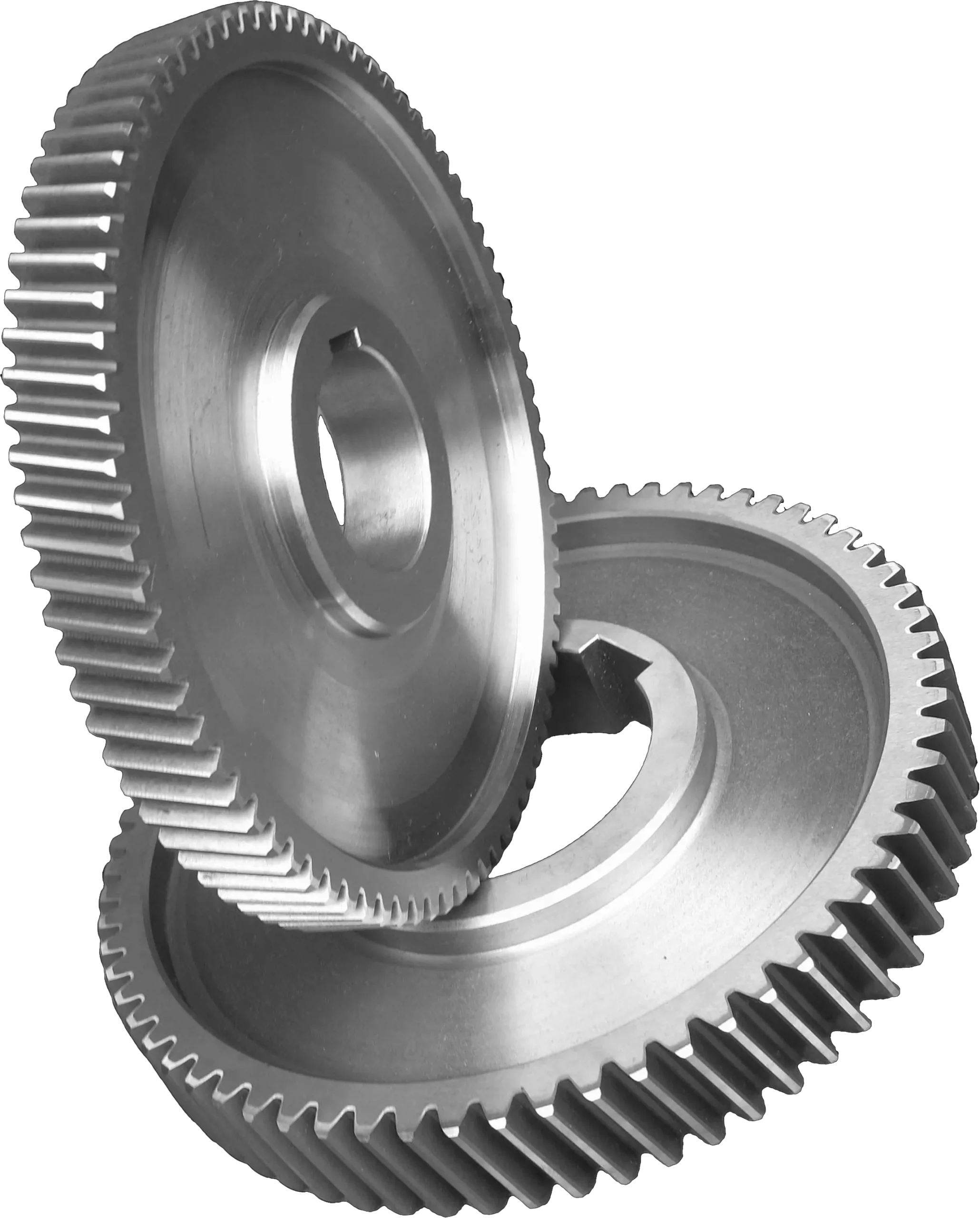
Wrong gear selection can stop a whole machine, delay delivery, and raise repair costs fast. In heavy-duty equipment, one weak gear can damage a full system. The solution is to work with a capable gear manufacturer that understands design, materials, production, and real working loads.
A gear manufacturer designs and produces gear parts used to transmit power, change speed, control direction, and support reliable motion in machinery. The right partner should offer precision gear manufacturing, custom gear options, material selection, heat treat support, quality inspection, and gear solutions that match the requirements of the application.
Article Outline
- What does a gear manufacturer do?
- Why is gear manufacturing important for heavy-duty machinery?
- What types of gear products can a custom gear manufacturer supply?
- How do spur gear, bevel gear, worm gear, and helical gears differ?
- What should buyers know about precision gear manufacturing?
- How does gear design affect torque, motion control, and service life?
- What materials and processes improve gear quality?
- How do leading companies control gear production quality?
- How can OEMs choose manufacturing services for custom solutions?
- Why work with a factory that understands industrial applications?
- FAQs about gear manufacturing
- Key takeaways
What does a gear manufacturer do?
A gear manufacturer makes gear parts that help machines move with control, strength, and repeatable accuracy. A gear may look simple, but every tooth, shaft fit, spline, bore, and surface finish affects how the final gear system works. In real machinery, small errors can create noise, vibration, heat, and early failure.
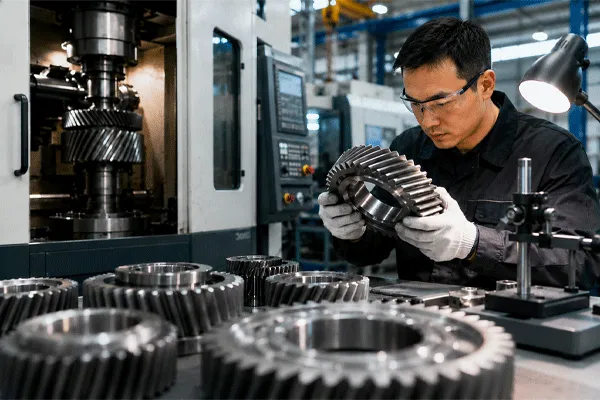
A professional manufacturer of gears does more than cut metal. The work often includes gear design, material planning, blank preparation, machining, hobbing, gear grinding, inspection, assembly support, and packaging. For buyers in transportation, construction, mining, logistics, and industrial and commercial projects, this matters because reliable power transmission depends on stable parts.
From our own experience as a China-based heavy-duty semi trailer manufacturer, we understand this clearly. Whether we design flatbed trailers, lowbed trailers, fuel tanker trailers, bulk cement tankers, dump trailers, or trailer parts, every mechanical connection must support real road conditions. That same thinking applies when choosing a gear partner: strength, fit, durability, and quality control must come first.
Why is gear manufacturing important for heavy-duty machinery?
Gear manufacturing is important because gears have teeth that mesh and move power from one part of a machine to another. When the teeth that mesh are accurate, the machine runs smoothly. When they are not, the system becomes noisy, weak, and less efficient.
In heavy-duty machinery, gear failure can be expensive. It may stop a production line, delay a shipment, damage connected parts, or create safety risks. A gear inside a reducer, hoist, drive unit, pump, steering mechanism, or motion control device must handle torque again and again. It cannot only look correct. It must work under load.
This is why buyers should not choose a supplier by price alone. A good gear supplier understands the requirements of the application, including load, speed, temperature, lubrication, tooth contact, installation space, and service environment. For trailer fleets and equipment operators, this practical view helps reduce downtime and improve long-term value.
What types of gear products can a custom gear manufacturer supply?
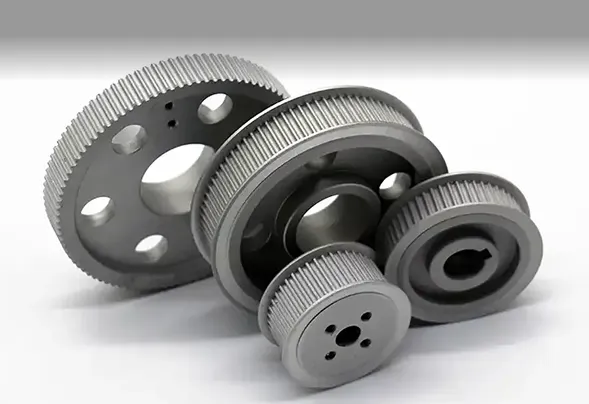
A custom gear manufacturer can supply a wide range of gear products for different industries and applications. These may include spur gear, bevel gear, worm gear, helical gears, internal gear, miter gears, planetary gears, differential gears, herringbone gears, double helical gears, straight bevel gears, and even plastic gear parts for lighter loads.
Some buyers also need related power transmission components such as sprocket, sprockets, shafts and splines, couplings, gearboxes, and parts and assemblies. A supplier with wider manufacturing capabilities can help reduce purchasing work because buyers can source more matched components from one place.
| Product Type |
Common Use |
Buyer Concern |
| Spur gear |
Simple speed and power transfer |
Cost, noise, tooth accuracy |
| Bevel gear |
Motion between intersecting shafts |
Angle accuracy and contact pattern |
| Worm gear |
High reduction ratio |
Wear resistance and lubrication |
| Helical gears |
Smooth and quiet operation |
Axial force and precision |
| Planetary gears |
Compact torque transfer |
Load sharing and alignment |
| Custom gearboxes |
Complete motion units |
Assembly fit and testing |
For OEMs, the best supplier is not only a parts seller. It should be able to manufacture custom items, review drawings, support prototype work, and offer custom manufacturing solutions for a wide range of industrial projects.
How do spur gear, bevel gear, worm gear, and helical gears differ?
A spur gear has straight teeth and is one of the most common round gears. It is often used when two parallel shafts need simple and efficient power transfer. Spur gear parts are usually easier to make, inspect, and maintain, which makes them popular in many basic drive systems.
A bevel gear is used when shafts meet at an angle. A straight bevel gear is common in systems that need motion between intersecting shafts. Hypoid and miter gears also belong to this larger family of angled power transfer parts. These gears require careful alignment because the contact pattern affects strength and noise.
Worm gear sets are used when a system needs high reduction in a compact space. Worm and worm wheel systems can provide smooth movement and strong holding ability, but they need good lubrication. Helical gears have angled teeth, so they run smoother and quieter than many straight-tooth options. For high-load industrial gears, the choice depends on speed, torque, space, cost, and working conditions.
What should buyers know about precision gear manufacturing?
Precision gear manufacturing is about control. The tooth form, pitch, runout, surface finish, bore, keyway, and spline must match the drawing and the final use. A gear that is only slightly wrong may still fit, but it may not last.
Buyers should ask how the supplier checks size and accuracy. Useful inspection steps may include tooth profile checking, lead checking, hardness testing, material verification, and contact pattern review. AGMA standards may also be used as a reference for quality levels and performance expectations, depending on the market and project.
For heavy-duty buyers, precision does not always mean the most expensive option. It means the right level of accuracy for the job. A low-speed trailer part may need toughness and corrosion resistance. A high-speed motion control part may need tighter tolerance and lower noise. The goal is not to overpay. The goal is to match the gear to the job.
How does gear design affect torque, motion control, and service life?
Gear design decides how power moves through a system. Tooth size, pressure angle, face width, material, hardness, lubrication, and center distance all affect torque capacity. If these details are wrong, the gear may wear too soon or break under shock load.
Good gear design also improves motion control. In machines that need accurate movement, backlash and tooth contact must be controlled. This is common in CNC equipment, automation systems, packaging machinery, lifting devices, and drive systems. The better the design, the more stable the motion.
Service life also depends on how the gear is used. Dust, poor lubrication, overload, misalignment, and impact can shorten life. That is why an experienced supplier should ask about the real working environment. In our trailer manufacturing work, we follow the same rule: a part designed for smooth highway use may not be enough for mining roads, construction sites, or port logistics.
What materials and processes improve gear quality?
Material choice is one of the biggest factors in gear quality. Carbon steel is common for many gear parts because it offers good strength and cost balance. Alloy steel, stainless steel, bronze, cast iron, and engineering plastics may also be used depending on load, corrosion, noise, and weight needs.
Process control is just as important. A typical gear production flow may include cutting the blank, rough machining, tooth cutting, heat treat, finishing, inspection, and packing. CNC machining can improve consistency, especially when buyers need repeat orders with stable size and shape.
Here is a simple process chart:
Drawing Review → Material Selection → Blank Machining → Tooth Cutting → Heat Treatment → Finishing → Inspection → Packaging
A strong factory will not rush these steps. It will check drawings, confirm tolerances, and give feedback before production. This reduces risk, especially for high quality custom projects where gears made to the wrong specification can cause expensive delays.
How do leading companies control gear production quality?
Leading companies control quality by managing the full process, not just the final inspection. They check materials before production, monitor machining during production, and inspect finished gear parts before shipment. This is how a manufacturing company builds repeatable quality.
Quality control should include several basic points:
- Material traceability for steel, bronze, or plastic materials
- Dimensional inspection for bore, keyway, shaft fit, and spline
- Tooth accuracy checks for profile, pitch, and runout
- Hardness testing after heat treatment
- Surface finish review for wear-sensitive areas
- Packaging protection to prevent rust and damage during export
Some buyers search for names like houston gear usa, southern gear, or gear motions when comparing suppliers in the gear industry. These searches show one thing clearly: buyers want proven experience, technical skill, and reliable communication. A China supplier that wants to compete globally must meet the same basic expectations.
How can OEMs choose manufacturing services for custom solutions?
OEMs should choose manufacturing services based on fit, quality, communication, and long-term supply ability. The lowest quote may look attractive, but a late or incorrect gear can cost much more than the original saving.
A good supplier should be able to engineer and manufacture parts from drawings, samples, or performance requirements. Its capabilities include drawing review, material advice, prototype support, small batch production, mass production, and export packing. This helps buyers solve real sourcing problems instead of only buying a catalog item.
For OEM / ODM buyers, lead times also matter. Fleet owners, equipment builders, trailer distributors, and machinery repair companies often need stable delivery. A supplier that can provide custom solutions and solutions to meet changing project needs will be more valuable than a supplier that only offers standard parts.
Why work with a factory that understands industrial applications?
A factory that understands industrial applications can ask better questions before production starts. It will ask where the gear will be used, how much load it must carry, whether the environment is dusty or wet, and whether the part must meet local rules or customer standards.
This is especially important across a wide range of industries such as construction equipment, mining machinery, port logistics, fleet maintenance, energy transport, agricultural equipment, and factory automation. Gear and machine parts in these fields must meet the demands of real work, not just paper drawings.
As a professional semi trailer manufacturer in China, we bring this practical mindset to every heavy-duty project. We specialize in trailer structure design, OEM / ODM customization, welding quality control, and export support. When discussing gear solutions or related trailer parts, our focus stays the same: durable structure, reliable function, stable delivery, and long-term cooperation.
What role does power transmission play in transport and machinery?
Power transmission is the movement of energy from one part to another so a system can work. In many machines, the gear is the part that changes speed, direction, or force. Without reliable power transmission, even a strong motor cannot do useful work.
For example, a reducer may slow down speed and increase torque. A gearbox may control direction. A gear system may help lift, rotate, pull, push, or position a load. In transport equipment, construction machinery, and industrial equipment, these movements must stay stable over time.
This is why power transmission components should be chosen with care. A buyer should not only ask, “What is the price?” Better questions are: “What load can it carry?” “How long will it last?” “Can the supplier support repeat orders?” “Can the supplier adjust the design for my working condition?” These questions lead to better purchasing decisions.
How can custom gear solutions reduce long-term costs?
Custom gear solutions can reduce long-term costs by improving fit, reducing wear, and preventing downtime. A standard part may work in simple cases, but custom gear design is often better when the machine has special load, space, or speed requirements.
For example, a mining operation may need stronger wear resistance. A logistics system may need smooth, quiet operation. A port equipment buyer may need corrosion protection. A trailer or machinery buyer may need a special shaft connection, spline profile, or assembly dimension. In each case, the right gear can protect the larger system.
The value is not only in the part itself. It is also in fewer repairs, less downtime, easier installation, and better confidence during operation. For global B2B buyers, this is where a capable supplier becomes a long-term partner, not just a one-time vendor.
Case Study: Choosing the right gear for a heavy-duty project
A project buyer needed a stronger drive component for equipment used in dusty construction conditions. The old part wore too quickly, and maintenance teams replaced it often. The buyer first wanted a cheaper copy of the same part.
After reviewing the working environment, the better plan was to adjust the material, improve tooth contact, and use a surface process suitable for dust and load. The supplier also checked the shaft fit and packaging method. The result was simple: better service life, fewer replacements, and less downtime.
This case shows why technical communication matters. A good supplier does not only say “yes” to a drawing. It reviews how the part will work. That is the difference between simple sourcing and real custom manufacturing solutions.
FAQs about gear manufacturing
What is a gear?
A gear is a mechanical part with teeth used to transfer motion and power. It can change speed, direction, or torque between moving parts in a machine.
What does a gear manufacturer specializing in custom parts usually provide?
A gear manufacturer specializing in custom parts usually provides drawing review, material selection, machining, tooth cutting, finishing, inspection, and support for special sizes or performance needs.
What is the difference between spur gear and helical gears?
A spur gear has straight teeth and is simple, efficient, and cost-friendly. Helical gears have angled teeth, which usually make them smoother and quieter, especially in higher-speed systems.
When should I choose a custom gear instead of a standard gear?
Choose a custom gear when a standard part cannot meet your load, size, speed, noise, material, or installation requirements. Custom parts are also useful when replacing old or hard-to-find components.
Why is AGMA important in gear manufacturing?
AGMA provides widely used gear standards and technical references. Buyers may use AGMA as a guide for gear quality, rating, inspection, and design expectations.
Can one supplier provide gear parts and assemblies?
Yes. Some suppliers can provide gear parts and assemblies, including matched shafts, splines, sprockets, reducers, and custom gearboxes. This can make sourcing easier and reduce compatibility problems.
Key things to remember
- A gear is small compared with a whole machine, but it can decide whether the system runs well or fails early.
- Choose a supplier based on quality, process control, engineering support, and delivery stability, not only price.
- Spur gear, bevel gear, worm gear, and helical gears each serve different motion and load needs.
- Precision gear manufacturing helps reduce vibration, noise, wear, and downtime.
- Material, heat treatment, tooth accuracy, and inspection all affect final performance.
- Custom solutions are valuable when standard parts cannot meet the real working condition.
- For heavy-duty transport, construction, mining, logistics, and industrial projects, the best partner is one that understands practical use, not just drawings.
- A reliable China-based manufacturing partner can support OEM / ODM projects with factory-direct supply, flexible customization, and long-term cooperation.












 11:23
11:23