A failed belt can stop an engine, delay a shipment, or shut down a machine. The problem feels small at first. Then downtime grows expensive. The solution is simple: understand the right belt type before you select, replace, or customize drive components.
A poly V belt is a multi-ribbed power transmission belt with several small V-shaped ribs running along its length. It combines the flexibility of flat belts with the gripping performance of v-belts, making it useful for compact, high-speed, and smooth belt drive systems in automotive, industrial machinery, HVAC, pump, appliance, and truck-related applications.
Article Outline
- What Is a Poly V Belt?
- How Does a Poly V Belt Work in a Belt Drive?
- What Are the Main Parts of a Poly-V Belt?
- Poly-V Belt vs V Belt: What Is the Difference?
- What Are the Advantages of a Poly V Belt?
- Where Is a Poly V Belt Used?
- How Do You Select the Right Poly V Belt?
- What Causes Poly V Belt Failure?
- Why Do Trailer, Truck, and Fleet Buyers Care About Belt Quality?
- How Can OEM / ODM Trailer Support Improve Belt and Drive Reliability?
- FAQs About Poly V Belts
- Key Takeaways
What Is a Poly V Belt?
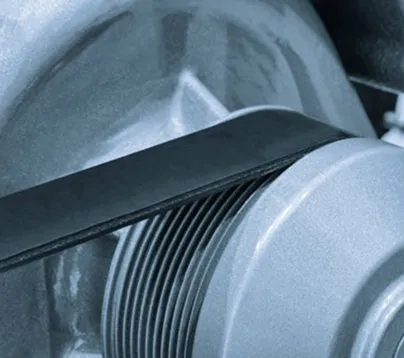
A poly V belt is a thin, flexible, multi-ribbed belt used to move power from one rotating part to another. It has multiple longitudinal ribs on the inner side. These ribs fit into matching grooves on a pulley. This shape helps the belt grip well while still bending easily.
Many people also call it a ribbed belt, multi-rib belt, multi-ribbed drive belt, or serpentine belt in automotive systems. The name may change by market, but the idea is the same: one flexible part can transfer power smoothly and efficiently.
In our work as a professional semi trailer manufacturer in China, we often discuss not only trailer frames, axles, suspension, tank structures, and trailer parts, but also the smaller drive components that support truck and fleet operation. A small component can affect a whole transport project. That is why understanding the belt is useful for fleet owners, logistics companies, trailer distributors, and maintenance teams.
In many industrial and automotive applications, poly V belts are valued because they can run smoothly, reduce vibration, support higher speed operation, and work with smaller pulley diameters. This makes them useful when engineers need a compact and efficient power transmission solution.
What Is a Poly V Belt?
How Does a Poly V Belt Work in a Belt Drive?
A belt drive moves power by contact. One pulley turns. The belt follows. Then the belt turns another pulley. This simple movement supports many transmission systems in trucks, machines, pumps, compressors, and factory equipment.
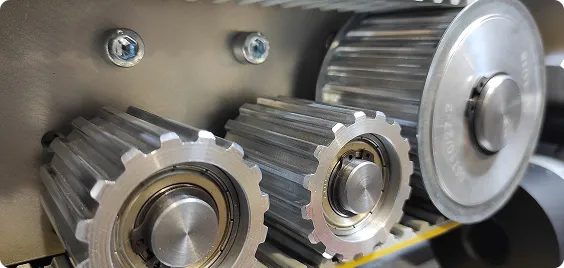
The working face of a poly v belt has several V-shaped ribs. These ribs increase the contact area between the belt and the pulley. More contact helps reduce slip, improve efficiency, and support smooth power transmission. The flat back side may also run over idlers or tension rollers.
Here is a simple view:
| Part |
What It Does |
Why It Matters |
| Driving pulley |
Provides rotation |
Starts the movement |
| Belt ribs |
Grip the grooves |
Help reduce slippage |
| Tensile cord |
Carries pulling force |
Supports strength and stability |
| Rubber body |
Provides flexibility |
Helps absorb vibration |
| Driven pulley |
Receives power |
Runs the target component |
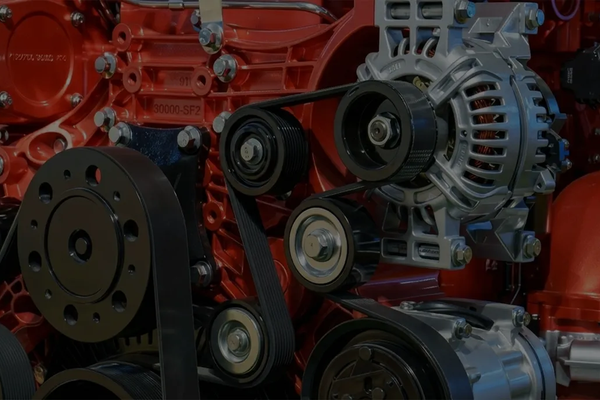
In a truck engine area, for example, a ribbed belt may help drive an alternator, power steering pump, water pump, or air conditioning compressor, depending on the design. In industrial machinery, a similar system may run a blower, conveyor, compact machine tool, or HVAC unit.
What Are the Main Parts of a Poly-V Belt?
A poly-v belt may look simple, but it has a clear structure. Each layer has a job. The outer back layer protects the belt. The inner rib surface grips the pulley. The cord inside helps carry tension. The rubber body gives the part flexibility and shock absorption.
Most designs include:
- Back surface: helps protect the belt and can contact idler pulleys.
- Tensile cord: controls stretch and supports load.
- Rubber body: gives shape, flexibility, and temperature resistance.
- Multiple ribs: run lengthwise and fit into pulley grooves.
A poly V belt is commonly designed with multiple longitudinal ribs. These ribs help transmit torque through contact between the belt rib flanks and pulley grooves. In simple words, the belt grips the pulley surface and moves power from one part to another.
This structure is crucial because it allows a compact design. Compared with a traditional single groove v-belt, the multi-rib design can handle efficient power transfer in less space. That is why engineers often consider it when space, speed, and smooth operation matter.
Poly-V Belt vs V Belt: What Is the Difference?
The phrase “poly-v belt vs v belt” is common because both products look related. The difference is mainly in shape and use. A traditional V belt has one larger V-shaped profile. It usually runs in one matching groove. A poly V belt has many small ribs across its width.
| Item |
Poly-V Belt |
Traditional V Belt |
| Shape |
Multi-ribbed, thin profile |
Single larger V shape |
| Contact |
Many small rib surfaces |
One main side contact area |
| Flexibility |
High |
Lower in tight bends |
| Pulley size |
Works well with smaller pulley diameter |
Often needs larger pulley |
| Running style |
Smooth and quiet |
Strong but may be less compact |
| Common use |
Automotive accessory drives, appliances, HVAC, pumps |
Heavy-duty simple drives, older machines |
A v-belt is still useful. It is simple, strong, and easy to replace in many machines. But a poly V design often wins when the drive must be narrow, high-speed, and quiet. It can operate quietly and smoothly when the system is aligned and tensioned correctly.
This does not mean one is always better. The right choice depends on power, speed, pulley layout, temperature, tension, space, and maintenance style. A good engineer does not select by name alone. The system must be checked as a whole.
What Are the Advantages of a Poly V Belt?
The main advantage of a poly V belt is that it offers strong contact in a compact space. Its multiple ribs create more surface area than a plain flat design. This helps the system transfer power with reduced slippage.
Key benefits include:
- High efficiency in suitable drive layouts.
- Quiet running when properly installed.
- Good flexibility for smaller pulleys.
- Compact design for limited engine or machine space.
- Smooth power transmission capability at high-speed operation.
- Versatility across various industries.
- Better performance and reliability when paired with correct pulleys and tension.
In practical use, poly V belts are often selected for compactness, smooth operation, and high power transmission in limited space. Some ribbed belt designs also provide low vibration, quiet running, minimal slip, and good temperature resistance when the correct material and profile are used.
For fleet owners, these benefits are practical. A smoother accessory drive can help reduce noise complaints, improve service confidence, and support longer lifespan when the system is maintained well. Small parts do not look exciting. But they matter.

What Are the Advantages of a Poly V Belt?
Where Is a Poly V Belt Used?
A poly V belt is widely used in automotive, appliance, industrial, and light-to-heavy machinery applications. In automotive systems, it often appears as a serpentine belts design. One continuous belt may drive several accessories from the crankshaft pulley.
Common applications include:
| Application Area |
Typical Use |
| Automotive systems |
Alternator, air conditioning, power steering, pump drives |
| Industrial machinery |
Machine tools, blowers, compressors, conveyors |
| HVAC |
Fans, air handling units, compact drives |
| Appliances |
Washing machines, dryers, vacuum cleaners |
| Fitness equipment |
Treadmills and exercise machines |
| Trucks and fleets |
Engine accessory systems and maintenance parts |
For semi trailer and truck-related buyers, the most direct link is fleet reliability. A trailer may not use this part in its main structure, but truck and trailer operations depend on the whole transport system. If a tractor unit stops because of a failed accessory belt, the loaded flatbed semi trailer, skeleton container trailer, lowbed trailer, fuel tanker trailer, or bulk cement tanker trailer also stops.
That is why professional fleet buyers often think beyond the trailer body. They care about spare parts, technical support, maintenance planning, and reliable sourcing. This is also why we support customers with trailer parts, OEM / ODM trailer solutions, and practical engineering guidance for heavy-duty transport projects.
How Do You Select the Right Poly V Belt?
To select the right belt, start with the system. Do not only copy a length from an old part. Check the profile, number of ribs, belt length, pulley width, pulley groove condition, center distance, load, speed, and operating temperature.
A simple selection checklist:
- Confirm the profile type, such as PH, PJ, PK, PL, or PM.
- Count the number of ribs.
- Measure effective length or match the original part number.
- Check pulley groove wear.
- Confirm working temperature and contamination risk.
- Review tension method: manual tensioner or automatic tensioner.
- Match the duty level with the application.
For general industrial applications, common V-ribbed belt and pulley profiles include PH, PJ, PK, PL, and PM. These profiles help buyers and engineers match belts with the correct pulley groove design and working requirements.
For international project buyers, this is important. A fleet in a hot mining area, a port logistics company near salt air, and a construction contractor hauling machinery over rough roads may not need the same support package. Good selection protects performance and longevity.
What Causes Poly V Belt Failure?
Most failures come from the system, not only the belt itself. Poor alignment, wrong tension, worn pulleys, oil contamination, heat, dust, and wrong part selection can all shorten service life.
Common failure signs include:
| Symptom |
Possible Cause |
What to Check |
| Squealing noise |
Low tension or misalignment |
Tensioner, pulley alignment |
| Cracks |
Age, heat, fatigue |
Rubber condition |
| Glazing |
Slip or excess heat |
Pulley surface and tension |
| Edge wear |
Misalignment |
Pulley position |
| Rib damage |
Debris or worn pulley grooves |
Groove condition |
| Early breakage |
Wrong length or overload |
Part number and system load |
In heavy-duty transport, downtime is expensive. One stopped truck may delay container logistics, fuel delivery, construction machinery transport, mining operations, or infrastructure project work. That is why preventive maintenance is better than emergency repair.
A practical rule: inspect the whole drive. Replacing only the belt may not solve the real problem if the pulley, tensioner, bearing, or alignment is already poor.
Why Do Trailer, Truck, and Fleet Buyers Care About Belt Quality?
Fleet owners and logistics companies care because small parts affect big schedules. A belt is not the most expensive part of a truck, but failure can stop a loaded vehicle. That can affect delivery time, customer trust, and operating cost.
For our target customers—container transport operators, port and intermodal transport companies, construction contractors, mining companies, fuel and chemical transport companies, and bulk powder logistics operators—reliability is not optional. Their equipment works under pressure. Roads can be rough. Loads can be heavy. Delivery windows can be strict.
This is why we connect trailer design with long-term service thinking. When we produce flatbed semi trailers, side curtain trailers, sidewall / fence trailers, lowboy trailers, removable gooseneck trailers, dump semi trailers, car carrier trailers, tanker trailers, and trailer parts, we focus on strong structure, reliable welding, quality control, and flexible customization.
A trailer is more than steel. It is part of a working fleet. Good transport equipment should support uptime, safety, compliance, and long-term cooperation.
How Can OEM / ODM Trailer Support Improve Belt and Drive Reliability?
OEM / ODM support is not only about changing size or color. It is about matching equipment to real working conditions. A trailer for port container transport is different from a lowbed trailer for excavators. A fuel tanker trailer is different from a bulk cement tanker trailer. The same logic applies to spare parts and drive components.
When we support international buyers, we often ask practical questions:
- What cargo will you carry?
- What road conditions will the fleet face?
- What axle load and local regulations apply?
- Do you need factory-direct supply or distributor branding?
- What spare parts should be included?
- What maintenance habits are common in your market?
This approach helps buyers reduce risk. It also makes communication easier between fleet managers, maintenance teams, and purchasing departments. If your project needs trailers, trucks, and parts together, a factory with engineering support can help you build a more stable supply chain.
That is the real value of working with a professional semi trailer manufacturer in China: you get production capacity, customization, export experience, and practical technical support in one place.
How Can OEM / ODM Trailer Support Improve Belt and Drive Reliability?
Quick Comparison Chart: When Should You Use Each Belt Type?
| Requirement |
Better Fit |
| Small pulley diameter |
Poly V belt |
| Very compact layout |
Poly-V belt |
| Older simple machinery |
V belt |
| Smooth high-speed running |
Poly V |
| Easy low-cost simple replacement |
V-belt |
| Multiple accessories in one path |
Poly V / serpentine design |
| Heavy shock loads in a simple drive |
Check V-belt or matched industrial design |
Simple view:
Poly V belt:
Compact + Smooth + High-speed + Multi-rib
Traditional V belt:
Simple + Strong + Familiar + Easy to service
The best choice depends on the whole drive system. Always confirm profile, size, pulley condition, and working environment before purchase.
Case Study: How a Small Belt Decision Can Affect a Heavy-Duty Fleet
A logistics company may operate tractor trucks with skeleton container trailers for port transport. The trailers carry containers every day. The schedule is tight. One truck develops noise near the engine. The driver keeps working because the vehicle still moves.
Two days later, the drive belt fails. The alternator stops charging. The truck cannot continue. A loaded container misses the delivery window. The trailer is fine, but the fleet still loses time.
The lesson is simple: spare parts planning matters. A strong trailer structure is important, but fleet uptime also depends on maintenance parts, inspection routines, and supplier support. For international buyers, this is why trailer purchasing should include questions about trailer parts, after-sales support, and long-term cooperation.
As a semi trailer manufacturer, we encourage buyers to think in systems. Good equipment is not one product. It is a working solution.
Buying Guide for Fleet and Trailer Parts Buyers
When sourcing belts or related drive components, do not only ask for the lowest price. Ask for fit, material, profile, durability, and supply stability. Cheap parts can become costly if they fail early.
For fleet buyers, a smart purchase plan includes:
- Correct profile and rib count.
- Verified length and width.
- Reliable rubber quality.
- Proper packaging for export.
- Stable batch supply.
- Clear replacement records.
- Technical communication with the supplier.
- Spare parts planning for long-distance projects.
For trailer purchasing, apply the same mindset. Whether you need flatbed semi trailers, lowbed trailers, aluminum tanker trailers, dump semi trailers, or trailer parts, the right supplier should understand your work conditions. Factory-direct pricing is useful, but engineering support is what protects your project.
FAQs About Poly V Belts
What is a poly V belt used for?
A poly V belt is used to transfer power between pulleys in compact and high-speed systems. It is common in automotive accessory drives, HVAC units, pumps, appliances, industrial machinery, and some conveyor or machine tool systems.
Is a poly V belt the same as a serpentine belt?
In many automotive uses, yes. A serpentine belt is often a multi-ribbed belt that follows a winding path around several pulleys. The term “serpentine” describes the route, while poly V describes the ribbed belt style.
Is a poly V belt better than a V belt?
It depends on the application. A poly V belt is often better for compact, smooth, quiet, and high-speed systems. A traditional V belt may be better for simple, rugged, older, or lower-cost drive layouts.
How do I know which poly V belt to buy?
Check the belt profile, number of ribs, length, pulley size, tension method, and original part number. Also inspect pulley condition and alignment. If the working environment is hot, dusty, oily, or high-load, ask for technical support before buying.
Why does a poly V belt make noise?
Noise may come from misalignment, low tension, worn pulley grooves, contamination, cracked ribs, or a failing tensioner. The belt is often blamed first, but the whole system should be inspected.
Can one poly V belt drive several components?
Yes. In many automotive systems, one continuous multi-ribbed belt can drive several accessories, such as the alternator, power steering, air conditioning compressor, and pump, depending on the engine layout.
Final Thoughts: A Small Belt Can Protect a Big Operation
A poly V belt is a small part, but it plays an important role in efficient power transfer. Its multi-rib structure gives it smooth running, good contact, and compact drive performance. That is why it is widely used in automotive systems, industrial equipment, appliances, HVAC, and fleet-related machinery.
For heavy-duty transport buyers, the lesson is bigger than one belt. Every component matters. A strong semi trailer needs good steel, welding, axles, suspension, braking systems, and spare parts support. A reliable fleet also needs smart maintenance and stable supply.
As a professional semi trailer manufacturer in China, we provide design, production, customization, and export support for flatbed semi trailers, skeleton container trailers, side curtain trailers, sidewall / fence trailers, lowbed trailers, lowboy trailers, removable gooseneck trailers, tanker trailers, dump semi trailers, car carrier trailers, trucks, and trailer parts.
If you are building a fleet for logistics, construction, mining, fuel transport, bulk cement transport, port operations, or infrastructure projects, choose partners who understand both equipment and real working conditions.
Key Takeaways
- A poly V belt is a multi-ribbed power transmission belt used in compact, smooth, and high-speed drive systems.
- It works by using multiple ribs to grip matching pulley grooves.
- It combines the flexibility of flat belts with the gripping performance of v-belts.
- Poly-V belt vs V belt selection depends on speed, space, load, pulley size, and maintenance needs.
- Common uses include automotive systems, HVAC, pumps, appliances, industrial machinery, and fleet-related equipment.
- Poor alignment, wrong tension, worn pulleys, and heat can shorten belt life.
- Fleet owners should care about small components because small failures can create large downtime.
- Trailer buyers should choose suppliers that provide strong structure, quality control, OEM / ODM customization, export support, and long-term spare parts cooperation.












 10:55
10:55