Industrial machinery depends on reliable power transmission. When a production line, conveyor system, construction machine, or heavy-duty equipment needs controlled speed and high torque, choosing the right gearbox becomes a critical engineering decision.
Many equipment buyers struggle with gearbox selection because different gearboxes have different strengths. A wrong choice can lead to higher energy consumption, excessive wear, unexpected downtime, and increased maintenance costs. This guide explains the 6 types of industrial gearboxes, their structures, typical uses, and how to select the right solution for industrial applications.
An industrial gearbox reduces speed while increasing torque to transfer mechanical power efficiently between a motor and driven equipment. The six primary types of industrial gearboxes are helical gearboxes, bevel gearboxes, worm gearboxes, planetary gearboxes, spur gearboxes, and bevel helical gearboxes. Each type is designed for different load conditions, installation requirements, and industrial applications.
How Many Types of Industrial Gearboxes Are There? 6 Types of Industrial Gearboxes and Their Typical Uses
What Is an Industrial Gearbox and Why Is It Important?
An industrial gearbox is a mechanical transmission device that uses a combination of gears to control rotational speed, torque, and movement direction. It connects a power source, such as an electric motor or engine, to industrial equipment that requires specific operating conditions.
In modern industrial operations, gearboxes are used in machines where direct motor speed is too high or torque output is insufficient. By adjusting the gear ratio, a gearbox allows machines to operate smoothly under different loads.
For example, a conveyor system in a warehouse may require steady movement at a lower speed but with enough torque to transport heavy products. A gearbox helps achieve this balance by converting high-speed motor rotation into controlled mechanical output.
Industrial gearboxes are widely used in:
- Manufacturing equipment
- Mining machinery
- Material handling systems
- Conveyor systems
- Construction equipment
- Energy equipment
- Food processing machinery
- Chemical processing plants
A reliable gearbox does more than reduce speed. It improves efficiency, protects motors, and extends equipment service life. For companies operating heavy-duty machinery, gearbox quality directly affects production stability.
How Many Types of Industrial Gearboxes Are There?
There are several types of industrial gearboxes available, but six designs represent the most common solutions used across global industries.
| Gearbox Type |
Main Feature |
Typical Uses |
| Helical gearbox |
High efficiency and smooth operation |
Conveyors, mixers, industrial machinery |
| Bevel gearbox |
Changes power direction at an angle |
Heavy equipment, lifting systems |
| Worm gearbox |
High reduction ratio and compact design |
Automation equipment, positioning systems |
| Planetary gearbox |
High torque density and precision |
Robotics, servo systems |
| Spur gearbox |
Simple structure and cost efficiency |
Low-speed machinery |
| Bevel helical gearbox |
Combines high efficiency and right-angle transmission |
Heavy industrial applications |
Understanding these gearbox types helps engineers and purchasing teams choose a solution based on torque requirements, operating environment, space limitations, and maintenance expectations.
What Are the Main Types of Industrial Gearboxes?
1. Helical Gearboxes: Efficient Solutions for Continuous Operation
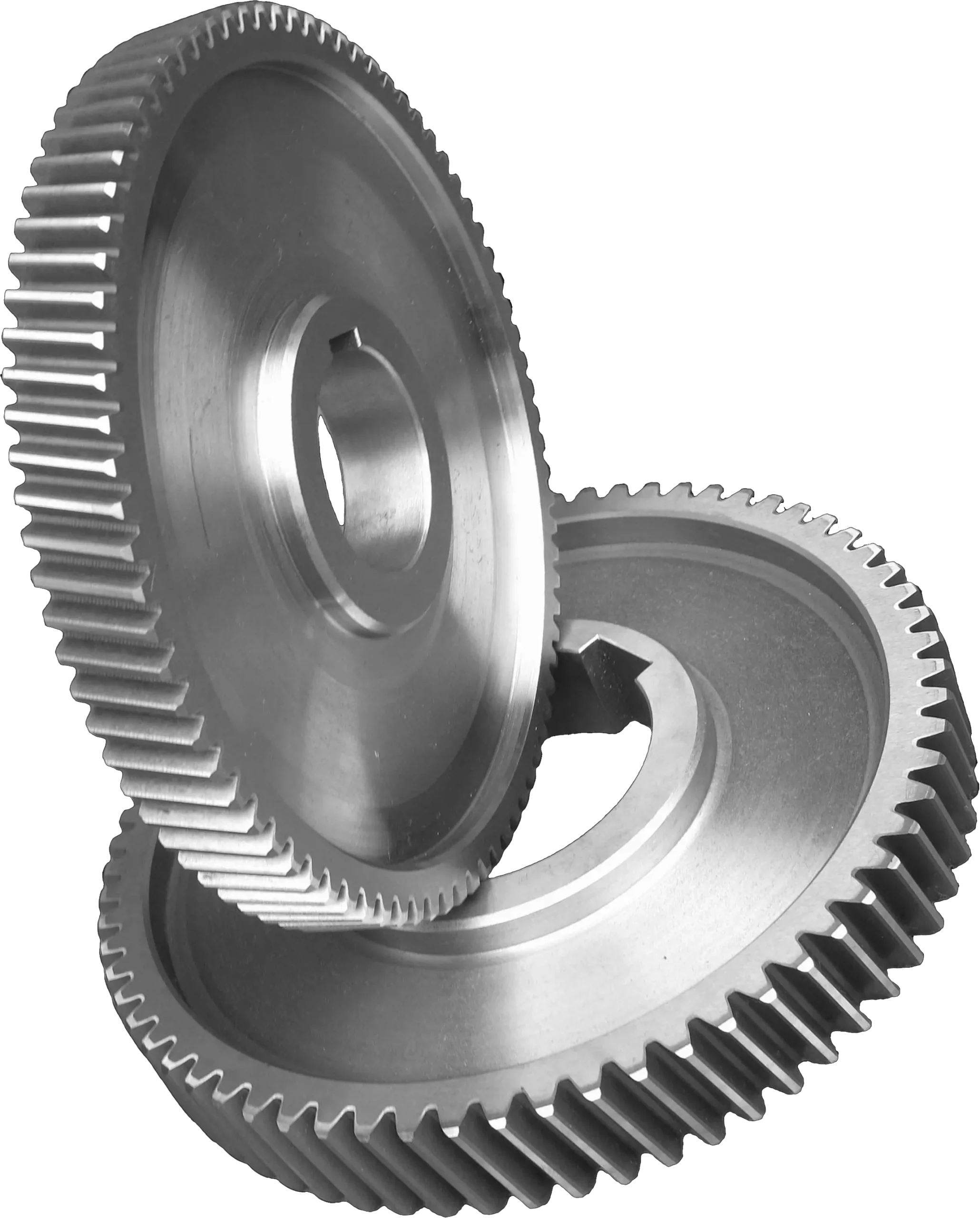
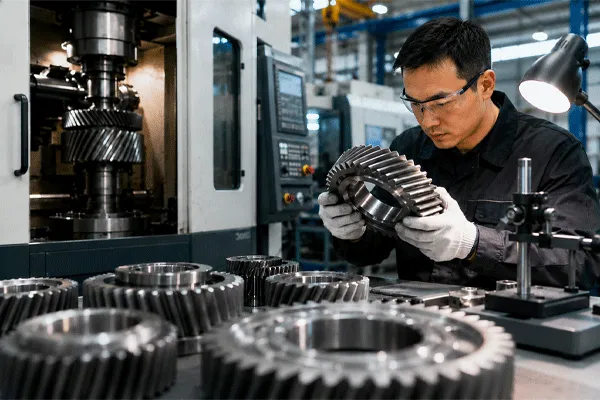
Helical gearboxes are among the most popular gearboxes used in industrial environments. They use helical gears with angled teeth that engage gradually, creating smoother operation compared with traditional straight-cut gears.
The helical gear design reduces vibration and noise because multiple teeth share the load during operation. This makes helical gearboxes suitable for applications that require continuous running and reliable performance.
Common advantages include:
- High transmission efficiency
- Smooth and quiet operation
- Strong load capacity
- Long service life
- Suitable for heavy-duty operation
Typical helical gearbox applications include:
- Conveyor systems
- Industrial fans
- Pumps
- Mixers
- Packaging machinery
- Production equipment
Compared with some other gearbox types, helical gearboxes provide an excellent balance between efficiency and durability. They are often selected when equipment needs stable power transmission for long working hours.
A coaxial helical gearbox is a common design where the input and output shafts are aligned on the same axis. This structure saves installation space and provides efficient mechanical transmission.
2. Bevel Gearboxes: Changing Transmission Direction Efficiently
Bevel gearboxes are designed with bevel gears that transfer power between shafts positioned at an angle, commonly 90 degrees. They are widely used when equipment design requires a change in power direction.
The bevel gear structure allows machines to transmit mechanical energy efficiently while maintaining strong torque performance.
Typical applications include:
- Construction equipment
- Material handling machines
- Mining equipment
- Industrial drives
- Lifting systems
A bevel gearbox is especially useful when the motor position and driven equipment cannot be aligned in a straight line.
Different bevel gear designs provide different performance characteristics. Straight bevel gear offers simple construction, while spiral bevel gear provides smoother operation and higher load capability.
For heavy industrial settings, manufacturers often combine bevel and helical technology to create bevel helical gearboxes.
These gearboxes combine:
- The efficiency of helical gears
- The directional flexibility of bevel gears
- Higher torque capacity
- Compact installation design
Bevel helical gearboxes are commonly found in demanding industrial applications where reliability and power density are important.
3. Worm Gearboxes: Compact Design with High Reduction Ratio
Worm gearboxes use a worm gear and worm wheel arrangement to achieve high speed reduction in a compact structure.
The worm gear system contains a screw-like component that drives a toothed wheel. This design allows significant reduction ratios within a relatively small housing size.
Main advantages include:
- Compact dimensions
- High reduction capability
- Quiet operation
- Simple installation
- Self-locking characteristics in certain designs
Worm gearboxes are frequently used in:
- Automation systems
- Positioning equipment
- Packaging machines
- Small conveyors
- Lifting mechanisms
However, worm gearboxes generally have lower efficiency compared with helical or planetary designs because of sliding friction between the worm gear and wheel.
For applications requiring extremely high reduction ratios and compact size, worm reduction gearboxes remain a practical choice.
How Many Types of Industrial Gearboxes Are There? 6 Types of Industrial Gearboxes and Their Typical Uses
4. Planetary Gearboxes: High Torque in a Compact Structure
A planetary gearbox is designed around a central sun gear, multiple planet gears, and an outer ring gear.
The planetary gear arrangement distributes the load across several gears at the same time. This creates excellent torque capacity while maintaining a compact size.
A typical planetary gearbox consists of:
- Central sun gear
- Multiple planet gears
- Outer ring gear
- Planet carrier
Because the load is shared between several contact points, planetary gearboxes can handle high torque levels compared with many traditional gearbox designs.
Planetary gearboxes are widely used in:
- Robotics
- CNC machines
- Automation equipment
- Medical devices
- Precision machinery
- Renewable energy equipment
Planetary gearboxes come in different configurations depending on required speed, torque, and precision. They are especially valuable where accuracy and compact installation are priorities.
For advanced industrial applications requiring precise movement control, planetary gear systems provide excellent performance.
How Do Gearbox Types and Their Applications Differ?
Selecting between different types of industrial gearboxes depends on several engineering factors. There is no single best gearbox for every machine.
The correct choice depends on:
| Selection Factor |
Importance |
| Required torque |
Determines gearbox strength |
| Gear ratio |
Controls output speed |
| Installation space |
Influences gearbox structure |
| Operating environment |
Determines material and protection requirements |
| Working cycle |
Affects durability requirements |
| Maintenance needs |
Impacts long-term operating cost |
For example, a conveyor used in logistics may require a helical gearbox because it needs continuous operation and efficiency. A robotic arm may require a planetary gearbox because precision and compact size are more important.
When selecting an industrial gearbox, engineers should consider the complete operating condition rather than only comparing specifications.
5. Spur Gearboxes: Simple and Reliable Gear Transmission
Spur gearboxes use spur gears with straight teeth arranged parallel to the shaft. This is one of the simplest gearbox types because the gear arrangement is easy to manufacture, maintain, and replace.
Although spur gearboxes are not as quiet as helical designs, they remain popular in applications where high precision is not the primary requirement. Their simple structure makes them a cost-effective option for many machines.
The main advantages of spur gearboxes include:
- Simple mechanical structure
- Easy maintenance
- Low manufacturing cost
- Reliable speed reduction
- Efficient operation at moderate speeds
Typical uses of spur gearboxes include:
- Small industrial machines
- Automated equipment
- Simple conveyor systems
- Material handling devices
- Low-speed mechanical systems
The limitation of spur gearboxes is that the straight teeth engage suddenly, which can create more vibration and noise compared with a helical gear design. For this reason, spur gearboxes are generally selected for applications where operating speed and noise requirements are moderate.
For manufacturers and engineers looking for a practical transmission solution without unnecessary complexity, spur gearboxes can provide dependable performance.
6. What Are Bevel Helical Gearboxes and Why Are They Used in Heavy Industry?
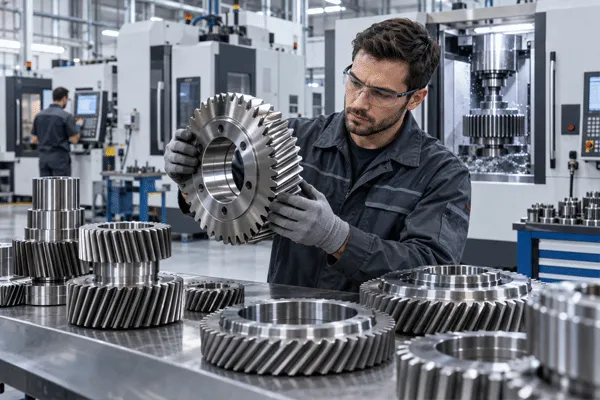
Bevel helical gearboxes combine two different gear types into one transmission system: bevel gears and helical gears.
The bevel section changes the direction of power transmission, while the helical gear section provides smooth and efficient speed reduction.
This combination creates a gearbox designed for demanding industrial applications where high torque, durability, and compact installation are required.
Common advantages of bevel helical gearboxes include:
- High transmission efficiency
- Strong torque output
- Compact right-angle design
- Long operating life
- Suitable for continuous industrial operation
A skew bevel helical gearbox is an advanced design that provides reliable power transmission while handling high loads. These gearboxes are often selected for machines that require strong mechanical performance under difficult working conditions.
Typical industrial applications include:
- Heavy conveyor systems
- Mining equipment
- Cement production machinery
- Steel processing equipment
- Material handling systems
Compared with standard gear drives, helical bevel gearboxes provide a better balance between efficiency and load capability. They are often considered when standard gearboxes cannot meet torque or installation requirements.
How Many Types of Industrial Gearboxes Are There? 6 Types of Industrial Gearboxes and Their Typical Uses
What Are the Typical Uses of Different Industrial Gearboxes?
Different types of industrial gearboxes are designed for different operating environments. Selecting the correct gearbox depends on machine structure, required torque, speed control, and working conditions.
The table below shows common applications:
| Industrial Application |
Recommended Gearbox Type |
Reason |
| Conveyor systems |
Helical gearbox / bevel helical gearbox |
Continuous operation and high efficiency |
| Robotics |
Planetary gearbox |
Precision and compact design |
| Mining equipment |
Bevel helical gearbox |
High torque and heavy-duty performance |
| Packaging machinery |
Worm gearbox / planetary gearbox |
Compact size and accurate control |
| Industrial mixers |
Helical gearbox |
Smooth operation and durability |
| Lifting equipment |
Worm gearbox / bevel gearbox |
High reduction and load control |
| Automation systems |
Planetary gearbox |
Accurate positioning |
In modern factories, gearboxes are often customized according to the machine rather than selected only from standard catalogs.
For example, a conveyor manufacturer may need a gearbox that can operate continuously for thousands of hours. A mining company may require a heavy-duty gearbox capable of handling shock loads and harsh environments.
This is why working with an experienced gearbox manufacturer is important. A professional supplier can evaluate load conditions, operating speed, installation space, and environmental factors before recommending the right industrial gearbox.
How Do Gearboxes and Their Most Typical Applications Affect Machine Performance?
The relationship between gearboxes and their most typical applications is directly connected to productivity, reliability, and maintenance costs.
A correctly selected gearbox helps machines:
- Operate at the required speed
- Deliver stable torque
- Reduce motor stress
- Improve energy efficiency
- Minimize unexpected downtime
For example, in a conveyor application, the gearbox must provide enough torque to move materials while maintaining smooth movement. If the gearbox is too small, overheating and premature failure may occur.
In contrast, selecting an oversized gearbox may increase equipment cost and reduce system efficiency.
The key is matching gearbox performance with actual operating requirements.
Important factors include:
Load Requirement
The required torque determines the gearbox size. Heavy-duty applications usually require stronger gear systems with higher load capacity.
Speed Reduction Ratio
The gear ratio defines how much the gearbox reduces input speed. A higher ratio creates lower output speed with increased torque.
Operating Environment
Dust, moisture, temperature, and vibration can affect gearbox life. Industrial settings often require special sealing, lubrication, and housing protection.
Duty Cycle
Machines running continuously require gearboxes designed for long-term operation, while intermittent applications may use different solutions.
How Can You Select the Right Industrial Gearbox for Your Equipment?
Selecting the right industrial gearbox requires a complete understanding of the machine and operating conditions.
Many buyers focus only on output speed or price, but gearbox selection involves much more.
Consider the following steps:
1. Define Required Output Torque
Torque is one of the most important specifications. The gearbox must provide enough force to move the load without excessive stress.
Heavy machinery, mining equipment, and industrial conveyors usually require high torque solutions.
2. Determine the Required Gear Ratio
The gear ratio controls the relationship between input speed and output speed.
A higher gear ratio provides:
- Lower output speed
- Higher torque
- Better load handling capability
3. Check Installation Space
Different gearbox designs have different structures.
For example:
- Coaxial helical gearboxes are suitable where shafts need alignment.
- Bevel gearboxes work well where direction changes are required.
- Planetary gearboxes fit applications requiring compact dimensions.
4. Consider Maintenance Requirements
A gearbox should match the maintenance capabilities of the facility.
Some industries prefer easy-access designs with replaceable components, while others prioritize maximum service life.
5. Work With an Experienced Manufacturer
A professional gearbox manufacturer can provide engineering support, customization, and production solutions.
At KTD, industrial transmission solutions are developed around real application requirements, including precision machining, custom components, and OEM manufacturing support.
Why Choose a Professional Industrial Gearbox Manufacturer?
Choosing the right supplier is as important as choosing the right gearbox.
A reliable manufacturer should provide:
- Engineering consultation
- Custom gearbox design support
- Material selection guidance
- Precision manufacturing
- Quality inspection
- OEM and ODM services
- Stable production capacity
Industrial customers often require more than a standard gearbox. They need a partner who understands machine integration and long-term operation.
A professional manufacturer can help optimize:
- Gear arrangement
- Shaft design
- Bearing selection
- Housing structure
- Lubrication system
- Transmission efficiency
This approach reduces installation problems and improves equipment reliability.
For global industrial customers, KTD provides precision transmission solutions designed for automation, machinery manufacturing, and heavy industrial applications.
Frequently Asked Questions About Industrial Gearboxes
What are the 6 types of industrial gearboxes?
The six common types of industrial gearboxes are helical gearboxes, bevel gearboxes, worm gearboxes, planetary gearboxes, spur gearboxes, and bevel helical gearboxes. Each design has different advantages depending on torque requirements, speed control, and installation conditions.
Which type of industrial gearbox is best for heavy-duty applications?
For heavy-duty applications, bevel helical gearboxes and helical gearboxes are commonly selected because they provide high torque capacity, efficient power transmission, and reliable continuous operation.
However, the best industrial gearbox depends on the machine requirements, load conditions, and operating environment.
What are helical gearboxes used for?
Helical gearboxes are widely used for conveyors, mixers, pumps, industrial machinery, and production equipment. Their smooth tooth engagement provides efficient and quiet operation.
When should I use a planetary gearbox?
A planetary gearbox is suitable when an application requires high torque density, compact size, and precise movement control. They are commonly used in robotics, automation equipment, CNC machines, and precision machinery.
What is the difference between a worm gearbox and a helical gearbox?
A worm gearbox provides high reduction ratios in a compact design, while a helical gearbox usually offers higher efficiency and better performance for continuous operation.
The correct choice depends on whether the application prioritizes compact size, efficiency, torque, or operating hours.
How do I choose the right gearbox manufacturer?
A reliable gearbox manufacturer should provide technical support, customization capability, quality control, and experience with industrial applications.
Before purchasing, evaluate manufacturing capability, inspection methods, engineering support, and whether the supplier can provide solutions beyond standard gearboxes.
Key Takeaways: 6 Types of Industrial Gearboxes and Their Applications
- Industrial gearboxes are essential components for controlling speed, torque, and mechanical power transmission.
- The six primary gearbox types are helical, bevel, worm, planetary, spur, and bevel helical gearboxes.
- Helical gearboxes are suitable for efficient continuous operation.
- Bevel gearboxes are ideal when power direction changes are required.
- Worm gearboxes provide compact solutions with high reduction ratios.
- Planetary gearboxes deliver high torque and precision in compact designs.
- Spur gearboxes offer simple and economical transmission solutions.
- Bevel helical gearboxes are designed for demanding heavy industrial applications.
- Selecting the right industrial gearbox requires consideration of torque, speed ratio, environment, and maintenance needs.
- Working with an experienced gearbox manufacturer helps ensure reliable performance, customization flexibility, and long-term equipment operation.












 09:19
09:19