Poor roller selection can turn a reliable conveyor into a constant maintenance problem. Boxes stall, belts wander, bearings fail, and heavy loads overload the conveyor frame. The solution starts with understanding what each conveyor roller does and matching the roller type to the load, environment, speed, and drive method.
Conveyor belt rollers support, guide, or drive material through a conveyor system. Common types of conveyor rollers include gravity rollers, powered conveyor rollers, chain-driven conveyor rollers, belt-driven rollers, motorized rollers, impact rollers, and support idlers. The right conveyor roller depends on product size, load per roller, conveyor speed, environment, roller spacing, drive method, and required material.
Conveyor Belt Rollers: Types of Conveyor Rollers, Selection, and Conveyor Design Guide
What Is a Conveyor Roller and How Does It Work?
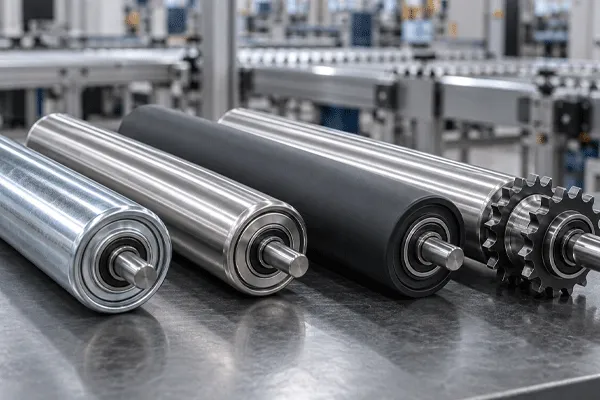
A conveyor roller is a cylindrical component that rotates around a shaft or bearing assembly to move products or support a conveyor belt. It may rotate freely under gravity, receive power from a chain or belt, contain its own motor, or simply support the belt and material passing above it.
This sounds simple, but the words can cause confusion. A roller conveyor carries cartons, totes, pallets, or components directly on the roller surface. A belt conveyor, by contrast, normally carries the product on a continuous belt while rollers or idlers support the belt underneath.
That distinction matters when you send an RFQ.
If you ask a manufacturer for “conveyor belt rollers,” you may actually need one of three things:
- rollers that directly carry products in a roller conveyor;
- idler or support rollers that support the belt;
- drive or return components used in a belt conveyor.
At KTD, we approach conveyor projects from the component level. The required roller diameter, bearing, shaft, tube material, drive interface, and length should follow the real operating conditions rather than a generic catalogue size.
KTD’s current conveyor roller range includes gravity, motorized, sprocket-driven, steel, and fully customized designs for material handling applications.
What Are the Main Types of Conveyor Rollers?
There are several types of conveyor rollers, and each solves a different material handling problem.
The most common types include gravity rollers, powered rollers, chain-driven rollers, belt-driven rollers, motorized rollers, steel rollers, stainless steel rollers, coated rollers, and specialized belt-support idlers.
| Roller Type |
How It Works |
Typical Use |
| Gravity roller |
Rotates freely without a motor |
Cartons, totes, manual lines |
| Powered conveyor roller |
Receives mechanical power |
Automated transport |
| Chain-driven conveyor roller |
Sprockets and chain transfer torque |
Pallets and heavy loads |
| Belt-driven roller |
Belt transfers power between rollers |
Cartons and light-medium loads |
| Motorized roller |
Motor is integrated into roller |
Zoned automation |
| Steel conveyor roller |
Strong metal tube construction |
General industrial handling |
| Stainless steel roller |
Corrosion-resistant construction |
Food, wet, chemical environments |
| Coated roller |
Rubber or PU surface |
Fragile or slippery products |
| Impact roller |
Absorbs loading impact |
Bulk belt conveyor loading zones |
CEMA also distinguishes several conveyor technologies in its standards, including non-powered roller conveyors, belt-driven live roller conveyors, chain-driven live roller conveyors, line-shaft driven live roller conveyors, and motor-driven roller conveyors.
There is no single best roller type. The best choice is the one that matches your load, required movement, maintenance strategy, and operating environment.
When Should You Use Gravity Conveyor Rollers?
A gravity roller rotates freely. There is no powered drive connected to the roller. Products move because of a slight slope, manual pushing, or momentum from an upstream section.
A gravity conveyor is one of the simplest and most economical forms of material handling. It works well for warehouses, packing stations, assembly areas, loading docks, and temporary transfer sections.
Typical products include:
- cardboard cartons;
- plastic totes;
- trays;
- bins;
- crates;
- flat-bottom packages.
The key is the product base. A rigid, flat carton moves well. A soft bag with an uneven bottom may not.
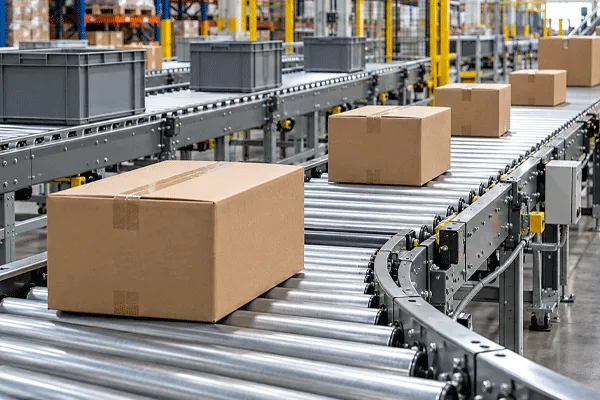
For many gravity conveyor rollers, a useful design rule is to keep at least three rollers under the product. For example, a 300 mm-long carton would normally require a roller spacing no greater than about 100 mm if you apply the three-roller rule.
Why bearing quality matters more on a gravity conveyor
On a powered conveyor, a motor can overcome some rolling resistance.
On a gravity line, it cannot.
A stiff bearing can stop a light carton entirely. This makes bearing consistency one of the most important parts of roller selection for gravity applications.
KTD offers precision ball bearings, stamped bearings, and polymer bearing housing options across its conveyor roller range.
How Do Powered Conveyor Rollers Move Products?
A powered conveyor uses mechanical or electrical power to rotate the rollers. This gives much greater control over conveyor speed, product spacing, accumulation, and transport direction.
The main powered designs include:
- chain-driven conveyor rollers;
- belt-driven conveyor rollers;
- motorized rollers;
- line shaft conveyor rollers;
- pulley-driven systems.
The drive method should follow the load.
Light cartons and totes may work well on a belt-driven roller system. Pallets, metal parts, and heavier industrial loads often require chain-driven rollers because the chain can transmit greater torque.
Powered conveyor rollers also suit horizontal conveying. Unlike gravity rollers, they do not depend on a decline to move the load.
Powered vs gravity rollers
| Requirement |
Gravity Roller |
Powered Roller |
| Motor required |
No |
Yes |
| Precise conveyor speed |
Limited |
Good |
| Heavy automatic transport |
Limited |
Good |
| Low system cost |
Excellent |
Moderate |
| Zero-pressure accumulation |
Limited |
Possible |
| Control integration |
Minimal |
Strong |
| Maintenance complexity |
Low |
Higher |
If the process requires predictable cycle time, automated sorting, merging, accumulation, or machine-to-machine transfer, powered rollers usually provide the better solution.
What Are Chain-Driven Conveyor Rollers?
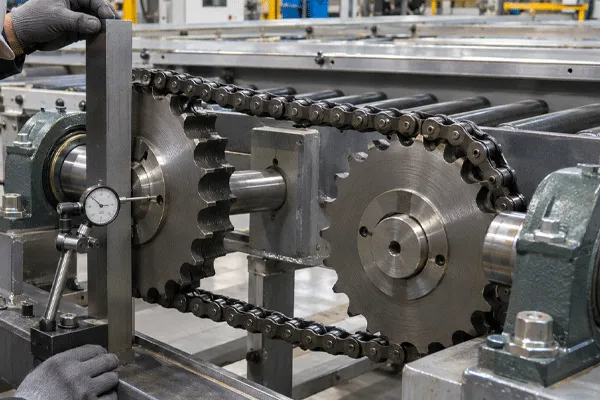
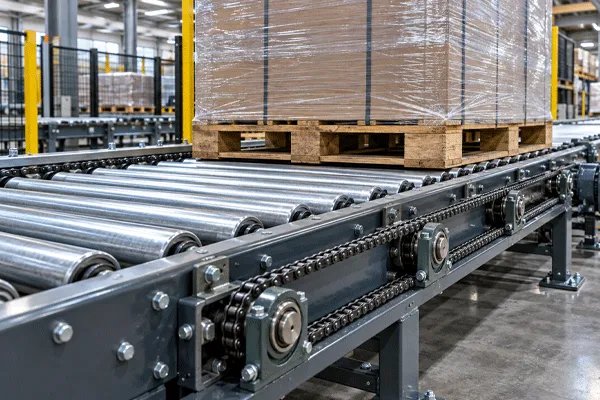
Chain-driven conveyor rollers use sprockets mounted on the roller tube or shaft. A chain transfers torque from one roller to the next.
This arrangement is strong, simple, and well suited to demanding industrial conditions.
Typical applications include:
- pallet transport;
- automotive assembly;
- steel fabrication;
- warehouses;
- heavy manufacturing;
- production transfer lines.
A chain-driven system can move heavy units more reliably than many light belt-drive arrangements.
For demanding projects, the design should consider:
- sprocket pitch;
- sprocket tooth count;
- chain size;
- shaft diameter;
- bearing load;
- roller tube wall thickness;
- frame spacing.
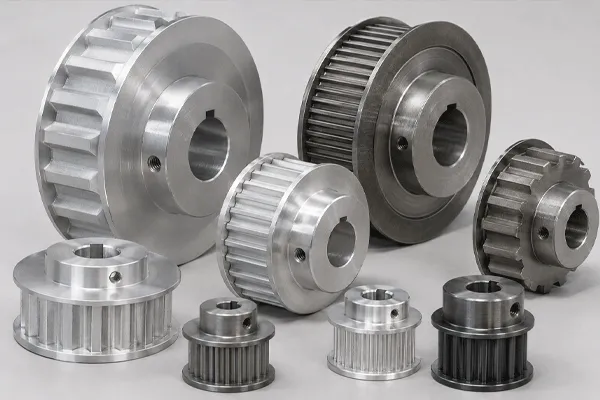
KTD manufactures sprocket-driven conveyor rollers as part of its current product range and also produces chain sprockets, which can reduce integration problems between the roller and its drive element.
What is the trade-off?
Strength comes with more maintenance.
Chain systems require attention to alignment, guarding, lubrication, tension, and wear. They can also generate more noise than many belt-drive or motorized systems.
Still, for heavy-duty conveyor rollers, durability often matters more than silence.
How Do Belt-Driven Conveyor Rollers and Motorized Rollers Differ?
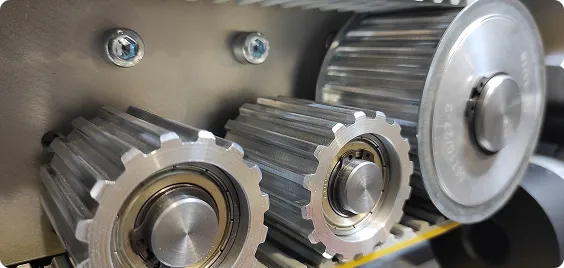
A belt-driven roller receives torque from a belt. Depending on the conveyor design, this may be a round O-belt, flat belt, timing belt, or another drive element.
A flat belt or round-belt system is often quieter than chain drive. It works well for cartons, totes, packaging lines, and lighter industrial applications.
One useful feature is controlled slip. If a carton jams, the belt may slip before the system transfers damaging force into the product.
A smooth belt may also offer a simple, economical way to power multiple rollers from a central drive.
Motorized rollers
Motorized rollers place the motor inside the roller body. This creates a compact drive unit and is widely used in automated logistics.
These systems are useful for:
- zoned transport;
- parcel sorting;
- accumulation;
- e-commerce fulfillment;
- automated distribution centers.
A motorized system may divide a long conveyor into short zones. Each zone runs only when needed, which can improve process control and reduce unnecessary movement.
However, a motorized roller is an electromechanical product. Voltage, controller compatibility, torque, speed, duty cycle, and sealing requirements all need to be confirmed.
Do not select it only by tube diameter.
Conveyor Belt Rollers: Types of Conveyor Rollers, Selection, and Conveyor Design Guide
What Is the Difference Between Roller Conveyors and Conveyor Belt Rollers?
This distinction is one of the most important parts of this guide.
A roller conveyor transports the product directly on rotating rollers.
A belt conveyor transports the product on a continuous belt.
In a belt conveyor, the rollers beneath the belt are usually called idlers, carrying rollers, return rollers, or support rollers depending on their position and function.
Common belt conveyor roller functions
Carrying idler:
Supports the loaded belt.
Return idler:
Supports the empty belt as it travels back toward the tail.
Impact rollers:
Help absorb shock where bulk material drops onto the conveyor belt.
Tracking or guide rollers:
Help control belt position.
For bulk belt systems, CEMA Standard 502 addresses troughing and return idlers and groups idlers into different classes based on load ratings and roll diameters.
This is different from a unit-handling roller conveyor carrying cartons directly on steel rollers.
The terms overlap in normal purchasing language, so always tell the supplier whether the product touches the roller or rides on a belt.
Which Roller Material Is Best: Steel, Stainless Steel, Aluminum, Plastic, or Coated Rollers?
Material should follow the environment and load rather than personal preference.
KTD currently lists carbon steel, 304/316 stainless steel, aluminum, and PVC as available tube materials for its conveyor roller range.
Steel rollers
Steel rollers are a strong general-purpose choice.
They suit:
- warehouses;
- manufacturing plants;
- pallet systems;
- automated machinery;
- dry industrial environments.
Steel conveyor rollers can carry substantial loads while providing good rigidity and cost control.
Stainless steel rollers
Stainless steel rollers fit wet, washdown, food, pharmaceutical, and corrosive environments.
304 stainless suits many general wet applications. 316 should be considered when chlorides, salt, or more aggressive cleaning chemicals are present.
Aluminum rollers
Aluminum reduces rotating mass and total system weight.
It can be useful where:
- operators reposition conveyor sections;
- acceleration matters;
- corrosion resistance is desirable;
- loads are moderate.
Plastic rollers
Plastic rollers work best in lighter applications where low noise, low mass, or chemical resistance matters more than maximum load.
Coated rollers
Coated rollers add rubber, PVC, or polyurethane to the roller surface.
This can:
- increase friction;
- protect delicate products;
- reduce noise;
- reduce marking;
- improve product control.
KTD also lists custom PU, rubber, and PVC lagging options for special conveyor requirements.
How Do You Select the Right Conveyor Roller Diameter and Spacing?
Selecting the right roller requires more than choosing the nearest catalogue diameter.
Important inputs include:
- product size;
- product weight;
- load per roller;
- conveyor width;
- roller spacing;
- roller material;
- shaft configuration;
- bearing type;
- conveyor speed;
- drive method;
- operating environment.
KTD currently lists standard tube diameters such as 38 mm, 50 mm, 60 mm, and 89 mm, with custom lengths to fit the conveyor frame.
Roller diameter is not the same as load capacity
A larger roller can support demanding loads, but roller diameter alone does not tell you the real capacity.
Two 50 mm rollers can behave very differently if they have:
- different tube wall thickness;
- different shaft diameter;
- different bearing type;
- different face length.
A longer roller also deflects more under the same central load.
This is why good conveyor design evaluates tube diameter, wall thickness, span, shaft, and bearing together.
Roller spacing
For carton handling, start with the shortest product size.
If at least three rollers should support the product, then:
Maximum roller spacing ≈ shortest product length ÷ 3
Example:
- shortest carton = 450 mm;
- 450 ÷ 3 = 150 mm;
- target spacing should be approximately 150 mm or less.
Soft bags, irregular packages, and products with recessed bottoms may require closer spacing.
How Do Bearings, Shafts, and the Conveyor Frame Affect Roller Life?
A conveyor roller is not just a tube.
The complete assembly includes the tube, bearing, shaft, bearing housing, surface, and connection to the conveyor frame.
Bearings
Precision bearings reduce rolling resistance and noise. Poor bearings increase drag, heat, vibration, and energy consumption.
KTD emphasizes precision bearing integration and concentricity control because bearing quality and tube runout directly influence smooth rotation.
Shafts
Common configurations include:
- spring-loaded shafts;
- female-threaded ends;
- milled-flat shafts.
Spring-loaded designs are convenient for fast removal.
Female-threaded shafts provide a more rigid mounting.
Milled flats help prevent shaft rotation where torque transfer or secure positioning matters.
Conveyor frame
Even the best roller cannot correct a badly aligned frame.
Poor frame alignment can cause:
- uneven bearing loads;
- product drift;
- vibration;
- premature roller wear.
Always confirm the between-frame dimension before ordering custom rollers.
What Causes Belt Slippage, Roller Failure, and Conveyor Downtime?
Roller failures often start with small design or maintenance issues.
1. Bearing contamination
Dust, water, abrasive particles, or chemicals can enter the bearing area and increase resistance.
Eventually the roller may seize.
2. Incorrect load distribution
If too few rollers support a heavy load, each roller carries more force than expected.
This can bend the shaft or tube.
3. Poor concentricity
An eccentric roller creates vibration on every rotation.
At high speed, this increases noise and bearing stress.
4. Belt slippage
Belt slippage may occur because of:
- insufficient tension;
- contamination;
- insufficient friction;
- overloaded drive;
- incorrect pulley or roller surface.
A suitable roller coating can improve traction when needed.
5. Wrong roller surface
A smooth roller surface may allow certain products to slide.
On the other hand, too much friction can prevent accumulation.
There is no universally correct surface.
6. Poor spacing
If roller spacing is too large, short products can tip into the gaps or stall.
7. Incorrect diameter
Using undersized rollers on wide spans can increase deflection and shorten the life of conveyor components.
The solution is not simply “use larger rollers.” Review the full system.
How Do You Choose the Right Conveyor for Common Applications?
Different conveyor applications require different roller configurations.
Logistics and parcel sorting
Typical requirements:
- low rolling resistance;
- low noise;
- controlled speed;
- high cycle rate.
Suitable solutions may include gravity rollers, powered rollers, or motorized roller zones.
Pallet handling
Pallets require high structural strength.
Common choices include:
- larger rollers;
- heavy tube walls;
- strong bearings;
- chain-driven rollers.
Food and washdown processing
The focus shifts toward corrosion resistance and hygiene.
Typical choices include:
- 304 or 316 stainless steel;
- sealed bearings;
- corrosion-resistant housings;
- washable roller surfaces.
Manufacturing and assembly
A plant may combine several different conveyor types on one line.
Gravity sections may sit beside powered transfer sections. Chain-driven beds may feed robotic cells. Coated rollers may protect finished components.
Curved conveyors
Curves often require tapered rollers so that the outer edge travels farther than the inner edge without forcing the product to skid.
Some systems also use flanged rollers where lateral guidance is required.
The right conveyor is usually a system of different components rather than one roller repeated everywhere.
Conveyor Belt Rollers: Types of Conveyor Rollers, Selection, and Conveyor Design Guide
How Should Buyers Evaluate Conveyor Roller Manufacturers?
Price per roller matters, but it should not be the only comparison.
Professional conveyor roller manufacturers should be able to discuss:
- tube material;
- wall thickness;
- roller diameter;
- bearing type;
- shaft design;
- drive interface;
- runout;
- coating;
- load;
- environment;
- quantity.
The strongest suppliers ask questions before quoting.
A buyer requesting 500 rollers should expect engineering questions such as:
- What is the heaviest product?
- What is the shortest product?
- What is the between-frame dimension?
- Is the roller gravity or powered?
- What drive method is used?
- What is the required speed?
- Is washdown involved?
- What shaft end does the frame require?
KTD manufactures standard and custom conveyor rollers for OEM and material handling projects, and its published product range covers gravity, powered, motorized, sprocket-driven, steel, and custom configurations. The company’s broader site positions conveyor rollers as part of its logistics and sorting transmission solutions.
For OEM projects, custom manufacturing becomes especially valuable when standard rollers do not match an existing machine.
You may need:
- non-standard length;
- custom tube wall;
- special shaft machining;
- sprocket integration;
- grooves;
- guide flanges;
- PU or rubber coating.
That is where a component manufacturer adds more value than a simple catalogue distributor.
Quick Conveyor Roller Selection Chart
Use this table as a starting point—not a final engineering specification.
| Application |
Suggested Roller Type |
Main Selection Priority |
| Light cartons |
Gravity roller |
Low rolling resistance |
| Parcel sorting |
Motorized / powered conveyor roller |
Speed and zone control |
| Medium cartons |
Belt-driven conveyor rollers |
Quiet operation |
| Heavy pallets |
Chain-driven conveyor rollers |
Torque and load capacity |
| Food washdown |
Stainless steel rollers |
Corrosion resistance |
| Fragile goods |
Coated rollers |
Surface protection |
| Bulk belt loading |
Impact rollers |
Shock absorption |
| Curved conveyor |
Tapered rollers |
Product tracking |
| OEM machinery |
Custom conveyor roller |
Exact dimensional fit |
Frequently Asked Questions About Conveyor Belt Rollers
What are the most common types of conveyor rollers?
The common types include gravity conveyor rollers, powered conveyor rollers, chain-driven rollers, belt-driven rollers, motorized rollers, steel rollers, stainless steel rollers, coated rollers, tapered rollers, and belt conveyor idlers. The correct roller type depends on whether the product rides directly on the rollers or on a conveyor belt.
What is the difference between a roller conveyor and a belt conveyor?
A roller conveyor carries products directly on rotating rollers. A belt conveyor carries products or bulk material on a continuous belt, while idler or support rollers sit below the belt. They serve different conveying needs and use different component designs.
How do I choose the right conveyor roller?
Start with the product weight, shortest product size, conveyor width, roller spacing, drive method, operating environment, and desired conveyor speed. Then select the tube diameter, wall thickness, bearing, shaft, and material. For custom equipment, send the supplier a drawing and actual working conditions.
Are steel rollers suitable for heavy loads?
Yes. Steel rollers are widely used for industrial and pallet handling applications because steel offers good rigidity and load capacity. However, wall thickness, shaft size, bearing rating, and conveyor span must also match the load.
When should I use stainless steel rollers?
Use stainless steel rollers when moisture, regular washdown, salt, chemicals, or corrosion are significant concerns. 304 works in many general environments, while 316 is more appropriate for stronger chloride exposure.
What causes conveyor rollers to fail early?
Common causes include overloaded bearings, contamination, poor alignment, excessive tube deflection, incorrect shaft selection, inadequate sealing, poor concentricity, and incorrect roller spacing. Matching the roller to the actual conveyor system usually prevents more problems than simply choosing a more expensive component.
Final Takeaways: Selecting the Right Conveyor Belt Rollers
- Conveyor roller is a broad term covering gravity, powered, motorized, chain-driven, belt-driven, and custom designs.
- A roller conveyor and a conveyor belt system are not the same thing.
- Gravity rollers are simple and economical but depend heavily on low bearing resistance.
- Powered conveyor rollers provide better control over conveyor speed and automated movement.
- Chain-driven conveyor rollers are strong choices for pallets and heavy loads.
- Belt-driven roller systems suit quieter light- and medium-duty material handling.
- Motorized rollers work well in automated zones and sorting systems.
- Steel, stainless steel, aluminum, PVC, and coated rollers each suit different environments.
- Roller diameter alone does not determine load capacity; wall thickness, shaft, bearing, and span also matter.
- Roller spacing should be based on the shortest product that must travel reliably.
- Impact rollers and support rollers serve different roles in belt conveyor systems.
- Bearing quality, shaft configuration, and conveyor frame alignment directly affect roller life.
- The right conveyor roller should be selected from real load, speed, environment, and installation data—not only from a catalogue.
- For OEM or non-standard systems, working with an experienced custom conveyor roller manufacturer can reduce integration risk and simplify long-term maintenance.
When standard components cannot match your frame, product load, drive method, or operating environment, KTD can develop a custom roller configuration around your drawings and application requirements. A clear RFQ with product weight, between-frame dimension, drive method, quantity, material, and environment gives the engineering team the best starting point for a practical quotation.












 14:50