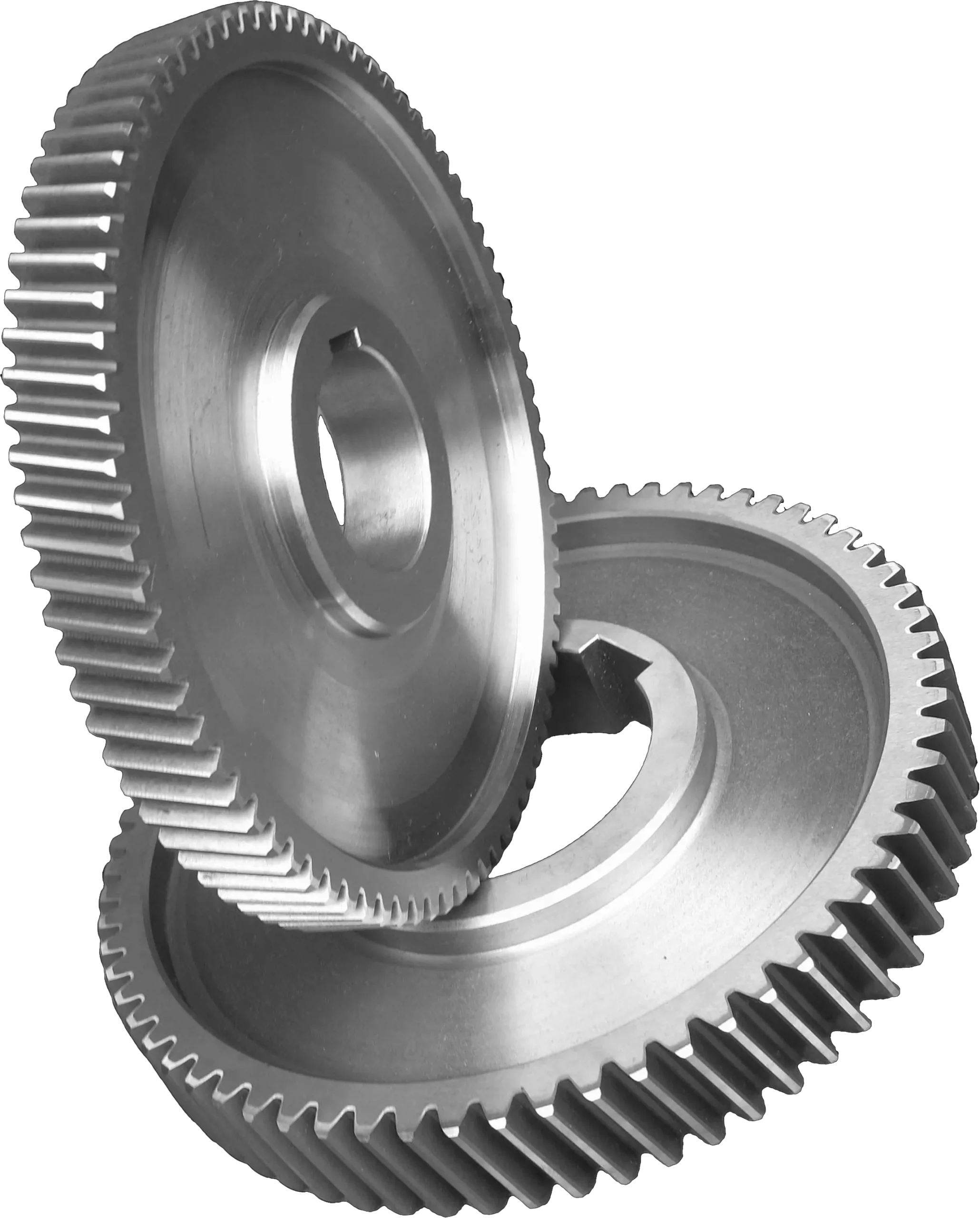
A weak gear can stop a whole machine. When gears fail, fleets lose time, projects slow down, and repair costs rise fast. The best answer is not always the hardest material. It is the right gear material for load, speed, corrosion, and heat treatment.
The strongest material for gears is usually heat-treated alloy steel, especially carburized or hardened steel used for heavy loads, torque, wear resistance, and power transmission. However, the best material depends on the specific application, gear size, corrosion risk, operating conditions, material cost, and manufacturing process.
Article Outline
- What Is the Strongest Gear Material?
- Why Is Gear Material Selection So Important?
- Why Is Alloy Steel Often the Best Material for Heavy-Duty Gears?
- When Should You Use Carbon Steel for Gear Manufacturing?
- How Does Heat Treatment Improve Gear Performance?
- Are Stainless Steel Gears Better for Corrosion Resistance?
- Can Plastic Gears Be Strong Enough for Some Machines?
- What Gear Material Works Best for Small Gear and Precision Gear Parts?
- What Should a Machinist Check Before Gear Processing?
- How Does Gear Material Selection Apply to Trailer and Heavy-Duty Equipment?
- FAQs About Gear Material Selection
- Key Takeaways
What Is the Strongest Gear Material?
For most heavy-duty gear applications, heat-treated alloy steel is the strongest and most reliable choice. It offers high strength, good toughness, strong wear resistance, and excellent durability under heavy loads. Common grades include carburizing steels, chromium-molybdenum steels, nickel-chromium-molybdenum steels, and medium-carbon alloy steels.
KHK Gear notes that carbon steel S45C and case-hardening alloy steel SCM415 are commonly used gear materials, and that heat treatment makes steel harder and stronger. KHK also lists SCM415 carburized gears as products with excellent strength and abrasion resistance, while SCM440 is used for stronger hardened gear options.
So, if the question is “what is the strongest material for gears?” the short answer is: alloy steel with proper heat treatment. But if the question is “what is the best material for my gear?” the answer needs more detail. A gear in a small instrument, a food machine, a truck part, and a mining trailer support system may all need different material selection.
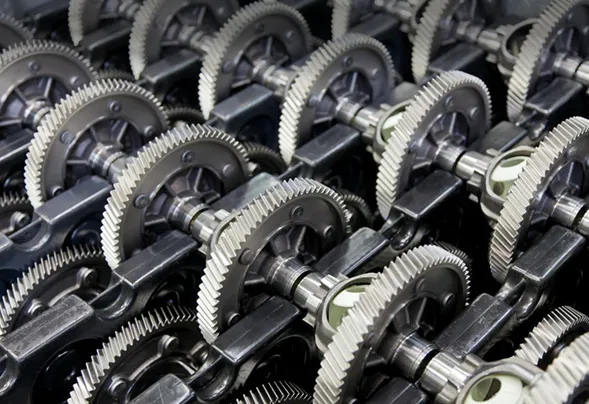
What Is the Strongest Gear Material? A Practical Gear Material Selection Guide for Heavy-Duty Machinery
Why Is Gear Material Selection So Important?
Gear material selection affects strength, noise, wear, cost, corrosion, machining, and service life. A gear transfers torque between moving parts. If the material is too soft, the gear teeth wear. If it is too brittle, the teeth may crack under shock loading. If the material has poor corrosion resistance, rust can damage the tooth surface.
A good gear material selection guide should consider:
- Load and torque
- Speed and noise
- Gear type, such as spur gear or helical gear
- Operating conditions
- Lubrication
- Temperature
- Corrosion or outdoor exposure
- Material cost
- Machining difficulty
- Heat treatment requirements
- Gear geometry and gear design
- Expected service life
For heavy-duty equipment, the gear is often a small part with a large job. In trailer manufacturing, truck equipment, landing gear mechanisms, hydraulic equipment, winches, ramps, and transport machinery, gear components must work under stress. We do not treat material quality as a small detail. It is part of total equipment reliability.
Why Is Alloy Steel Often the Best Material for Heavy-Duty Gears?
Alloy steel is often the best material for strong gears because alloy elements can improve strength, hardness, toughness, and wear resistance. Chromium, nickel, and molybdenum help steel perform better under load. Molybdenum can improve hardenability and strength in many steel alloys.
AISI 4140 is a well-known chromium-molybdenum alloy steel. MatWeb lists 4140 steel in one quenched and tempered condition with Rockwell C hardness around 48 and ultimate tensile strength around 1585 MPa. This shows why properly heat-treated alloy steel is widely used when high strength and wear resistance matter.
Alloy steel is a strong choice for:
| Application Need |
Why Alloy Steel Helps |
| Heavy loads |
High strength and toughness |
| Shock loading |
Better resistance to sudden force |
| Long service life |
Good wear resistance after heat treatment |
| Power transmission |
Strong tooth surface and core support |
| Compact gear design |
Higher strength allows smaller gear size |
| Harsh machinery |
Better durability and performance |
For heavy-duty fleets and industrial projects, alloy steel gears are often the safest technical choice when the gear set must carry large torque.
When Should You Use Carbon Steel for Gear Manufacturing?
Carbon steel is common in general gear manufacturing because it offers good strength, good machinability, and lower material cost than many alloy steels. Plain carbon steel and medium-carbon steel can be a practical choice for moderate loads, simple machinery, and cost-sensitive production.
KHK lists S45C, a carbon steel for machine structural use, as one of the common gear materials. It also shows many spur gear products made from S45C, including induction-hardened options for improved wear resistance.
Carbon steel is useful when:
- The gear does not face extreme shock loading.
- The gear operates at moderate speed.
- The machine has good lubrication.
- The customer needs good value.
- The gear can be induction hardened or heat treated if needed.
- The design does not require the highest material strength.
Low-carbon steel is often used when carburizing is planned. Medium-carbon steel can be hardened more directly. The best choice depends on the gear design and production process.
How Does Heat Treatment Improve Gear Performance?
Heat treatment can make steel gears stronger, harder, and more wear-resistant. Common gear heat treatment methods include carburizing, induction hardening, quenching and tempering, nitriding, and through hardening. Each method changes the steel surface, core, or both.
KHK explains that steels become harder and stronger after heat treatment, and its gear catalog shows carburized SCM415 gears and induction-hardened S45C gears used for strength and abrasion resistance.
Common heat treatment options include:
| Heat Treatment |
Main Purpose |
Typical Use |
| Carburizing |
Hard surface, tough core |
High-load transmission gears |
| Induction hardening |
Hard tooth surface |
Spur gear, shaft gear, medium-load parts |
| Quench and temper |
Higher core strength |
Alloy steel gear and shaft parts |
| Nitriding |
Hard wear-resistant surface |
Precision gear and low-distortion parts |
| Through hardening |
Full-section hardness |
Smaller or simpler steel gears |
Carburized gears are often preferred for high-performance power transmission because the surface can resist wear while the core remains tougher. This balance is important. A gear tooth needs a hard surface, but it also needs a strong core to resist bending.
Are Stainless Steel Gears Better for Corrosion Resistance?
Stainless steel gears are not always the strongest, but they can be better when corrosion resistance matters. If a gear works in a wet, humid, chemical, food, marine, or outdoor environment, stainless steel may be the right choice.
KHK material comparison tables include stainless steels such as SUS303, SUS304, SUS316, SUS420J2, SUS440C, and SUS630, showing that different stainless grades serve different needs. Austenitic stainless steel, such as 304 or 316, can offer good corrosion resistance, but it may not provide the same hardenability as some alloy steel grades.
Use stainless steel when the gear faces:
- Moisture
- Washdown
- Salt air
- Mild chemicals
- Food processing areas
- Outdoor machine exposure
- Corrosive work sites
The trade-off is cost and material performance. Some stainless steel grades are easy to machine but not very hard. Others can harden more but may cost more. If corrosion is the biggest risk, stainless may win. If torque and heavy loads are the biggest risk, alloy steel may still be better.
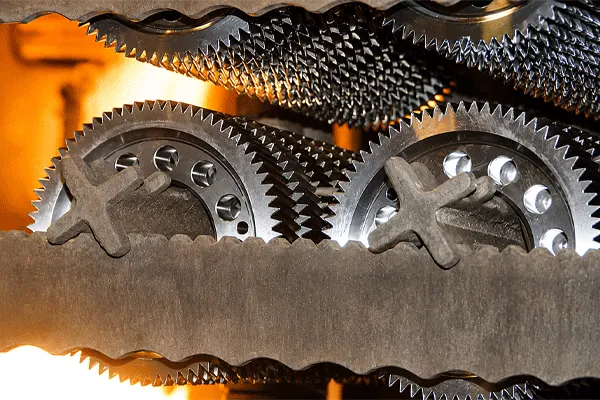
What Is the Strongest Gear Material? A Practical Gear Material Selection Guide for Heavy-Duty Machinery
Can Plastic Gears Be Strong Enough for Some Machines?
Yes, plastic gears can be strong enough for light-duty and special applications. They are quiet, lightweight, corrosion-resistant, and sometimes self-lubricating. Plastic gears are often used in small machines, office equipment, consumer products, instruments, and low-load automation.
KHK lists engineering plastic materials such as MC nylon and polyacetal for some gear products, including plastic gears that can be used without lubrication in suitable applications. Plastic gear production may use injection molding for high-volume parts or machining for low-volume precision parts.
Plastic is not the best choice for heavy loads, high heat, or extreme torque. But it can be the best choice when the machine needs:
- Low noise
- Low weight
- Corrosion resistance
- Lower cost in large quantity
- Self-lubricating behavior
- Safe use with softer mating gears
- Electrical insulation
Modern thermoplastic gear materials are useful, but they need careful design. A plastic gear cannot simply replace a steel gear in a heavy-duty transmission without checking load, heat, and wear.
What Gear Material Works Best for Small Gear and Precision Gear Parts?
A small gear or precision gear may need a different material than a large heavy-duty gear. Small gears often need tight tolerance, smooth tooth finish, stable dimensions, and low noise. Material selection must support both machining and final performance.
For small gears, machinists may use carbon steel, stainless steel, brass, bronze, aluminum alloys, tool steel, or plastic, depending on the application. Tool steel may be used where wear resistance and hardness are critical. Stainless steel may be selected when rust prevention matters. Plastic may be used when quiet operation matters.
Precision gear material selection should consider:
| Gear Need |
Possible Material |
| High wear resistance |
Tool steel or hardened alloy steel |
| Corrosion resistance |
Stainless steel |
| Low noise |
Plastic or paired metal/plastic design |
| Light weight |
Aluminum alloys or plastic |
| Low cost |
Carbon steel or injection-molded plastic |
| High strength |
Heat-treated alloy steel |
A precision gear also depends on gear processing. Even a strong raw material will not perform well if the teeth are cut poorly, heat treatment causes distortion, or grinding is not controlled.
What Should a Machinist Check Before Gear Processing?
A machinist should check the material grade, hardness target, heat treat plan, gear geometry, tolerance, lubrication, and final operating conditions before machining. Gear processing is not only cutting teeth. It is a full manufacturing process.
Before gear processing, check:
- Raw material certificate
- Material strength and mechanical properties
- Gear drawing and tolerance
- Tooth profile and module or DP
- Bore, keyway, spline, and shaft fit
- Surface hardness target
- Case depth if carburizing is used
- Distortion allowance after heat treatment
- Grinding or finishing requirements
- Inspection method
This is especially important for OEM and ODM parts. If the gear is part of a trailer support mechanism, hydraulic pump, ramp drive, winch, or industrial machine, the final operating conditions must be known before the material is chosen.
How Does Gear Material Selection Apply to Trailer and Heavy-Duty Equipment?
As a professional semi trailer manufacturer in China, we work with heavy-duty transportation products that must perform under real road, load, and project conditions. Our main products include flatbed semi trailers, skeleton container trailers, side curtain trailers, sidewall and fence trailers, lowbed trailers, lowboy trailers, removable gooseneck trailers, fuel tanker trailers, aluminum tanker trailers, bulk cement tanker trailers, dump semi trailers, car carrier trailers, trucks, and trailer parts.
In this field, gear material selection can affect parts such as landing gear systems, winch mechanisms, hydraulic drive components, ramp systems, support devices, truck equipment, and other mechanical transmission parts. These parts may face heavy loads, dust, water, impact, vibration, and corrosion.
For fleet owners, logistics companies, construction contractors, mining companies, fuel transport operators, port companies, trailer distributors, and international project buyers, the focus is simple: durability and performance. Strong gear materials help support long service life, stable operation, and lower maintenance risk.
Which Gear Material Is Best for Different Applications?
There is no single best choice for every gear. The best choice for gears depends on whether the application needs strength, corrosion resistance, low noise, low weight, or low material cost.
| Gear Application |
Recommended Material Direction |
Reason |
| Heavy-duty transmission gears |
Carburized alloy steel |
High strength and wear resistance |
| General machinery gears |
Carbon steel or alloy steel |
Good strength and value |
| Outdoor or wet equipment |
Stainless steel or coated steel |
Better corrosion resistance |
| Small gear systems |
Stainless, brass, plastic, or tool steel |
Depends on load and precision |
| Low-noise equipment |
Plastic or metal/plastic pair |
Quieter operation |
| High-wear precision gears |
Tool steel or nitrided alloy steel |
Strong wear surface |
| Cost-sensitive simple gears |
Plain carbon steel |
Lower material cost |
| Shock-loaded machinery |
Tough alloy steel |
Better impact resistance |
This table is a guide, not a final engineering decision. For safety-critical parts, use engineering calculation, material testing, and qualified manufacturing control.
What Are Common Reasons Gears Fail?
Gears fail for many reasons. Sometimes the material is wrong. Sometimes the heat treatment is poor. Sometimes the gear is overloaded, badly aligned, poorly lubricated, or exposed to corrosion. A strong gear can still fail if the system design is weak.
Common failure causes include:
- Tooth wear
- Pitting
- Tooth bending fatigue
- Cracking
- Scuffing
- Poor lubrication
- Misalignment
- Overload
- Corrosion
- Wrong hardness
- Poor heat treatment
- Bad material quality
Strong material helps, but it does not replace good gear design. A gear must match the whole machine. Material science, gear geometry, machining, heat treatment, and inspection must work together.
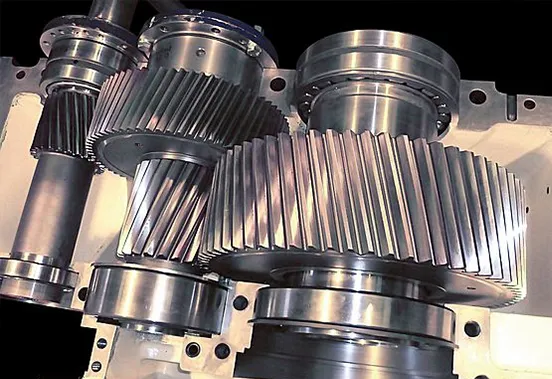
What Is the Strongest Gear Material? A Practical Gear Material Selection Guide for Heavy-Duty Machinery
Case Study: Choosing Gear Material for a Heavy-Duty Trailer Support System
A customer needed a mechanical support system for heavy-duty trailer use. The gear would face repeated loading, dusty road conditions, and possible outdoor corrosion. A low-cost plain carbon steel gear looked attractive at first because the material cost was low.
After reviewing the torque, working environment, and expected service life, a stronger alloy steel option with heat treatment became the better choice. The surface needed wear resistance, and the core needed toughness. We also reviewed lubrication and sealing to reduce wear and corrosion risk.
The lesson is clear. The cheapest material is not always the most economical. For heavy-duty transport equipment, choosing the right gear material can reduce repair work, protect fleet uptime, and improve long-term value.
Engineering note: A gear is small, but it carries trust. When a gear fails, the customer remembers the whole machine, not only the failed part.
How Should B2B Buyers Choose a Gear or Trailer Parts Supplier?
B2B buyers should look for engineering support, material control, welding quality, manufacturing capacity, customization ability, inspection process, and export experience. For gear-related trailer parts, the supplier should understand both material performance and equipment use.
As a China-based professional semi trailer manufacturer and exporter, we provide OEM and ODM trailer solutions for container logistics, bulk cargo transport, liquid and powder transport, construction machinery transport, mining operations, infrastructure projects, energy transport, port logistics, and global heavy-duty fleet operations.
When you source trailer parts or mechanical components, ask your supplier:
- Can you confirm the gear material and heat treatment?
- Can you provide drawings and technical review?
- Can you customize for local road conditions?
- Can you support bulk procurement and long-term supply?
- Can you control welding, assembly, and inspection quality?
- Can you export complete trailers, trucks, and parts?
- Can you support after-sales communication?
For global heavy-duty projects, the supplier should not only quote fast. It should help prevent problems before production starts.
FAQs About Gear Material Selection
What is the strongest material for gears?
The strongest common material for gears is heat-treated alloy steel. Carburized, hardened, or nitrided alloy steel can provide high strength, strong wear resistance, good toughness, and long service life.
Is carbon steel good for gears?
Yes, carbon steel is good for many general gear applications. Medium-carbon steel is often used for machine parts and can be hardened for better wear resistance. It is practical when loads are moderate and cost matters.
Is stainless steel good for gears?
Stainless steel is good when corrosion resistance is important. It is often used in wet, food, chemical, marine, or outdoor environments. However, it may not always match hardened alloy steel for heavy loads.
Are plastic gears strong?
Plastic gears can be strong enough for light-duty or low-noise applications. They are not usually the best choice for heavy loads, high heat, or high torque. They work best when the design matches their limits.
Why is heat treatment important for gears?
Heat treatment improves hardness, strength, wear resistance, and gear performance. Carburizing, induction hardening, nitriding, and quenching can make steel gears last longer under load.
What is the best choice for heavy-duty transmission gears?
For heavy-duty transmission gears, carburized alloy steel is often the best choice because it combines a hard wear-resistant surface with a tough core that supports bending strength.
Key Takeaways
- The strongest common gear material is usually heat-treated alloy steel.
- The best material depends on load, torque, speed, corrosion, lubrication, and cost.
- Carbon steel is practical for general machinery and moderate loads.
- Stainless steel is useful when corrosion resistance matters.
- Plastic gears are suitable for light-duty, low-noise, and self-lubricating applications.
- Heat treatment can greatly improve gear hardness, wear resistance, and durability.
- Carburizing gives a hard surface and tough core, making it useful for heavy-duty gears.
- Gear material selection should match the specific application, not only the highest strength number.
- For trailer parts and heavy-duty equipment, material quality, welding, design, and inspection all affect service life.
- A professional semi trailer manufacturer can help global buyers source trailers, trucks, and trailer parts with stronger structure, OEM/ODM support, and long-term supply.












 16:58
16:58