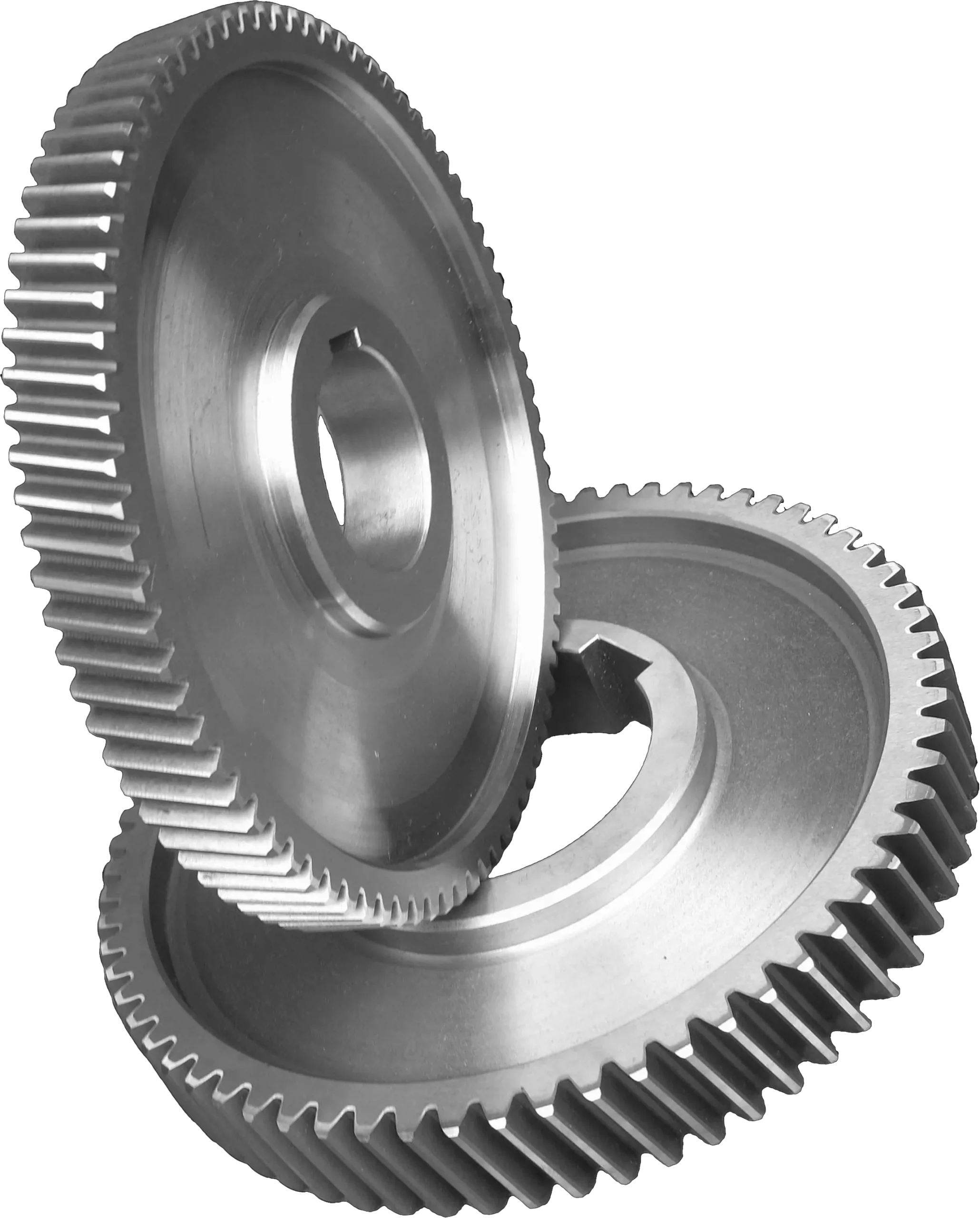
A poorly selected sprocket can reduce machine efficiency, increase maintenance costs, and cause unexpected downtime. Many manufacturers focus on motors and gearboxes but overlook the small component that transfers power — the sprocket.
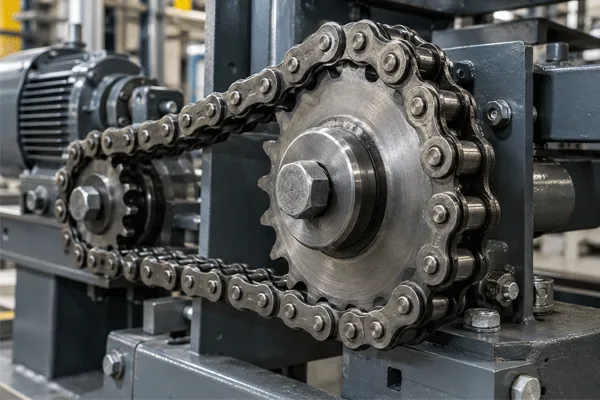
A transmission sprocket is a toothed wheel designed to work with a chain to transmit rotational motion and power between shafts. It is widely used in industrial machinery, conveyor systems, motorcycles, agricultural equipment, and mechanical transmission applications because it provides reliable power transfer without slipping.
What Is a Transmission Sprocket? Complete Guide to Sprockets and Chain Drive Systems
Makale Anahatları
- What Is a Transmission Sprocket and How Does It Work?
- Why Are Sprockets Important in Mechanical Transmission Systems?
- What Are the Different Types of Sprockets?
- How Do Sprockets and Chains Work Together?
- What Materials Are Used for Transmission Sprockets?
- How to Choose the Right Sprocket for Industrial Applications?
- What Are the Key Differences Between Sprockets vs Gears?
- How Do Transmission Sprockets Affect Speed, Torque and Efficiency?
- What Causes Sprocket Wear and How Can Service Life Be Improved?
- Frequently Asked Questions About Transmission Sprockets
What Is a Transmission Sprocket and How Does It Work?
A sprocket is a toothed wheel that works with a chain to transfer mechanical energy. Unlike a standard pulley, a sprocket uses teeth that engage with chain rollers, allowing positive power transmission without slipping.
A transmission sprocket rotates together with a shaft and transfers motion through a roller chain. When the sprocket rotates, its teeth pull the chain forward, creating movement in the connected component. This simple structure makes sprockets reliable for applications requiring stable torque transmission.
The basic working process includes:
| Bileşen |
İşlev |
| Zincir dişleri |
Engage with chain rollers |
| Roller chain |
Transfers rotational movement |
| Şaft |
Supports rotation |
| Motor or gearbox |
Provides drive power |
In a typical chain drive system, the sprocket and chain work together to transmit power from one shaft to another. The number of teeth, pitch diameter, and chain pitch determine the final transmission ratio.
For example, a small sprocket driving a larger sprocket can reduce speed while increasing torque. A larger sprocket driving a smaller sprocket can increase speed output.
This makes sprockets essential components in many mechanical systems where accurate speed and torque control are required.
Why Are Sprockets Important in Mechanical Transmission Systems?
In industrial environments, reliable power transfer directly affects machine performance. Sprockets provide a simple and efficient solution for transferring rotational energy between components.
Compared with some other transmission methods, chain drives offer several advantages:
- No belt slipping during operation.
- High torque capacity.
- Suitable for long-distance transmission.
- Easy maintenance and replacement.
- Good performance in harsh environments.
Many industrial applications depend on sprockets, including conveyor systems, packaging equipment, agricultural machines, motorcycles, and production lines.
In a mechanical transmission system, sprockets provide accurate movement because the chain teeth maintain direct engagement. This allows machines to operate consistently even under changing loads.
For example, in food processing equipment, stainless steel sprockets are often selected because they resist corrosion and meet hygiene requirements. In heavy industrial machinery, hardened steel sprockets are preferred because they handle high loads and repeated operation.
A well-designed sprocket system improves transmission efficiency and extends the overall service life of equipment.
What Are the Different Types of Sprockets?
Understanding different types of sprockets helps engineers choose suitable components for specific machines. Sprockets are commonly classified according to design, application, and chain compatibility.
Common sprocket types include:
| Zincir Dişlisi Türü |
Features |
Applications |
| A tipi dişliler |
Düz plaka tasarımı |
Genel makine |
| B tipi dişliler |
Bir tarafında göbek |
Industrial drive systems |
| C tipi dişliler |
Her iki tarafta da göbek |
Heavy-duty applications |
| Avara dişlileri |
Guide and support chains |
Konveyör sistemleri |
| Duplex sprockets |
Two chain rows |
High-load transmission |
Different types of sprockets are designed for different operating conditions. Selecting the wrong design can create alignment problems and reduce equipment performance.
For example, type B sprockets are widely used because their hub design provides better support for industrial shafts. Heavy-duty machines often require stronger designs with increased tooth strength.
The selection process should consider:
- Chain size.
- Chain pitch.
- Load requirements.
- Operating speed.
- Shaft diameter.
- Working environment.
A professional manufacturer evaluates these factors before recommending a sprocket solution.
For companies purchasing industrial components, understanding sprocket types helps reduce replacement frequency and improve machine reliability.
What Is a Transmission Sprocket? Complete Guide to Sprockets and Chain Drive Systems
How Do Sprockets and Chains Work Together?
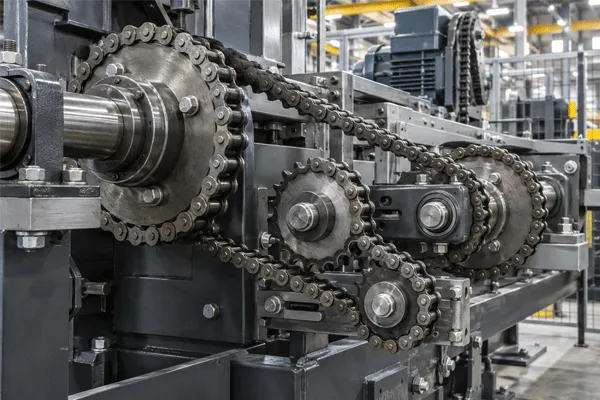
The performance of a transmission sprocket depends heavily on the relationship between the sprocket and the chain. These two components must work as a complete system because the teeth on sprockets are designed to engage precisely with chain rollers.
In a chain drive system, the sprocket rotates and pulls the roller chain forward. The chain then transfers movement to another sprocket connected to a driven shaft. This direct engagement allows the system to transmit power efficiently without the slipping problems often found in friction-based systems.
The connection between chains and sprockets depends on several important design factors:
| Parametre |
Importance |
| Zincir aralığı |
Determines sprocket compatibility |
| Diş sayısı |
Controls speed and torque ratio |
| Diş profili |
Affects smooth engagement |
| Zincir dişlisi çapı |
Influences rotational speed |
| Chain width |
Determines load capacity |
When designing a mechanical system, engineers must ensure the chain pitch and sprocket teeth that match the chain are correctly selected. Incorrect matching can cause vibration, noise, accelerated wear, and reduced transmission efficiency.
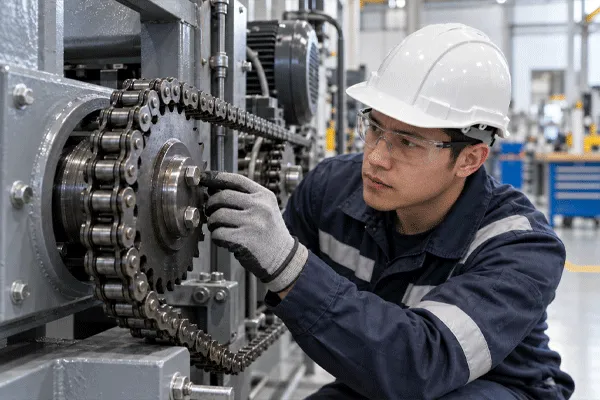
A properly designed sprocket drive provides stable movement for industrial machinery, conveyor systems, and automation equipment. Because the chain and the sprocket operate together continuously, both components require proper lubrication, alignment, and maintenance.
In many industrial applications, companies choose customized transmission sprockets because standard products may not always meet specific load, speed, or environmental requirements.
What Materials Are Used for Transmission Sprockets?
The choice of sprocket material directly affects strength, durability, and service life. Different machines require different materials depending on load conditions, operating environments, and maintenance expectations.
Common materials include:
| Malzeme |
Advantages |
Tipik Uygulamalar |
| Karbonlu çelik |
Güçlü ve uygun maliyetli |
General industrial machinery |
| Paslanmaz çelik |
Korozyon direnci |
Food processing equipment |
| Alaşımlı çelik |
Yüksek mukavemet ve aşınma direnci |
Heavy-duty machinery |
| Hardened steel |
Excellent tooth durability |
High-load transmission |
Steel sprockets are widely used because they provide excellent resistance against impact and repeated loading. For heavy industrial machinery, hardened steel improves tooth strength and extends sprocket life.
In environments exposed to moisture, chemicals, or frequent cleaning, stainless steel sprockets are often preferred. For example, equipment used in food processing requires materials that can maintain product quality and resist corrosion.
The sprocket material should match the machine operating conditions. A high-speed system may require precise machining, while a heavy-load drive system may require stronger heat-treated materials.
Professional manufacturers consider:
- Working load.
- Operating temperature.
- Corrosion exposure.
- Required service life.
- Maintenance frequency.
Choosing suitable material improves reliability and reduces the risk of premature failure.
What Is a Transmission Sprocket? Complete Guide to Sprockets and Chain Drive Systems
How to Choose the Right Sprocket for Industrial Applications?
Choosing the right sprocket requires understanding the complete transmission system instead of selecting only by size.
A suitable sprocket should match the machine requirements, chain specifications, and operating conditions. Engineers normally evaluate several factors before making a final selection.
Important selection factors include:
1. Chain Compatibility
The sprocket must match the chain pitch, roller diameter, and chain width. A mismatch between the chain and sprocket can prevent smooth engagement.
2. Number of Teeth
The number of teeth directly affects the transmission ratio. A smaller tooth count increases speed, while a larger tooth count can increase torque output.
3. Load Capacity
Heavy-duty applications require sprockets with stronger teeth and higher material strength.
4. Operating Environment
Dust, water, chemicals, and temperature changes influence material selection.
5. Shaft Connection
The sprocket bore must fit the shaft correctly to ensure stable rotation.
Before purchasing, companies should consider:
- Required torque.
- Machine speed.
- Chain size.
- Space limitations.
- Maintenance requirements.
A professional supplier can help customers choose the right sprocket based on actual operating conditions instead of simply supplying standard components.
For OEM equipment manufacturers and industrial buyers, correct sprocket selection improves machine performance and reduces long-term operating costs.
What Are the Key Differences Between Sprockets vs Gears?
Many people compare sprockets vs gears because both components use teeth to transfer motion. However, their working principles and applications are different.
The main difference is the transmission method.
| Özellik |
Zincir dişlileri |
Dişliler |
| Connection method |
Works with chains |
Mesh directly with other gears |
| Operating distance |
Suitable for longer distances |
Usually short-distance transmission |
| Kayma riski |
Very low with proper chain engagement |
Çok düşük |
| Bakım |
Requires chain maintenance |
Requires gear lubrication |
| Uygulama |
Conveyors, machines, motorcycles |
Gearboxes, precision systems |
A sprocket does not directly mesh with another toothed wheel. Instead, it works with a chain that connects multiple components.
Gears are commonly used when compact mechanical designs and precise motion control are required. Sprockets are often selected when engineers need flexible installation distance and reliable power transfer.
Örneğin:
- Motorcycle systems use sprockets and chains.
- Industrial conveyors use sprockets for chain movement.
- Gearboxes mainly use gears for speed reduction.
Both systems have advantages. The correct choice depends on machine structure, load requirements, and transmission goals.
How Do Transmission Sprockets Affect Speed, Torque and Efficiency?
A transmission sprocket plays an important role in controlling machine speed and torque output.
The relationship between sprocket sizes determines the gear ratio. When a small sprocket drives a larger sprocket, rotational speed decreases while torque increases. When a larger sprocket drives a smaller sprocket, speed increases while available torque decreases.
This principle allows engineers to adjust machine performance without changing motors.
Important factors include:
- Sprocket tooth count.
- Pitch diameter.
- Chain speed.
- Motor power.
- Required torque.
For example, a conveyor system carrying heavy materials may use a larger driven sprocket to provide higher torque. A lightweight machine requiring faster movement may use a different sprocket ratio.
Efficient power transmission depends on correct design. A well-selected sprocket system helps transmit power smoothly while reducing energy loss.
Modern industrial power transmission systems often combine sprockets, chains, motors, and gearboxes to achieve reliable operation.
A professional sprocket manufacturer evaluates the complete system to ensure proper transmission ratio, load capacity, and operational stability.
What Causes Sprocket Wear and How Can Service Life Be Improved?
Although sprockets are designed for long-term operation, improper selection, installation, or maintenance can reduce their service life. Since sprockets continuously transfer load through chain engagement, the teeth experience repeated contact forces during operation.
Common causes of sprocket wear include:
- Incorrect chain and sprocket matching.
- Insufficient lubrication.
- Misalignment between shafts.
- Excessive load.
- Incorrect chain tension.
- Operating with worn chains.
When sprocket teeth become worn, they may lose their original tooth profile. This affects how the chain rollers engage with the sprocket and can create vibration, noise, and unstable movement.
A worn sprocket can also accelerate chain wear because the chain and sprocket operate as a connected system. Replacing only one damaged component without checking the entire system may lead to repeated failures.
To improve sprocket life, companies should focus on:
| Maintenance Method |
Avantaj |
| Regular lubrication |
Reduces friction and wear |
| Correct alignment |
Improves smooth operation |
| Periodic inspection |
Detects problems early |
| Proper chain adjustment |
Reduces stress |
| Quality components |
Güvenilirliği artırır |
For industrial machinery, preventive maintenance is usually more cost-effective than emergency repairs. A small inspection can prevent production interruption and expensive downtime.
In our experience supplying mechanical transmission components, customers who pay attention to sprocket selection and maintenance usually achieve longer equipment lifespan and better operating stability.
How Are Transmission Sprockets Used in Industrial Applications?
Transmission sprockets are used across many industries because they provide reliable mechanical power transfer.
Tipik endüstriyel uygulamalar arasında şunlar yer alır:
Konveyör Sistemleri
Conveyor systems commonly use sprockets to move chains carrying products, materials, or components. They are widely used in warehouses, manufacturing plants, mining facilities, and logistics equipment.
Manufacturing Machinery
Production machines use sprockets to synchronize movement between different mechanical parts. Their stable operation supports continuous manufacturing processes.
Tarım Ekipmanları
Farm machinery uses sprockets for heavy-duty movement where high torque and durability are required.
Motorcycle and Bicycle Systems
Motorcycle and bicycle systems use chain drives because they provide efficient movement with simple maintenance.
Food Processing Equipment
Stainless steel sprockets are often used in food processing because they provide corrosion resistance and easier cleaning.
Many industrial applications depend on sprockets because they offer a balance between strength, flexibility, and installation convenience.
Compared with other transmission methods, sprocket systems are especially valuable when machines require long-distance transmission, reliable torque transfer, and easy maintenance.
Frequently Asked Questions About Transmission Sprockets
What is a transmission sprocket?
A transmission sprocket is a toothed wheel designed to work with a chain to transfer rotational movement and power. It is commonly used in mechanical transmission systems, industrial machinery, conveyor equipment, and vehicles.
How do sprockets work?
Sprockets work by using teeth that engage with chain rollers. When the sprocket rotates, the teeth pull the chain forward, transferring movement and torque to another component.
What is the difference between sprockets and gears?
The main difference is that sprockets work with chains, while gears mesh directly with other gears. Sprockets are suitable for longer-distance power transfer, while gears are often used for compact precision systems.
Doğru dişliyi nasıl seçerim?
To choose the right sprocket, consider chain size, tooth count, load capacity, speed, material, shaft size, and working environment. Correct selection ensures efficient power transmission and longer service life.
What materials are transmission sprockets made from?
Transmission sprockets are commonly manufactured from carbon steel, stainless steel, alloy steel, and hardened steel. The best material depends on load requirements and operating conditions.
Why do sprocket teeth wear out?
Sprocket teeth may wear due to poor lubrication, incorrect alignment, overload, unsuitable materials, or operation with a worn chain. Regular inspection helps prevent premature damage.
Önemli Çıkarımlar
- A transmission sprocket is a toothed component that works with a chain to transfer mechanical power.
- Sprockets are essential parts of many mechanical transmission and industrial drive systems.
- Different sprocket types are designed for different loads, speeds, and applications.
- The correct sprocket must match chain pitch, tooth count, material, and machine requirements.
- Sprockets and gears have different working principles and should not be confused.
- Proper maintenance, lubrication, and alignment improve sprocket service life.
- High-quality sprockets help machines achieve stable power transfer and efficient operation.
- Professional engineering support helps companies select the best sprocket solution for their equipment.












 10:13
10:13