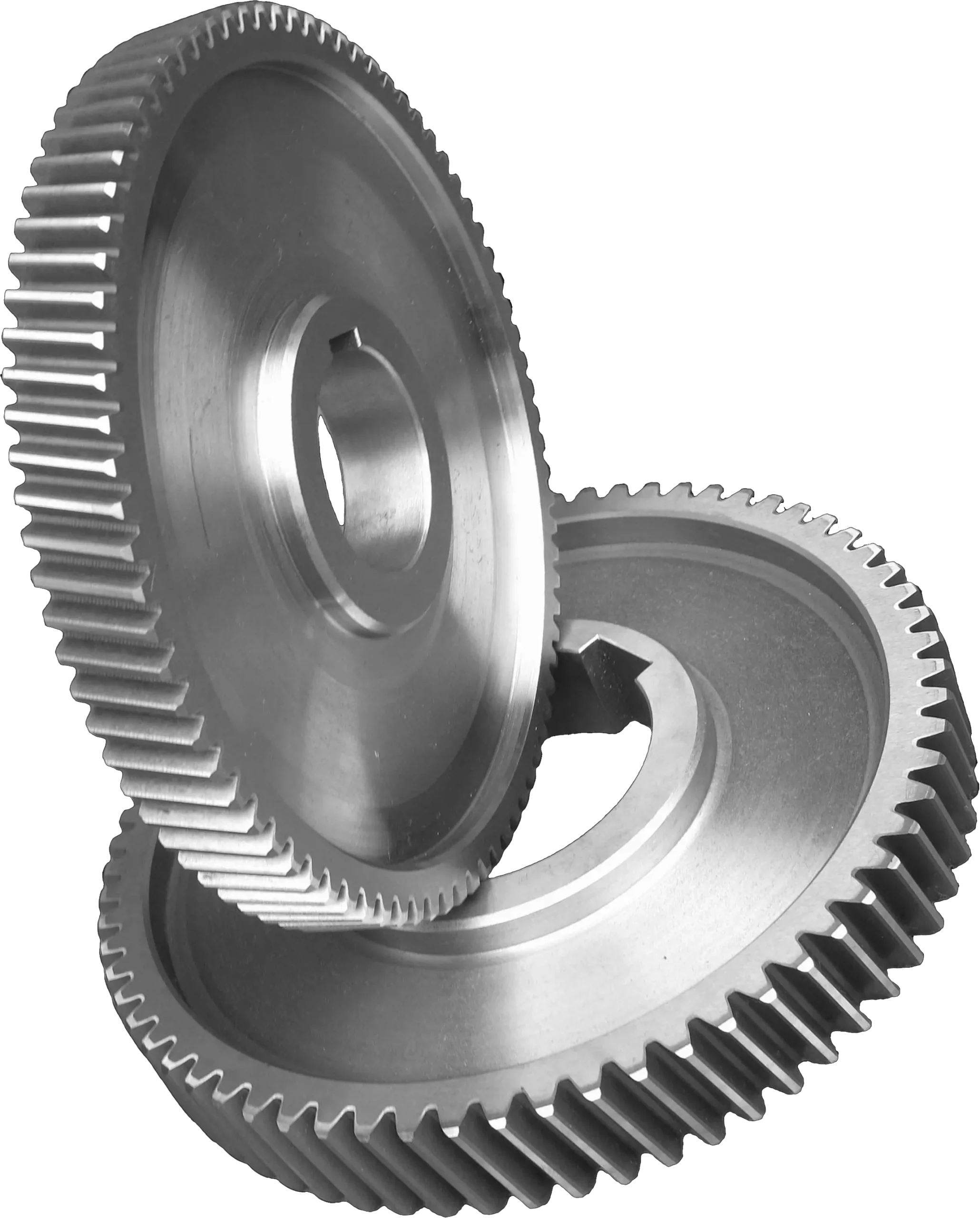
Wrong gear selection can stop machines, delay transport work, and increase repair costs. In heavy-duty industries, one small gear problem may affect the whole system. The right industrial gear, trailer solution, and engineering support help keep equipment moving safely.
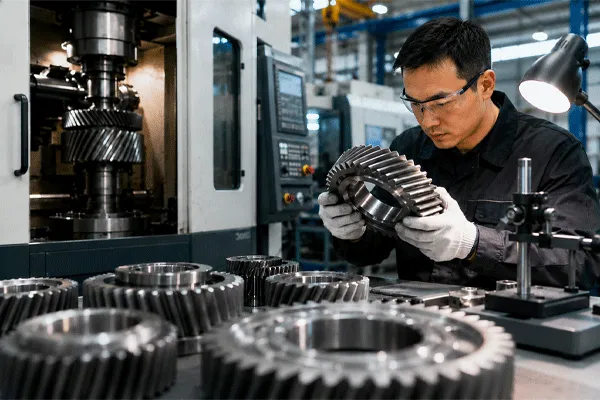
Industrial gears are mechanical parts with teeth that transfer motion and power between shafts or moving parts. Common types include spur gear, helical gear, bevel gear, worm gear, rack and pinion gear, internal gear, hypoid gear, and planetary gear systems. Each gear type fits different speed, torque, space, and direction needs.
Article Outline
1.What is an industrial gear?
2.Why are gears used in industrial applications?
3.What are the main types of industrial gears?
4.How does a spur gear work?
5.Why is a helical gear used in industrial machinery?
6.What is a bevel gear and where is it used?
7.How does a worm gear create a high gear ratio?
8.What is a rack and pinion gear?
9.What are planetary gear systems?
10.What materials are used in industrial gear manufacturing?
11.How should buyers choose gear manufacturers?
12.FAQs about industrial gears
What are industrial gears?
What Is an Industrial Gear?
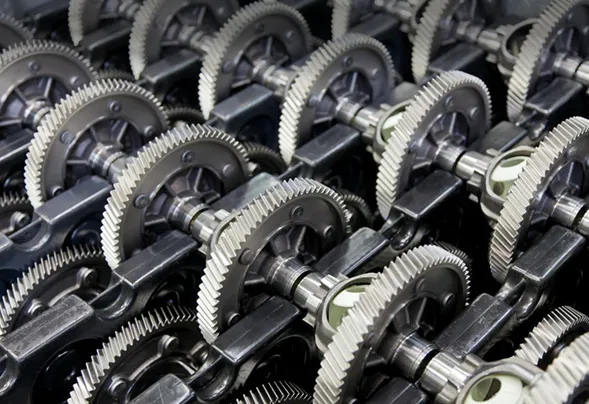
An industrial gear is a round or linear mechanical part with teeth. These gear teeth connect with a mating gear to transfer power, change speed, change torque, or change motion direction. You can find gears in a gearbox, hoist, conveyor, crane, truck transmission, mining machine, construction equipment, and many other systems.
The basic idea is simple. One gear turns. Its teeth push the teeth of another gear. The second gear turns too. By changing gear size, tooth shape, and shaft position, engineers can build many types of motion systems.
For fleet owners, logistics companies, construction contractors, and mining operators, gears may not always be visible. But they are working inside machines every day. As a professional semi trailer manufacturer in China, we understand that heavy-duty transport depends on reliable mechanical systems, strong trailer structures, durable components, and correct equipment matching.
Why Are Gears Used in Industrial Applications?
Gears are used in industrial applications because machines need controlled power. Motors often run at speeds that are too fast or with torque that is too low for the final job. A gear set helps adjust this power so the machine can lift, pull, rotate, crush, move, or transport materials.
A gearbox can reduce speed and increase torque. It can also change the direction of rotation. This is useful in industrial machinery, port logistics, construction equipment, bulk cargo handling, and heavy-duty fleet operations.
In demanding industrial applications, gears help machines do hard work in a controlled way. For example:
| Application |
Why Gears Matter |
| Mining equipment |
High torque for heavy loads |
| Construction machinery |
Controlled movement and lifting |
| Truck powertrain |
Speed and torque control |
| Conveyor systems |
Stable motion for continuous work |
| Port logistics |
Reliable movement under heavy duty |
| Trailer-related equipment |
Durable support for fleet operations |
A good gear system reduces wasted energy, improves control, and supports safer operation. A poor gear system does the opposite. It creates heat, vibration, noise, wear, and downtime.
What Are the Main Types of Industrial Gears?
There are many different gear types, but most buyers should first understand the main types: spur gear, helical gear, bevel gear, worm gear, rack and pinion gear, internal gear, hypoid gear, and planetary gear. Each type of gear has a different tooth shape and motion style.
Here is a quick table:
| Gear Type |
Shaft Position |
Main Benefit |
Common Use |
| Spur gear |
Parallel shafts |
Simple and cost-effective |
Basic machines, conveyors |
| Helical gear |
Parallel or crossed shafts |
Smooth and quiet running |
Gearbox, reducers |
| Bevel gear |
Intersecting shafts |
Changes motion direction |
Right-angle drives |
| Worm gear |
Non-parallel shafts |
High gear ratio |
Hoists, lifts, reducers |
| Rack and pinion gear |
Rotary to linear |
Converts rotation to straight motion |
Steering, machines |
| Internal gear |
Gear teeth inside ring |
Compact drive systems |
Planetary gear systems |
| Hypoid gear |
Offset shafts |
Smooth right-angle power |
Automotive and heavy drives |
| Planetary gear |
Sun, planet gears, ring gear |
Compact high torque |
Transmissions, reducers |
These types of industrial gears cover most heavy-duty needs. Still, selection should always match load, speed, duty cycle, lubrication, material, and working environment.
What are industrial gears?
How Does a Spur Gear Work?
A spur gear is one of the simplest and most common gear types. It has straight teeth cut parallel to the axis of the gear. Spur gear teeth mesh directly with the teeth of another spur gear on a parallel shaft.
Spur gears are used when a machine needs simple power transfer. They are easy to manufacture, easy to inspect, and often cost less than more complex gears. This makes them common in light and medium industrial applications.
The main advantage is simplicity. The main weakness is noise at high speed. Because the teeth engage suddenly, a spur gear can create more vibration than a helical gear. Still, spur gears are among the most useful gears in industrial machines because they are practical, strong, and easy to replace.
Common spur gear uses include:
Conveyors
Small reducers
Packing machines
Agricultural machines
Basic industrial drives
Simple gear train systems
A spur gear is a good choice when cost, simple design, and easy maintenance matter more than quiet operation.
Why Is a Helical Gear Used in Industrial Machinery?
A helical gear has angled teeth. Because of this angled shape, the gear teeth engage gradually. This makes the helical gear smoother and quieter than a spur gear. It also spreads the load across more tooth contact area.
Helical gears are commonly used in gearbox systems, speed reducers, compressors, pumps, truck transmissions, and heavy-duty machines. When a system needs high speed and stable operation, a helical gear is often a good choice.
There are several forms, including parallel helical gears, double helical gears, and herringbone gears. A herringbone gear or double helical design can help balance axial thrust, which is one disadvantage of helical gears.
Simple comparison:
| Item |
Spur Gear |
Helical Gear |
| Tooth direction |
Straight |
Angled |
| Noise |
Higher at speed |
Lower and smoother |
| Load capacity |
Good |
Often higher |
| Cost |
Lower |
Higher |
| Axial thrust |
Low |
May need thrust support |
In heavy-duty systems, a helical gear can improve smoothness and reduce shock. That matters when machines run for long hours.
What Is a Bevel Gear and Where Is It Used?
A bevel gear is used when shafts meet at an angle, often 90 degrees. The shape of the gear looks like part of a cone. The surface of the gear is designed so that tooth contact can transfer power between intersecting shafts.
There are several bevel gear forms. Straight bevel gears have straight teeth. A spiral bevel gear has curved teeth and usually runs more smoothly. A hypoid gear is similar in function but uses offset shafts, which allows special compact layouts and high load performance.
Bevel gears are used in:
- Right-angle gearboxes
- Automotive drives
- Heavy machinery
- Industrial mixers
- Printing machines
- Marine equipment
- Power transmission units
Bevel gears are used when the machine must turn power around a corner. In trailer and truck-related industries, right-angle drive knowledge helps buyers understand power systems used in trucks, workshop equipment, loading machines, and fleet maintenance tools.
A spiral bevel gear can handle higher speed and smoother engagement than straight bevel gears in many designs. But it needs more precise gear cutting and better control during gear manufacturing.
How Does a Worm Gear Create a High Gear Ratio?
A worm gear usually has a screw-like worm and a worm wheel. In simple words, worm gears consist of a threaded shaft and a mating gear. As the worm turns, it pushes the teeth of the worm wheel.
The biggest advantage is a high gear ratio in a compact space. This means the system can reduce speed a lot and increase torque. A worm gear is often used in hoists, lifts, gates, conveyors, adjustment systems, and compact reducers.
The trade-off is efficiency. Worm gears can create more sliding contact than spur or helical gears. More sliding means more heat and more need for proper lubrication. So, material choice, oil choice, and cooling are very important.
A worm gear may be useful when:
- Space is limited
- Large speed reduction is needed
- Smooth motion is important
- The machine needs compact torque output
- The design benefits from possible self-locking behavior
This gear type is powerful, but it must be designed carefully. Poor lubrication can lead to fast wear.
What are industrial gears?
What Is a Rack and Pinion Gear?
A rack and pinion gear changes rotary motion into linear motion. The pinion gear is round. The rack is straight, like a flat gear bar. When the pinion turns, it moves along the rack, or the rack moves straight.
This design is common in steering systems, CNC machines, lifting equipment, sliding gates, automation lines, and material handling systems. It is easy to understand and easy to inspect.
A rack and pinion gear is useful because it gives direct motion. There is no need for a belt or chain in many cases. The motion can be accurate if the teeth are cut well and the system is supported correctly.
For industrial buyers, important checks include:
- Tooth quality
- Straightness of rack
- Hardness
- Lubrication
- Backlash
- Load capacity
- Mounting accuracy
The center of the gear and the rack alignment must be correct. Bad alignment causes uneven wear and noise.
What Are Planetary Gear Systems?
A planetary gear system has three main parts: a sun gear, several planet gears, and a ring gear. The planet gears rotate around the sun gear inside the ring gear. This layout creates a compact and strong gear system.
Planetary gear systems are used when machines need high torque in a small space. They are common in transmissions, winches, reducers, construction equipment, electric drives, and industrial automation.
The key benefit is power density. The load is shared by several planet gears, so the system can handle more torque for its size. This is why planetary gear systems are common in demanding industrial equipment.
A basic planetary layout:
| Part |
Role |
| Sun gear |
Central driving or driven gear |
| Planet gears |
Rotate around the sun gear |
| Ring gear |
Internal gear around the outside |
| Carrier |
Holds the planet gears |
This design is more complex than a spur gear pair, but it can be very efficient and compact when made well.
What Materials Are Used in Industrial Gear Manufacturing?
The materials used in industrial gears depend on load, speed, wear, noise, cost, and environment. Common materials include carbon steel, alloy steel, stainless steel, cast iron, bronze, brass, aluminum bronze, and engineering plastics.
Steel gears are common for heavy-duty work. Plastic gears are used when low noise, light weight, or corrosion resistance matters more than extreme load. In some worm gear systems, a bronze worm wheel is paired with a hardened steel worm to reduce wear.
Common material choices:
| Material |
Typical Benefit |
Common Use |
| Carbon steel |
Strong and cost-effective |
General machinery |
| Alloy steel |
High strength and wear resistance |
Gearbox, heavy equipment |
| Stainless steel |
Corrosion resistance |
Food, chemical, marine |
| Cast iron |
Damping and cost control |
Large slow-speed gears |
| Bronze |
Good sliding wear behavior |
Worm gear systems |
| Plastic gears |
Low noise and light weight |
Small machines, devices |
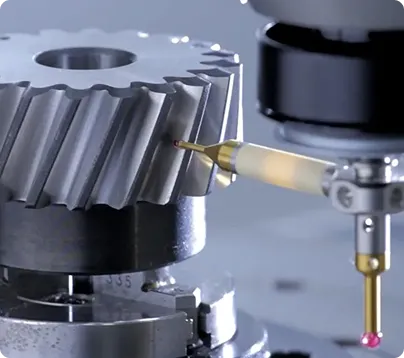
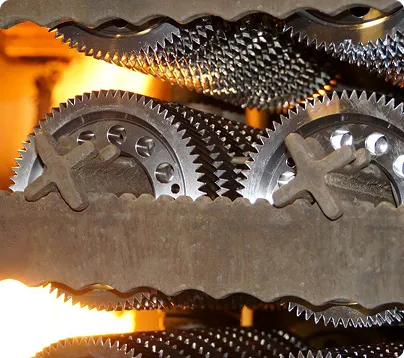
Gear manufacturing also includes heat treatment, surface hardening, grinding, finishing, and inspection. Good gear cutting improves tooth shape, reduces noise, and supports longer service life.
In heavy-duty trailer and fleet work, material quality matters everywhere. It matters in trailer beams, axles, landing gear parts, suspension parts, and truck-related mechanical systems. The lesson is the same: the material must match the job.
How Do Gear Ratio, Gear Meshing, and Gear Teeth Affect Performance?
The gear ratio compares the speed of the driving gear and the driven gear. A high gear ratio can reduce speed and increase torque. A lower ratio can support faster output speed. This is one reason gears are so useful in industrial machines.
Gear meshing means how the teeth contact each other. Good meshing is quiet, smooth, and stable. Poor meshing creates noise, heat, and wear. Tooth profile, backlash, lubrication, shaft alignment, and bearing support all affect meshing.
The shape of the gear also matters. A cylindrical gear such as a spur or helical gear works differently from a bevel gear or hypoid gear. A set of hypoid gears may support offset shafts, while spur and helical gears usually work on parallel shafts.
Simple performance checklist:
- Correct gear ratio
- Proper tooth contact
- Strong material
- Good lubrication
- Accurate shaft alignment
- Suitable load rating
- Clean installation
- Regular maintenance
Small errors can become big problems. This is why gear manufacturers and machine builders must control both design and production quality.
How Should Buyers Choose Gear Manufacturers?
Choosing gear manufacturers is not only about unit price. A cheap gear can become expensive if it fails early. Good gear manufacturers should understand design, material, gear cutting, heat treatment, inspection, packaging, and after-sales support.
When comparing gear manufacturing companies, buyers should check:
- Production equipment
- Gear manufacturing process
- Material traceability
- Heat treatment capability
- Inspection tools
- Surface hardness control
- Tooth accuracy
- Engineering support
- Delivery stability
- Export packaging
- Long-term cooperation ability
The same logic applies when choosing a semi trailer manufacturer. Heavy-duty transport buyers should not only ask, “What is the price?” They should ask, “Can the factory design for my load, road condition, cargo type, axle requirement, local regulation, and delivery schedule?”
As a professional semi trailer manufacturer in China, we provide OEM / ODM trailer solutions for container logistics, bulk cargo transport, liquid and powder transport, construction machinery transport, mining operations, infrastructure projects, energy transport, port logistics, and global fleet operations. We focus on strong load-bearing capacity, reliable welding, durable structure, quality control, factory-direct supply, and engineering support.
For clients who operate fleets and heavy machines, understanding gears helps with better equipment planning. Understanding trailers helps with safer transport. Both are part of the same goal: keep heavy work moving.
How Are Industrial Gears Connected to Heavy-Duty Transport and Trailer Projects?
Industrial gears are not only found in factory machines. They also support many systems around heavy transport. Trucks use transmissions and differentials. Loading machines use gearboxes. Port equipment uses reducers. Mining machines use gear systems. Workshop tools for trailer service may also use gears.
For a fleet owner, the trailer itself must match the transport task. A flatbed semi trailer may carry steel coils, containers, or building materials. A lowbed trailer may carry excavators or heavy equipment. A fuel tanker trailer needs safe tank structure and liquid transport design. A bulk cement tanker trailer needs reliable discharge and pressure system support.
Common trailer solutions include:
| Transport Need |
Suitable Trailer Type |
| Container logistics |
Skeleton container trailer |
| Steel and bulk cargo |
Flatbed semi trailer or sidewall trailer |
| Construction machinery |
Lowbed trailer or lowboy trailer |
| Oversized equipment |
Removable gooseneck trailer |
| Fuel transport |
Fuel tanker trailer or aluminum tanker trailer |
| Cement and powder |
Bulk cement tanker trailer |
| Mining and earthwork |
Dump semi trailer |
| Vehicle transport |
Car carrier trailer |
A buyer who understands industrial machinery, gearboxes, and equipment loads can choose trailers more wisely. The trailer is not a small purchase. It is a working tool for years.
Case Study: Choosing Transport Equipment for Heavy Machinery Logistics
A construction contractor needed to move excavators, loaders, and drilling machines between project sites. The buyer first asked only for a low-price lowbed trailer. But the real question was bigger: What machines would be moved? What road conditions? What loading angle? What axle capacity? What local rules?
We reviewed the load weight, machine height, route condition, and daily operating needs. Then we recommended a reinforced lowbed trailer with suitable axle configuration, ramp design, suspension, kingpin position, and steel structure. For the buyer, the value was not only lower purchase cost. It was safer loading, lower damage risk, and better long-term use.
This is also how engineers choose industrial gears. They do not choose a gear type by name only. They match load, speed, space, torque, material, and environment.
In heavy-duty industries, the best product is not always the strongest one. It is the one designed for the real job.
FAQs About Industrial Gears
What are industrial gears used for?
Industrial gears are used to transfer power, change speed, increase torque, and change motion direction in machines. They are common in gearboxes, conveyors, cranes, trucks, mining equipment, construction machinery, and factory production systems.
What is the most common type of gear?
The spur gear is a common type of gear because it is simple, practical, and cost-effective. However, helical gears are also very common when smooth and quiet operation is needed.
What is the difference between a spur gear and a helical gear?
A spur gear has straight teeth, while a helical gear has angled teeth. Spur gears are simpler and cheaper. Helical gears usually run smoother, quieter, and can carry higher loads, but they may create axial thrust.
What is a bevel gear used for?
A bevel gear is used to transfer power between shafts that meet at an angle, often 90 degrees. Bevel gears are commonly used in right-angle drives, industrial gearboxes, automotive systems, and heavy equipment.
Why are worm gears used?
Worm gears are used when a compact system needs a large speed reduction or high gear ratio. They are common in hoists, lifts, gates, conveyors, and adjustment mechanisms. They need good lubrication because they have sliding contact.
How do I choose reliable gear manufacturers?
Choose gear manufacturers with strong material control, accurate gear cutting, heat treatment ability, inspection tools, stable delivery, and engineering support. For heavy-duty projects, always check whether the supplier understands your load, speed, duty cycle, and operating environment.
Key Takeaways
An industrial gear transfers motion and power through meshing teeth.
Main gear types include spur gear, helical gear, bevel gear, worm gear, rack and pinion gear, internal gear, hypoid gear, and planetary gear.
Spur gears are simple and cost-effective.
Helical gears run smoother and quieter than spur gears.
Bevel gears change motion direction between angled shafts.
Worm gears provide high gear ratio in compact spaces.
Gear ratio, material, tooth accuracy, lubrication, and alignment affect performance.
Good gear manufacturers should offer strong production, inspection, and engineering support.
Heavy-duty transport buyers can use the same selection logic when choosing trailers: match the product to the real job.
As a China semi trailer manufacturer, we provide OEM / ODM solutions for logistics, construction, mining, port, energy, and industrial fleet operations worldwide.












 17:53
17:53