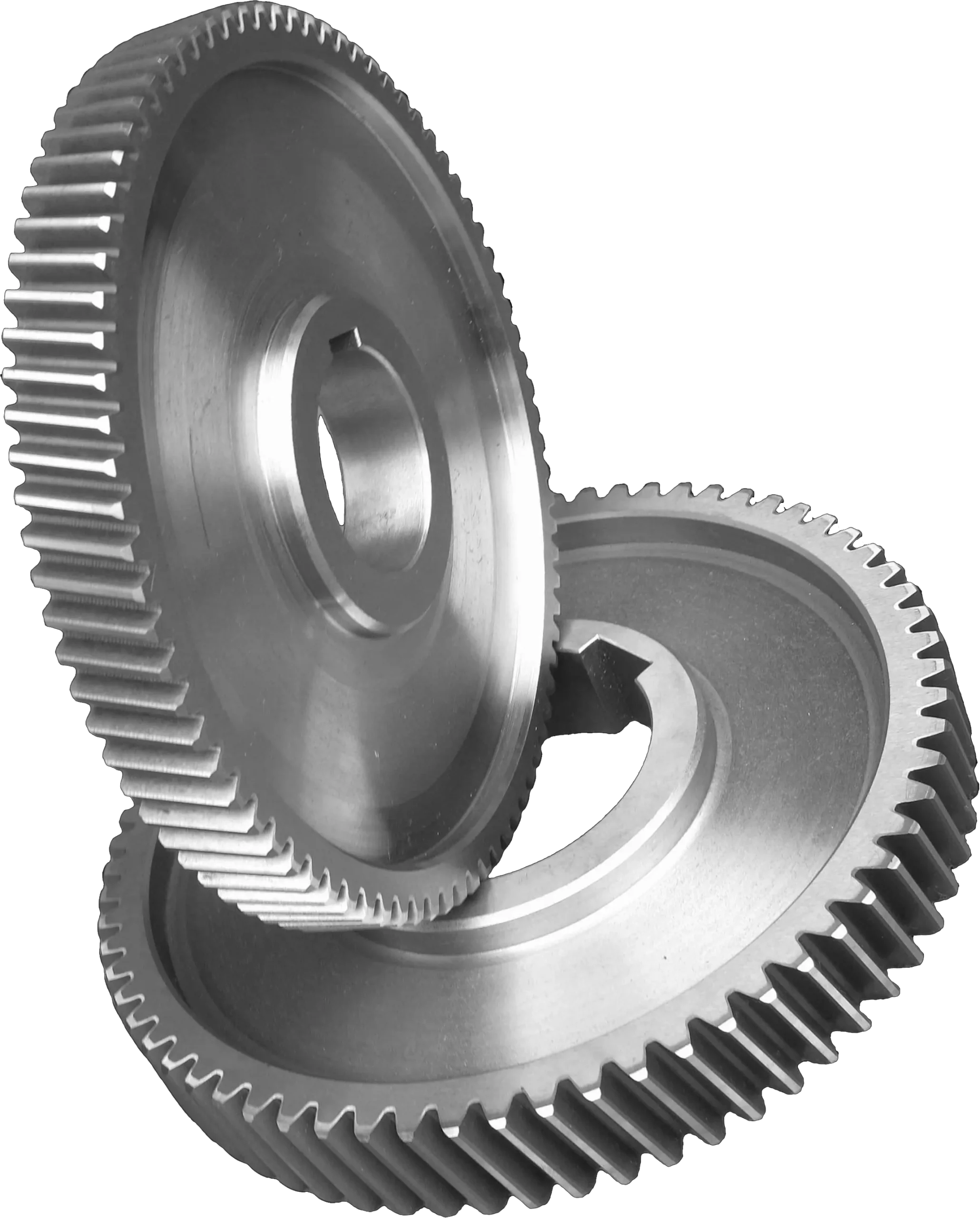
Choosing the wrong industrial chain and sprocket supplier can lead to inconsistent quality, unexpected equipment downtime, and costly replacement orders. A low quotation means little if components fail to fit or perform. The right sourcing partner should offer reliable manufacturing, clear quality control, and flexible engineering support.
Reliable industrial chain and sprocket suppliers combine manufacturing experience, material control, dimensional inspection, standard compliance, and customization capabilities. When sourcing roller chain sprockets, rollers, and bushing assemblies, buyers should evaluate production processes, quality records, delivery reliability, and technical communication before placing an order.f
This guide explains how to compare suppliers, verify manufacturing capabilities, assess quality, and prepare an effective RFQ. Whether you are sourcing components for conveyors, agricultural machinery, or automated production equipment, these points can help you reduce purchasing risks and build a reliable supply relationship.
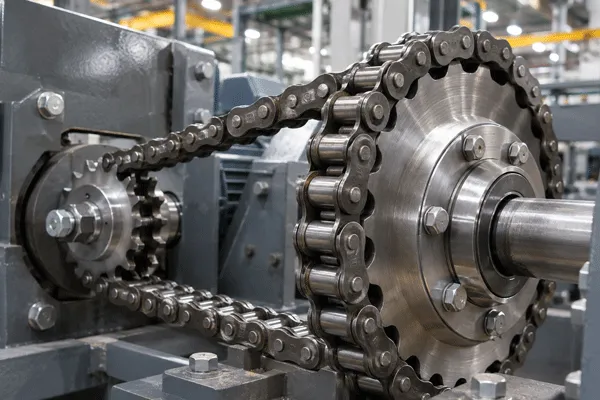
Industrial Chain and Sprocket Suppliers: A B2B Guide to Roller Chain Sprockets, Rollers & Bushing Options
Article Outline
- Why Does Choosing the Right Industrial Chain and Sprocket Supplier Matter?
- What Manufacturing Capabilities Should a Reliable Supplier Have?
- How Can Buyers Verify Chain and Sprocket Quality?
- Which Industrial Chain Standards Should Suppliers Support?
- How Important Are Materials, Heat Treatment, and Surface Finishing?
- Can Suppliers Handle Custom Sprockets, Bushings, and OEM Orders?
- Which Industrial Applications Require Different Chain and Sprocket Solutions?
- How Should Buyers Compare Supplier Prices and Delivery Times?
- What Information Should You Include in an Industrial Chain RFQ?
- Why Is Long-Term Technical Support Important When Choosing a Supplier?
1. Why Does Choosing the Right Industrial Chain and Sprocket Supplier Matter?
Industrial chains and sprockets are important components in mechanical systems. They transfer motion and power between shafts, support material handling, and keep production equipment operating. A small dimensional error in one component can affect the entire machine. Poor-quality chain links, inaccurate sprocket teeth, or an unsuitable bushing can cause noise, vibration, premature wear, and unexpected downtime.
For OEM manufacturers and industrial buyers, choosing a supplier is not simply about finding the lowest price. It is about finding a partner that can deliver consistent components across repeated orders. A chain drive used in a warehouse conveyor may operate for long hours every day, while agricultural equipment may face dust, moisture, and shock loads. Each application requires suitable materials, manufacturing methods, and quality standards.
Before selecting a supplier, consider these five factors:
- Manufacturing capability: Can the company produce the required components in-house?
- Quality consistency: Does it inspect materials, dimensions, and finished products?
- Technical knowledge: Can its engineers understand drawings and application requirements?
- Customization: Can it support non-standard dimensions and OEM projects?
- Delivery reliability: Can it maintain stable production and shipping schedules?
A dependable supplier should understand the complete chain and sprocket application rather than simply sell individual parts.
2. What Manufacturing Capabilities Should a Reliable Supplier Have?
A reliable industrial chain and sprocket supplier should have suitable production equipment, experienced technicians, and a clear manufacturing process. These capabilities are particularly important when purchasing custom components or large quantities for industrial machinery.
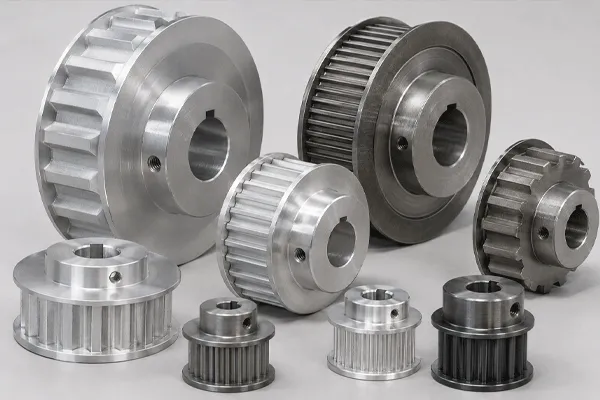
Look beyond product photographs and catalog descriptions. Ask how the company controls machining accuracy, tooth geometry, bore dimensions, and surface treatment. For example, sprocket production may involve raw material preparation, cutting, tooth machining, heat treatment, CNC finishing, and final inspection. Each stage can affect the performance of the finished component.
A professional manufacturer should also be able to explain its production workflow and identify which processes it controls internally. KTD’s Qingdao facility includes casting, forging, precision CNC machining, surface treatment, and multi-stage inspection. Its factory also lists 5-axis CNC equipment, CMM inspection systems, and material analysis equipment.
Manufacturing capabilities worth checking:
| Capability |
Why It Matters |
| CNC machining |
Controls dimensional accuracy |
| Tooth machining |
Supports accurate chain engagement |
| Heat treatment |
Improves wear resistance |
| Surface finishing |
Helps protect against corrosion |
| Material testing |
Verifies material specifications |
| Dimensional inspection |
Confirms drawing compliance |
| Prototype production |
Reduces development risks |
A supplier with integrated production capabilities can often coordinate manufacturing changes more efficiently than a company that relies heavily on unrelated subcontractors.
3. How Can Buyers Verify Chain and Sprocket Quality?
Product quality should be supported by measurable inspection results. A supplier’s quality claims are not enough. Buyers should understand what the company checks, how it records results, and whether inspection documents can be provided with an order.
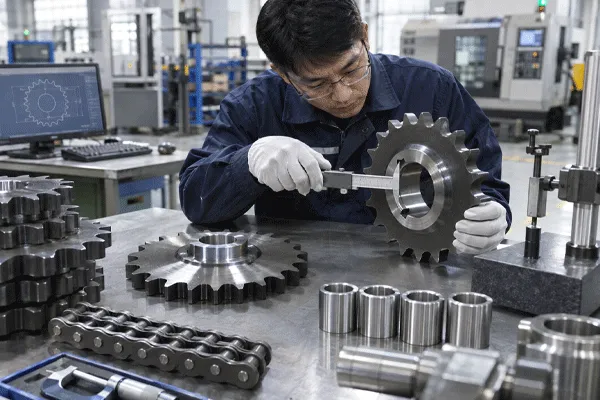
For roller chain sprockets, important inspection points include tooth profile accuracy, concentricity, bore dimensions, keyway dimensions, and runout. For chain products, dimensional consistency, link construction, roller movement, and material properties should also be considered.
A quality inspection process may include:
- Incoming material inspection: Verify material grade and supporting documentation.
- Production inspection: Check critical dimensions during machining.
- Heat treatment inspection: Confirm that the specified process and hardness requirements are met.
- Final dimensional inspection: Compare finished components with approved drawings.
- Visual inspection: Identify surface defects, burrs, and damage.
- Documentation: Provide inspection reports and relevant material records.
For OEM orders, first article inspection (FAI) is particularly useful. It allows the buyer to verify an initial production sample before approving larger production quantities.
Do not rely on a certificate alone. An ISO quality management certificate demonstrates that a management system has been assessed against applicable requirements, but it does not automatically prove that every individual component meets your drawing.
A reputable manufacturer should be willing to explain its inspection methods and provide appropriate evidence.
4. Which Industrial Chain Standards Should Suppliers Support?
International buyers often source components for machines designed in different countries. This creates a need for accurate standard identification and dimensional compatibility.
Common references include ANSI/ASME B29.1, ISO 606, and DIN 8187. Some European equipment specifications also refer to a British Standard or metric chain designation. A supplier should understand the applicable requirements and confirm which standard governs the actual component.
For example, an ANSI roller chain and a British Standard chain may have similar-looking dimensions, but this does not guarantee that their rollers, inner widths, and sprocket tooth profiles are interchangeable.
The ASME B29.1 standard covers precision power transmission roller chains, attachments, and associated sprockets. ISO 606:2015 specifies characteristics of short-pitch precision roller and bush chains, including dimensions, tolerances, strength, and associated sprockets.
When comparing industrial chain suppliers, ask:
- Which chain standards can you support?
- Can you manufacture matching sprockets?
- Can you provide dimensional inspection records?
- Can you work with both metric and imperial drawings?
- Can you confirm compatibility with an existing machine?
KTD’s chain sprocket range lists ANSI B29.1, ISO 606, and DIN 8187 compatibility, with standard and customized configurations.
The important point is to verify the exact designation instead of assuming that two similar-looking components will fit.
5. How Important Are Materials, Heat Treatment, and Surface Finishing?
Material selection directly affects the strength, wear resistance, corrosion resistance, and service life of industrial chains and sprockets.
Carbon steel is widely used for general mechanical transmission because it offers a practical balance of strength, machinability, and cost. Alloy steel may be appropriate for more demanding loads, while stainless steel is useful in wet, corrosive, or washdown environments.
Different industrial settings require different protection methods. A conveyor operating in a dry warehouse may use a different material and surface treatment from agricultural equipment exposed to mud, water, and outdoor conditions.
Common material and treatment options include:
| Material or Treatment |
Typical Purpose |
| 1045 carbon steel |
General industrial sprockets |
| Alloy steel |
Higher mechanical strength requirements |
| 304/316 stainless steel |
Corrosion resistance |
| Cast iron |
Selected heavy industrial components |
| Induction hardening |
Improved sprocket tooth wear resistance |
| Black oxide |
Surface protection |
| Zinc plating |
General corrosion protection |
Heat treatment deserves particular attention. Sprocket teeth experience repeated contact with chain rollers. Induction hardening can improve surface hardness while retaining a tougher core to withstand mechanical loads.
KTD lists induction-hardened sprocket teeth with a typical surface hardness of HRC 45–50, together with CNC machining and advanced surface protection options.
However, harder does not always mean better. The correct material and treatment depend on the chain, load, operating speed, environment, and expected maintenance cycle.
Industrial Chain and Sprocket Suppliers: A B2B Guide to Roller Chain Sprockets, Rollers & Bushing Options
6. Can Suppliers Handle Custom Sprockets, Bushings, and OEM Orders?
Standard catalog products are suitable for many industrial applications, but OEM machinery often requires special dimensions or mounting arrangements.
A custom order may involve a different shaft diameter, special keyway, modified hub, unique tooth count, or non-standard sprocket configuration. The supplier must be able to review technical drawings and identify potential manufacturing issues before production starts.
For example, a buyer may require finished bore sprockets for direct installation, while another project may use a taper-lock bushing arrangement to simplify assembly and future maintenance. Some machines also require idler sprockets, custom mounting structures, or multiple chain rows.
A capable manufacturer should support both standard production and made-to-order (MTO) requirements.
Common customization requirements include:
- Special bore sizes and keyways.
- Custom hub dimensions.
- Non-standard tooth counts.
- Single-, double-, and triple-strand arrangements.
- Special materials and surface treatments.
- Custom bushing interfaces.
- Split or detachable designs.
- Custom assemblies for OEM equipment.
KTD’s custom manufacturing service includes non-standard sprockets, custom bore sizes, keyways, splines, special materials, and DFM optimization. Its published service information also lists flexible quantities starting from 20 pieces and scaling to larger production runs.
For OEM projects, the process should begin with a drawing review. The engineering team should check the manufacturing feasibility, recommend improvements where necessary, and confirm the final specifications before production.
This reduces the risk of dimensional errors and expensive changes after manufacturing has started.
7. Which Industrial Applications Require Different Chain and Sprocket Solutions?
Different industrial applications place different demands on chains, sprockets, rollers, and related components.
For example, a warehouse conveyor needs reliable movement and stable operation under continuous loading. Agricultural equipment may require components that withstand dust, vibration, moisture, and shock loads. Food processing machinery may prioritize corrosion resistance and suitable cleaning conditions.
The types of industrial chains also vary according to their mechanical purpose. Standard roller chains are commonly used for power transmission, while conveyor chains and engineering-class chain designs serve different conveying and heavy-duty applications.
| Industry |
Typical Requirements |
Component Considerations |
| Logistics and warehousing |
Continuous operation and stable conveying |
Chain sprockets, conveyor rollers |
| Agriculture |
Shock loads and outdoor exposure |
Hardened sprockets, suitable materials |
| Food processing |
Corrosion resistance and cleaning |
Stainless steel sprockets |
| Mining and bulk handling |
Heavy loads and abrasive conditions |
Heavy-duty chain drive components |
| Packaging machinery |
Stable movement and repeatability |
Precision sprockets |
| Textile manufacturing |
Continuous running and low vibration |
Consistent transmission components |
| Industrial automation |
Accurate movement and compact layouts |
Custom sprockets and mounting parts |
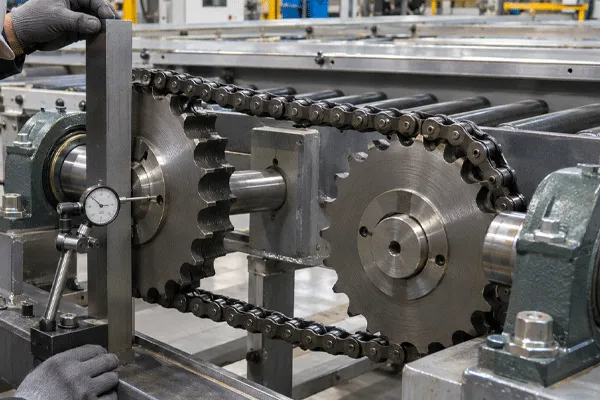
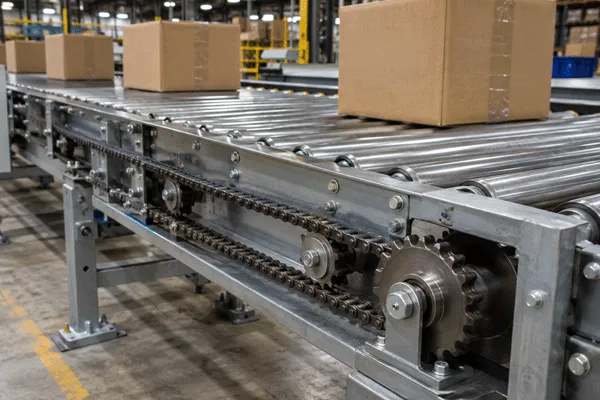
An industrial roller conveyor may use integrated sprockets to transfer motion between rollers. In this arrangement, sprocket positioning, shaft configuration, and chain compatibility are important for reliable operation.
The same principle applies to automotive and agricultural machinery, where chain-driven mechanisms may operate under different environmental and loading conditions.
KTD supports power transmission and conveying applications through its chain sprockets, conveyor rollers, and related industrial components.
8. How Should Buyers Compare Supplier Prices and Delivery Times?
Comparing quotations is an important part of industrial procurement, but the lowest price does not always represent the lowest overall cost.
Two suppliers may quote similar-looking sprockets with different materials, heat treatment, machining accuracy, inspection procedures, and packaging standards. These differences can affect component life, installation time, and future maintenance costs.
Buyers should compare the complete quotation rather than the unit price alone.
A useful quotation comparison should include:
| Evaluation Item |
What to Compare |
| Unit price |
Cost per component |
| Material |
Grade and supporting documents |
| Machining |
Required dimensions and tolerances |
| Surface treatment |
Type and specification |
| Quality inspection |
Inspection scope and reports |
| MOQ |
Minimum order quantity |
| Lead time |
Sample and mass production schedules |
| Packaging |
Protection during international transport |
| After-sales support |
Technical response and replacement policy |
Also consider the supplier’s production capacity. Can it support repeat orders? Does it have enough production flexibility to handle urgent replacement requirements?
Aftermarket suppliers may offer quick access to standard parts, but OEM buyers often need more than a replacement product. They may need drawing-based manufacturing, design changes, repeatable quality, and long-term supply planning.
A reliable partner should be transparent about pricing, production schedules, and any technical limitations before an order is confirmed.
Industrial Chain and Sprocket Suppliers: A B2B Guide to Roller Chain Sprockets, Rollers & Bushing Options
9. What Information Should You Include in an Industrial Chain RFQ?
A clear request for quotation helps suppliers understand your requirements and prepare accurate offers.
Sending only a product name or a photograph may not provide enough information. Industrial chain and sprocket systems have several connected dimensions, and small differences can affect compatibility.
For a chain and sprocket project, prepare the following information whenever possible:
Product and technical details
- Chain designation and applicable standard.
- Chain size and pitch.
- Roller diameter and inner width.
- Number of chain strands.
- Sprocket tooth count.
- Shaft diameter and bore sizes.
- Keyway and hub dimensions.
- Bushing type and mounting configuration.
- Material and surface treatment.
Operating conditions
- Required torque and power.
- Operating speed.
- Working hours per day.
- Load characteristics.
- Environmental conditions.
- Expected service life.
Purchasing information
- Estimated quantity.
- Prototype requirements.
- Target delivery date.
- Packaging requirements.
- Inspection and documentation requirements.
A sprocket diameter chart can help during early discussions, but it should not replace a complete drawing or technical specification.
For repeat orders, providing the original drawing and approved sample information is particularly valuable. It allows the manufacturer to maintain consistent dimensions and avoid unnecessary engineering changes.
KTD’s custom manufacturing workflow begins with drawing submission and consultation, followed by DFM review, quotation, prototyping, first article inspection, mass production, quality control, and delivery.
10. Why Is Long-Term Technical Support Important When Choosing a Supplier?
The relationship with a supplier should not end when the first order arrives.
Industrial buyers often need repeat production, replacement components, drawing revisions, and technical assistance as their machinery develops. A supplier with good engineering communication can help solve these problems more efficiently.
For example, an OEM may update a machine design and require a modified sprocket bore or a different mounting configuration. A long-term manufacturing partner should be able to review the revised drawing, identify the changes, and maintain production consistency.
Export experience also matters. International buyers need suitable packaging, clear documentation, reliable shipping arrangements, and communication throughout the order process.
Before establishing a long-term relationship, consider whether the supplier can provide:
- Consistent product quality across repeat orders.
- Technical support for drawing revisions.
- Material and inspection documentation.
- Prototype and small-batch production.
- Flexible OEM and MTO manufacturing.
- Export packaging and shipping coordination.
- Clear communication about delivery schedules.
KTD operates a manufacturing facility in Qingdao with an established production and export workflow. Its factory information describes multi-stage quality inspection, anti-rust treatment, export-grade packaging, material and inspection documentation, and international logistics support.
A good supplier should not only deliver the first batch successfully. It should help keep your production and equipment supply stable over time.
Frequently Asked Questions
1. What should I look for in industrial chain and sprocket suppliers?
Look for manufacturing capability, material control, dimensional inspection, standard compatibility, customization support, and reliable delivery. A supplier should also be able to understand technical drawings and provide appropriate quality documents.
2. Can one supplier provide both roller chains and sprockets?
Some suppliers offer complete chain and sprocket packages, while others specialize in sprocket manufacturing and work with compatible chain products. Always confirm the product scope and technical compatibility before ordering.
3. Are ANSI and British Standard roller chains interchangeable?
Not automatically. Similar pitch values do not guarantee matching roller dimensions, inner widths, or sprocket tooth profiles. Confirm the complete chain designation and applicable standard before purchasing.
4. Can industrial sprockets be manufactured according to customer drawings?
Yes. Experienced manufacturers can produce custom sprockets with special tooth counts, bore dimensions, keyways, hub configurations, materials, and surface treatments according to approved drawings.
5. What information is needed for a custom sprocket quotation?
Provide the chain standard, pitch, tooth count, bore diameter, keyway, hub dimensions, material, surface treatment, quantity, and operating conditions. A CAD or PDF drawing is especially helpful.
6. How can I reduce the risk of poor-quality industrial chain components?
Work with suppliers that have documented quality procedures, suitable inspection equipment, material verification, and prototype approval processes. Check the actual inspection evidence instead of relying only on general quality claims.
Key Takeaways: Choosing Reliable Industrial Chain and Sprocket Suppliers
- Evaluate manufacturing capability rather than comparing prices alone.
- Check material quality, machining accuracy, heat treatment, and inspection procedures.
- Confirm compatibility with ANSI, ISO, DIN, or applicable British Standard requirements.
- Choose materials according to load, operating conditions, and corrosion exposure.
- Check whether the supplier supports custom sprockets, bushings, and OEM manufacturing.
- Consider the complete application, including chain, sprocket, shaft, and mounting configuration.
- Compare quotations using total purchasing cost, quality, delivery, and service.
- Provide complete drawings and technical specifications when requesting quotations.
- Prioritize suppliers that offer consistent quality and long-term engineering support.
Looking for a Reliable Industrial Chain Sprocket Manufacturing Partner?
KTD, Qingdao Ivanos Transmission Machinery Co., Ltd., specializes in precision industrial power transmission components and custom manufacturing solutions for global OEM customers.
Our chain sprocket range includes bore type, hub type, plate type, single-strand, and double-strand configurations, with support for custom dimensions, materials, tooth hardening, and machining requirements.
Whether you are developing new machinery, sourcing replacement components, or planning an OEM production program, our engineering team can review your drawings and discuss suitable manufacturing options.
Send KTD your technical drawings, specifications, and purchasing requirements to discuss a suitable chain sprocket solution for your project.











 16:20