A synchronous belt failure can stop an entire production line, damage connected components, and increase maintenance costs. Replacing the belt without finding the real cause often leads to another failure. Understanding warning signs and checking the complete drive system can prevent repeated downtime.
A synchronous belt failure usually results from incorrect tension, pulley misalignment, excessive load, tooth wear, poor installation, contamination, or unsuitable operating conditions. Early signs include unusual noise, cracked belt surfaces, worn teeth, edge damage, and loss of synchronization. Identifying these problems early helps protect industrial machinery and extend belt service life.
This guide explains how to identify common belt problems, understand their root causes, inspect the pulley system, and prevent unexpected failures. It also explains the differences between industrial timing belt problems and automotive timing belt damage, helping engineers and maintenance teams make better decisions.
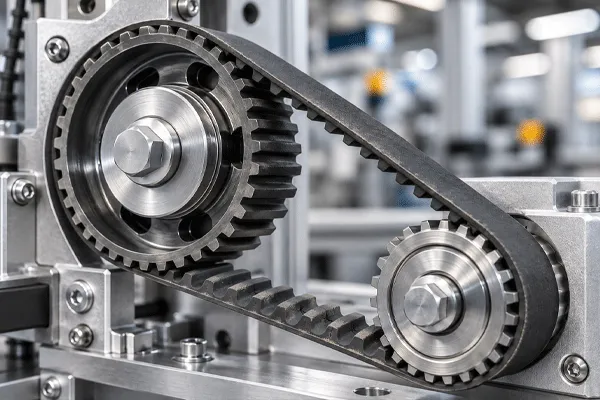
Synchronous Belt Failure in Industrial Drives: Warning Signs, Causes, Diagnosis and Prevention
Article Outline
- What Is Synchronous Belt Failure and Why Does It Matter?
- What Are the Common Warning Signs of Belt Failure?
- Why Do Synchronous Belt Teeth Wear or Break?
- What Causes Belt Edge Wear and Tracking Problems?
- Why Does a Synchronous Belt Crack or Break?
- How Do Tension, Misalignment, and Pulley Problems Cause Failure?
- How Is Industrial Synchronous Belt Failure Different from Automotive Timing Belt Failure?
- How Do You Inspect and Diagnose a Synchronous Belt Drive?
- How Can You Prevent Belt Failure and Extend Service Life?
- When Should You Replace a Belt, Pulley, or Complete Drive System?
1. What Is Synchronous Belt Failure and Why Does It Matter?
A synchronous belt is a toothed belt that engages with matching pulley grooves to transmit mechanical power. Unlike a friction-based belt drive, it uses positive engagement to maintain a fixed relationship between the driving and driven shafts. This makes it useful for machinery that requires accurate timing, stable speed, and repeatable movement.
A belt failure happens when the belt can no longer perform its intended transmission function. It may lose teeth, develop cracks, stretch beyond its working limits, break its internal tension members, or lose proper engagement with the pulley. In some cases, the belt still looks normal but cannot maintain accurate synchronization under load.
For industrial equipment, one failed belt can affect several connected processes. A packaging machine may lose product positioning, an automated conveyor may stop moving, and a CNC machine may lose motion accuracy. The result can be production delays, damaged materials, and unnecessary repair costs.
Common consequences include:
- Unexpected machine shutdown.
- Loss of synchronization between shafts.
- Reduced transmission efficiency.
- Damage to pulleys, bearings, and connected components.
- Increased maintenance costs.
- Unplanned production downtime.
The key is to treat belt failure as a system problem, not simply a damaged component.
2. What Are the Common Warning Signs of Belt Failure?
Most synchronous belt failures develop over time. Regular inspection allows maintenance teams to identify changes before the belt stops working completely.
One of the first warning signs is unusual noise. A healthy belt drive should operate smoothly under normal operating conditions. Clicking, knocking, squealing, or repeated vibration may indicate incorrect tension, poor tooth engagement, damaged pulleys, or excessive loading.
Visual changes are equally important. Look for cracks on the belt back, missing teeth, worn tooth surfaces, frayed edges, exposed cords, and unusual deformation. These signs can indicate different failure mechanisms, so engineers should avoid replacing the belt without checking the surrounding components.
| Warning Sign |
Possible Problem |
Recommended Action |
| Unusual noise |
Incorrect tension or tooth mismatch |
Check tension and pulley profile |
| Cracked belt back |
Heat, aging, or excessive bending |
Check temperature and pulley diameter |
| Missing teeth |
Overload or poor engagement |
Inspect load and pulley condition |
| Worn belt edges |
Misalignment or flange damage |
Check shaft alignment |
| Exposed tension cords |
Severe belt damage |
Replace the belt |
| Excessive vibration |
Imbalance or installation problems |
Inspect the complete drive |
| Loss of synchronization |
Tooth jumping or damaged teeth |
Check engagement and belt tension |
An important point: one symptom may have several causes. For example, excessive noise does not always mean the belt itself is defective. A worn pulley, incorrect tooth profile, or damaged bearing can produce similar symptoms.
3. Why Do Synchronous Belt Teeth Wear or Break?
Tooth damage is one of the most important failure types in a synchronous belt drive. The teeth carry the transmission load through engagement with the pulley. When the load exceeds the design capacity, the tooth surfaces may wear, deform, or break.
Premature Tooth Wear
Premature wear often develops when the belt and pulley do not match correctly. An incorrect tooth profile, damaged pulley groove, or excessive tension can create uneven contact.
Over time, the teeth of the belt may lose their original shape. The belt may become noisy, generate heat, and fail to maintain stable synchronization.
Tooth Shear
Tooth shear occurs when the load acting on the belt teeth exceeds their ability to resist the applied force. It is often associated with:
- Excessive torque.
- Sudden shock loads.
- Insufficient teeth in mesh.
- Incorrect belt tension.
- Worn or damaged pulleys.
- Incorrect belt and pulley combinations.
A machine that frequently starts and stops may experience higher peak loads than its normal running load. Engineers should therefore consider acceleration and impact conditions during drive design.
Tooth Jumping
Tooth jumping, also called ratcheting, happens when the belt teeth move out of their intended pulley grooves. The belt may skip one or more teeth, causing a change in timing or position.
This is especially serious in automated equipment. Even if the belt does not break, the machine may no longer operate accurately.
Mitsuboshi’s technical guide identifies overload, unsuitable pulley diameter, insufficient tooth engagement, and incorrect initial tension as important causes of premature tooth damage. Its timing belt failure troubleshooting guide provides useful inspection and prevention references.
4. What Causes Belt Edge Wear and Tracking Problems?
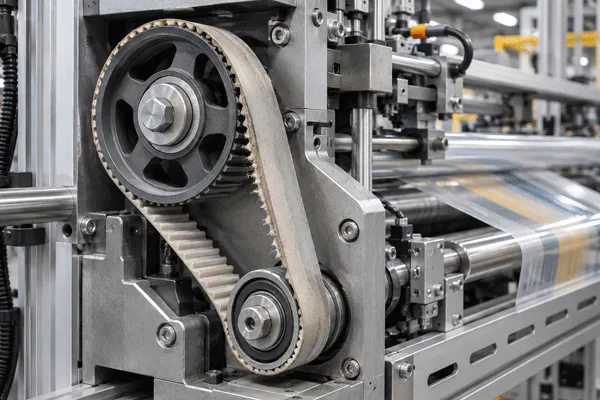
Edge wear occurs when one or both sides of a belt rub against the pulley flange, machine frame, or another nearby component. This is often a sign that the belt is not running in the correct position.
A common cause is shaft misalignment. If the driving and driven shafts are not parallel, the belt may gradually move toward one side of the pulley. Bent flanges, poor mounting surfaces, and incorrect pulley installation can create similar problems.
Another possible cause is an unsuitable belt width. If the belt is wider than the usable pulley face, its edges may contact nearby structures. A damaged flange or rough surface finish can also accelerate wear.
How to identify tracking problems:
- Stop the machine and inspect both belt edges.
- Check whether the wear appears on one side or both sides.
- Inspect the pulley flanges for bending or damage.
- Measure shaft parallelism and pulley alignment.
- Check whether the belt is rubbing against guards or brackets.
- Confirm that the belt width matches the pulley specification.
Do not solve edge wear simply by increasing belt tension. Excessive tension can increase bearing loads and create additional problems.
The correct solution is to find and remove the source of sideways movement.
Synchronous Belt Failure in Industrial Drives: Warning Signs, Causes, Diagnosis and Prevention
5. Why Does a Synchronous Belt Crack or Break?
A synchronous belt contains several structural layers. Depending on its construction, these may include a rubber or polyurethane body, reinforcing fabric, and internal tension members.
The outer material provides flexibility and protects the internal structure. The tension members carry the main tensile load and help control elongation. When these layers deteriorate, the belt may lose its strength and eventually break.
Common Causes of Belt Cracking
Cracks on the belt back or tooth surface may result from:
- Excessive operating temperature.
- Low-temperature exposure beyond the material’s limits.
- Aging and material hardening.
- Repeated bending around undersized pulleys.
- Chemical contamination.
- Excessive reverse bending.
- Incorrect belt material selection.
Why Do Internal Cords Break?
Internal cord failure is more serious because the belt can suddenly lose its ability to transmit load.
Common causes include excessive tensile force, shock loading, poor storage, foreign objects, and extreme pulley runout.
| Failure Type |
Main Cause |
Prevention |
| Back cracking |
Heat or material aging |
Select suitable belt materials |
| Tooth cracking |
Excessive bending or overload |
Review pulley diameter and load |
| Cord breakage |
Excessive tensile force |
Check drive capacity |
| Surface separation |
Poor engagement or contamination |
Inspect belt construction and pulley |
| Material hardening |
Unsuitable temperature |
Match material to operating conditions |
For example, rubber and polyurethane belts have different operating characteristics. Polyurethane is often selected for abrasion resistance and certain conveying applications, while rubber compounds are widely used in industrial power transmission.
The correct material selection depends on temperature, oil exposure, chemical contact, bending conditions, and required service life.
6. How Do Tension, Misalignment, and Pulley Problems Cause Failure?
A synchronous belt cannot work reliably without correct installation. Even a high-strength belt may fail early when tension, alignment, or pulley geometry is incorrect.
Incorrect Belt Tension
Low tension can allow the belt to lose proper tooth engagement, especially during acceleration or under heavy loads. This increases the risk of tooth jumping.
Excessive tension creates a different problem. It increases the radial load on bearings and shafts, which may lead to overheating, bearing wear, and reduced component life.
Always follow the belt manufacturer’s recommended installation tension. Do not use the same tension value for every belt profile or application.
Pulley Misalignment
Misalignment changes the path of the belt and can cause uneven contact. It may result in edge wear, vibration, noise, and premature damage.
Check both angular and parallel alignment. Also inspect the pulley mounting surface, shaft condition, and bearing position.
Incorrect Pulley Geometry
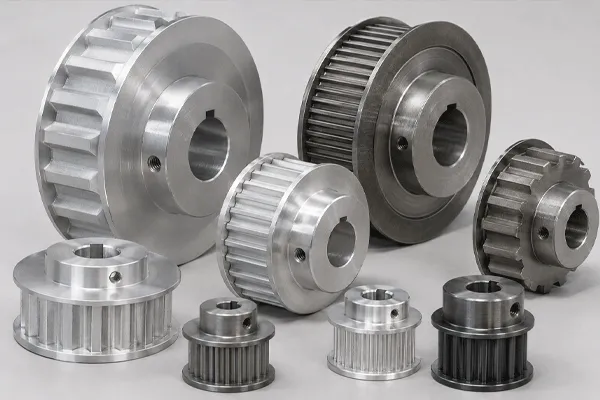
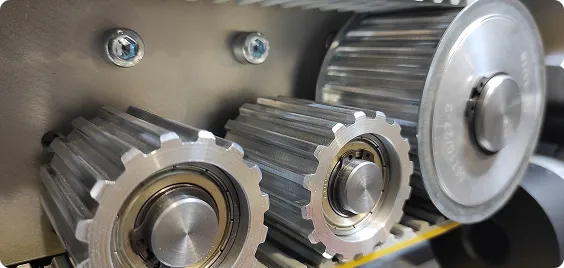
The pulley must match the belt’s tooth profile and pitch. A belt may physically fit around a pulley but still have poor tooth engagement if the geometry is incorrect.
The pulley groove condition also matters. Dirt, corrosion, damaged teeth, and worn surfaces can affect smooth engagement.
Common Drive System Problems
| Component |
Possible Problem |
Result |
| Belt |
Incorrect tension |
Tooth jumping or wear |
| Pulley |
Worn grooves |
Poor tooth engagement |
| Shaft |
Misalignment |
Edge wear |
| Bearing |
Excessive clearance |
Vibration |
| Idler |
Incorrect diameter |
Excessive bending |
| Machine frame |
Weak support |
Changing belt tension |
Gates’ Preventive Maintenance Manual provides a detailed synchronous drive troubleshooting table covering noise, tension loss, edge wear, tensile breakage, cracking, tooth shear, and tracking problems.
7. How Is Industrial Synchronous Belt Failure Different from Automotive Timing Belt Failure?
The basic working principle is similar, but industrial and automotive applications have different operating requirements.
In automotive engines, the timing belt synchronizes the crankshaft and camshaft. It controls the relationship between piston movement and valve operation. If the belt breaks, some engine designs may suffer serious internal damage because the valves and pistons can collide.
Industrial timing belts usually transmit power or control movement between machine shafts. They are commonly used in packaging equipment, textile machinery, automated production lines, CNC systems, and conveying applications.
| Comparison |
Automotive Timing Belt |
Industrial Synchronous Belt |
| Main function |
Synchronize engine components |
Transmit power and control motion |
| Typical equipment |
Automotive engines |
Industrial machinery |
| Main operating concern |
Engine timing |
Machine synchronization |
| Common failure impact |
Engine shutdown or internal damage |
Production interruption or loss of positioning |
| Inspection focus |
Engine-specific service schedule |
Operating condition and belt drive inspection |
| Replacement |
Vehicle manufacturer requirements |
Application and belt manufacturer requirements |
Automotive belt failure is often related to age, engine temperature, oil contamination, and maintenance intervals. Industrial belt failure is more closely linked to load, tension, alignment, pulley design, and machine operating conditions.
For automotive buyers researching engine damage, our separate guide, Will a Broken Timing Belt Destroy My Engine?, covers that subject in greater detail.
For KTD’s industrial customers, the priority is maintaining stable transmission performance and preventing unexpected machine stoppages.
8. How Do You Inspect and Diagnose a Synchronous Belt Drive?
A good inspection process should examine the belt and its connected components together. Replacing a damaged belt without checking the pulley, shaft, and bearings may leave the original problem unresolved.
Follow this practical inspection sequence.
Step 1: Stop the Machine Safely
Turn off the power, isolate the equipment, and make sure all moving components have stopped before inspection. Never examine a running belt by hand.
Step 2: Check the Belt Surface
Look for cracks, missing teeth, exposed cords, worn edges, deformation, and contamination.
Step 3: Inspect the Pulley
Check tooth wear, corrosion, damaged flanges, debris, and incorrect mounting.
Step 4: Check Alignment
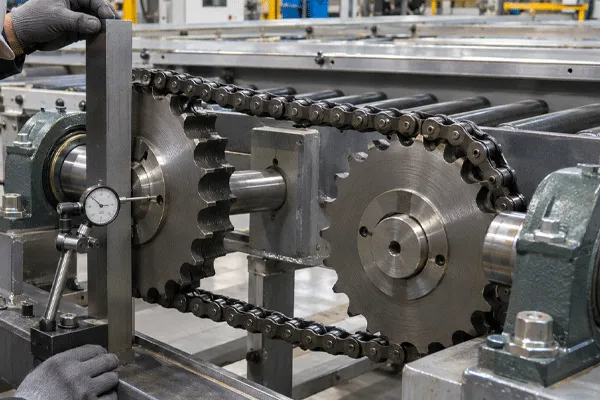
Use suitable alignment tools to inspect shaft parallelism and pulley positioning.
Step 5: Measure Tension
Use the manufacturer’s recommended method, such as a frequency-based tester or a specified force-and-deflection method.
Step 6: Review Operating Conditions
Check whether the machine has experienced overloads, sudden stops, unusual vibration, temperature changes, or frequent direction reversals.
Diagnostic Example
Consider a packaging machine that repeatedly loses synchronization after several weeks of operation.
The maintenance team notices worn belt teeth and unusual noise. Instead of replacing the belt immediately, the team checks the pulley profile, installation tension, and driven shaft alignment.
The inspection reveals excessive wear on the driven pulley and insufficient engagement under load. Replacing the damaged pulley and installing the correctly specified belt addresses the underlying problem.
9. How Can You Prevent Belt Failure and Extend Service Life?
Preventing belt failure starts during drive design and continues throughout installation and operation.
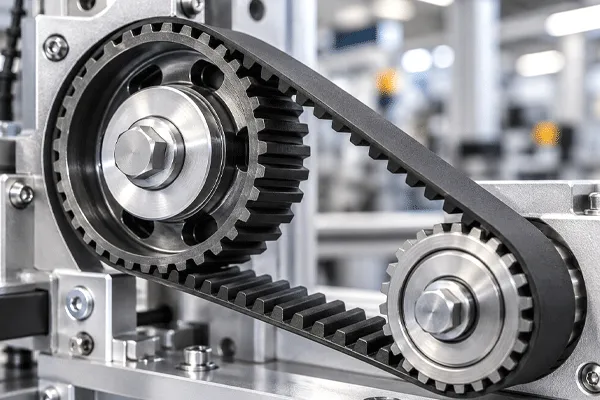
A reliable drive system should match the belt profile, pitch, width, material, pulley geometry, and operating load. Selecting a belt based only on its outside dimensions may lead to poor engagement or insufficient load capacity.
For high-torque applications, engineers should also consider the tensile strength of the reinforcement, the number of engaged teeth, pulley diameter, and peak operating loads.
Practical Belt Maintenance Checklist
| Inspection Item |
Recommended Action |
| Belt condition |
Check for cracks, wear, and missing teeth |
| Belt tension |
Measure against manufacturer specifications |
| Pulley condition |
Inspect grooves and flanges |
| Shaft alignment |
Check parallelism and positioning |
| Bearings |
Look for noise, heat, and excessive clearance |
| Machine load |
Review overload and shock conditions |
| Environment |
Check oil, dust, chemicals, and temperature |
| Belt history |
Record installation and replacement dates |
Choose Suitable Belt Materials
Different applications need different constructions. Rubber belts are common in general industrial drives, while polyurethane belts are often used for conveying, automation, and applications requiring specific wear or chemical resistance.
For demanding high-torque applications, specialized products such as Continental’s Synchrochain Supreme demonstrate how antistatic properties and heavy-duty synchronous belt construction can be combined for specific industrial environments. It is an application-specific product, not a universal replacement for every timing belt.
Synchronous Belt Failure in Industrial Drives: Warning Signs, Causes, Diagnosis and Prevention
Avoid Incorrect Installation
Never force a belt over a pulley by using a lever or screwdriver. This can damage the belt teeth or internal tension members before the machine even starts.
Use the correct mounting and tensioning procedure, and make sure the drive is properly aligned before operation.
10. When Should You Replace a Belt, Pulley, or Complete Drive System?
Not every damaged belt requires a complete machine overhaul. However, the decision should depend on the condition of the entire transmission system.
Replace the belt immediately if it has missing teeth, broken cords, severe cracks, or visible structural damage. A belt with exposed reinforcement should not continue operating under load.
The pulley may also need replacement if its teeth are worn, its flanges are damaged, or its geometry no longer matches the belt specification.
In some cases, the complete drive design needs improvement. This may be necessary when the original system repeatedly experiences excessive torque, shock loading, undersized pulleys, or insufficient belt capacity.
When Is a Design Upgrade Necessary?
Consider redesigning the drive when:
- The same belt fails repeatedly.
- The machine operates beyond its original load rating.
- Production speed has increased.
- The pulley diameter is too small.
- The drive experiences frequent shock loads.
- The current belt profile is unsuitable.
- The equipment requires better positioning accuracy.
For some heavy-duty applications, a reinforced polyurethane belt or a higher-capacity synchronous drive may be appropriate. Continental’s Synchrochain Supreme is one example of a specialized high-torque belt with antistatic properties. Other applications may require a different profile, width, material, or even a roller chain.
The important point is to match the drive to the actual machine requirements rather than replacing components with similar-looking products.
Frequently Asked Questions About Synchronous Belt Failure
1. What is the most common cause of synchronous belt failure?
Common causes include incorrect tension, pulley misalignment, excessive load, incorrect tooth engagement, worn pulleys, and unsuitable operating conditions. The actual cause should be confirmed through inspection.
2. How do I know if a synchronous belt needs replacement?
Replace a belt if you find missing teeth, broken internal cords, severe cracks, exposed reinforcement, or significant structural damage. Also investigate any loss of synchronization or repeated tooth jumping.
3. Can excessive belt tension cause belt failure?
Yes. Excessive tension increases the load on bearings and shafts and can accelerate tooth wear and internal cord fatigue. Always follow the manufacturer’s recommended tension range.
4. Why does a synchronous belt keep jumping teeth?
Common reasons include insufficient tension, excessive torque, too few teeth in mesh, incorrect pulley geometry, worn teeth, or sudden shock loads. Increasing tension alone may not solve the problem if the drive is incorrectly designed.
5. Can a damaged pulley cause a new belt to fail?
Yes. A worn or damaged pulley may prevent proper tooth engagement and create uneven loading. Always inspect the pulley before installing a replacement belt.
6. How can industrial belt life be extended?
Use the correct belt and pulley combination, maintain proper tension, align shafts accurately, avoid overloads, protect the drive from contamination, and perform regular inspections.
Key Takeaways: How to Prevent Synchronous Belt Failure
- Synchronous belt failure can result from incorrect tension, excessive load, misalignment, and poor installation.
- Tooth wear, tooth shear, cracking, cord breakage, and edge wear are important warning signs.
- Belt and pulley geometry must match to ensure proper tooth engagement.
- Excessive tension can damage bearings and shafts, while insufficient tension can cause tooth jumping.
- Industrial and automotive timing belts have different applications and maintenance requirements.
- Regular inspection helps identify problems before they cause unexpected downtime.
- Rubber and polyurethane belt materials should be selected according to operating conditions.
- Repeated failures may indicate a problem with the complete drive design rather than the belt alone.
- Replace damaged pulleys when their tooth geometry or flanges are worn.
- Always follow the manufacturer’s installation and tension recommendations.
Need Reliable Synchronous Belts for Your Industrial Equipment?
At KTD, Qingdao Ivanos Transmission Machinery Co., Ltd., we provide industrial timing belts, timing pulleys, and customized power transmission components for machinery manufacturers and OEM customers.
Our timing belt range includes rubber and polyurethane constructions, multiple tooth profiles, and customized specifications for industrial automation, conveying, textile machinery, and other transmission applications.
Whether you need a replacement belt or a new drive configuration, our engineering team can review your drawings, pulley dimensions, load requirements, and operating conditions.
Contact KTD to discuss your synchronous belt requirements and find a suitable solution for your machinery.












 14:58