A poor belt choice can waste energy, cause slippage, stop machines, and damage driven equipment. For buyers, one wrong belt drive can become repeated downtime. The right answer depends on load, speed, accuracy, pulley design, and maintenance needs.
A synchronous belt is better when you need no-slip timing, accurate position control, higher transmission efficiency, and lower maintenance. A cogged belt is better when you mean a cogged V-belt for friction-based power transmission, smaller pulley size, flexibility, and easier replacement in existing V-belt drives.

Synchronous Belt vs Cogged Belt: Which Belt Drive Is Better for V-Belts, Timing Belt, and Power Transmission?
Article Outline
- What does “synchronous belt or cog belt” really mean?
- How does a synchronous belt drive work?
- How does a cogged V-belt work?
- Which belt is better for slippage and accurate position control?
- Which belt drive is better for torque and power transmission?
- Which belt has better belt life and lower maintenance?
- How do pulley, sprockets, and sheaf design affect belt choice?
- Where are synchronous belts and cogged belts used?
- How should B2B buyers choose the right belt for industrial equipment?
- What should steel project buyers consider in belt-driven machinery?
- FAQs about synchronous belt, cogged belt, and V-belts
What Does “Synchronous Belt or Cog Belt” Really Mean?
The phrase “cog belt” can be confusing. In some markets, people use cog belt to mean a timing belt or synchronous belt. In that case, the two names may describe the same kind of toothed belt. But in many industrial discussions, a cogged belt means a cogged V-belt, also called a notched V-belt or raw edge V-belt.
That difference matters. A synchronous belt uses teeth that mesh with matching sprockets or toothed pulleys. It is a positive-drive belt, so it does not depend mainly on friction. A cogged V-belt still works like a V-belt. It uses wedge action and friction in the pulley groove, but its notched underside helps it bend more easily and run cooler.
So the better question is not only “Which is better?” It is: Which belt type fits your drive applications? If you need exact movement, choose a synchronous belt. If you need a flexible friction drive for a motor, fan, pump, compressor, or general equipment, a cogged V-belt may be a practical choice.
How Does a Synchronous Belt Drive Work?
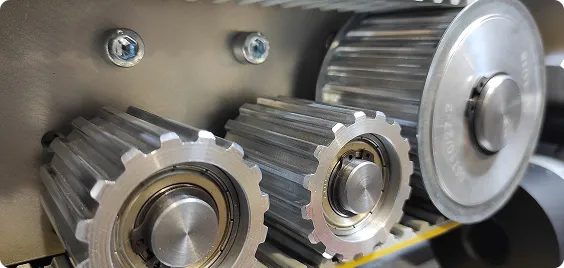
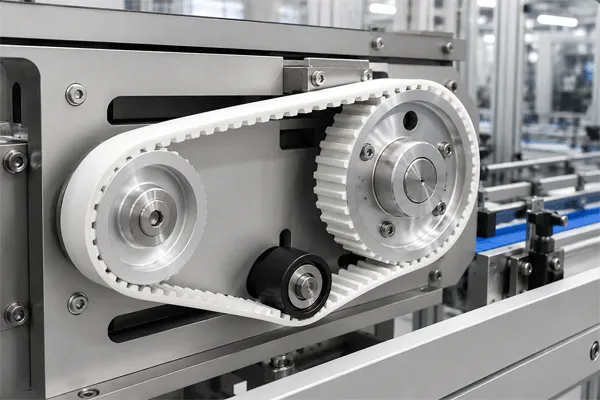
A synchronous belt drive works by matching belt teeth with sprockets or toothed pulleys. The belt and pulley move together in fixed timing. This design helps the drive system keep speed and position without normal belt slippage. Gates describes synchronous drives as highly efficient and notes that synchronous belts come in different tooth profiles, sizes, and constructions for many application needs.
In simple words, the belt locks into the pulley shape. It does not need the same friction-based grip as standard V-belts. That is why synchronous belts are widely used where timing is important, such as packaging machines, conveyors, indexing systems, robotics, CNC equipment, and automated production lines.
A synchronous belt is often the better belt when the machine must move at a controlled speed and stop in the right position. If your system must cut, stamp, print, sort, or feed material at the same interval every time, this belt design gives stronger control.
How Does a Cogged V-Belt Work?
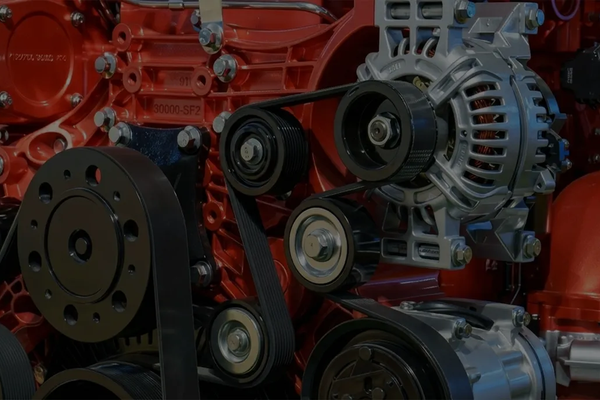
A cogged V-belt is still a V-belt. It has a trapezoidal cross-section that sits inside a pulley groove. The sides of the belt make contact with the sheaf, and the wedge shape helps transmit power through friction. The cogs or notches on the underside make the belt more flexible than a wrapped V-belt.
This flexibility helps the belt run around smaller pulleys, reduce bending stress, and improve heat release. That can support better belt life in the right drive design. However, a cogged belt does not give true no-slip timing unless it is actually a synchronous timing belt.
Here is the simple split:
| Belt Type |
How It Transmits Power |
Main Strength |
| Synchronous belt |
Teeth mesh with sprockets |
No-slip timing and precise control |
| Cogged V-belt |
Friction and wedge action in pulley groove |
Flexible V-belt drive performance |
| Wrapped V-belt |
Friction and wedge action |
Durable general use |
| Flat belt |
Friction on flat pulley |
Smooth high-speed movement |
A cogged narrow V-belt can be very useful. But it is not the same as a toothed synchronous belt if it depends on friction.
Which Belt Is Better for Slippage and Accurate Position Control?
The synchronous belt wins when the main problem is slippage. Its belt teeth engage with the sprockets, so the belt runs in step with the pulley. This is why synchronous belts offer strong timing control for automation, conveyors, and equipment that must keep exact movement.
A V-belt can slip when tension is too low, the pulley groove is worn, the belt is overloaded, or the drive components are misaligned. The U.S. Department of Energy notes that loose V-belts can vibrate, wear quickly, and waste energy through slippage, while too much tension can also shorten belt and bearing life.
But slippage is not always bad. In some machines, a small amount of slip can act like protection during shock loads. If driven equipment jams suddenly, a V-belt may slip before more expensive parts break. A synchronous belt may keep pulling until another component takes the stress. That is why equipment design matters.
Which Belt Drive Is Better for Torque and Power Transmission?
Both belt options can transmit power well, but they do it differently. A synchronous belt works well for high torque where speed ratio must stay fixed. It also keeps strong transmission efficiency because it does not rely on slip for operation. Gates states that synchronous drives are typically about 98% efficient when properly maintained, while V-belts average about 93–98%.
A cogged V-belt is strong in many power transmission applications because the wedge shape grips the pulley groove. It works well for fans, pumps, compressors, conveyors, agricultural machines, and many industrial belt drive systems. V-belts can also support multiple belt arrangements when one belt is not enough.
Use this quick guide:
| Requirement |
Better Choice |
| No-slip timing |
Synchronous belt |
| Exact position control |
Synchronous belt |
| Existing V-belt pulley setup |
Cogged V-belt |
| Shock load tolerance |
Cogged V-belt or standard V-belt |
| High-torque indexing |
Synchronous belt |
| Simple general power transmission |
Cogged V-belt |
| Lower re-tensioning needs |
Synchronous belt |
| Compact retrofit with smaller pulley |
Cogged V-belt |
The best belt is the one that matches the type of drive, not just the one with the best brochure.

Synchronous Belt vs Cogged Belt: Which Belt Drive Is Better for V-Belts, Timing Belt, and Power Transmission?
Which Belt Has Better Belt Life and Lower Maintenance?
A synchronous belt often needs less maintenance because it does not need the same re-tensioning cycle as many V-belt drives. It also does not need lubrication. Gates notes that synchronous belts do not slip, need retensioning, or require lubrication in its comparison of synchronous systems with other drive methods.
A cogged V-belt can also provide long service life when properly sized, aligned, and tensioned. Still, V-belt design depends on friction, and poor belt tension is a common cause of premature belt failure. Misalignment, worn sheaves, oil, heat, and incorrect pulley size can also shorten belt life.
For maintenance teams, the question is practical:
- Can workers check alignment easily?
- Is the installed belt correctly tensioned?
- Are the pulleys clean and unworn?
- Is the belt width correct for the groove?
- Does the drive run hot?
- Is vibration increasing?
- Are belt products from the same matched set?
If your plant wants fewer belt checks and better speed control, using synchronous belts may be smarter. If your plant needs easy replacement and familiar V-belt drives, cogged V-belts may be easier to manage.
How Do Pulley, Sprockets, and Sheaf Design Affect Belt Choice?
A synchronous belt requires toothed pulleys or sprockets. A V-belt requires a V-groove sheaf. You cannot freely swap them. Synchronous belts are toothed and require the installation of matching sprockets or toothed pulleys. A cogged V-belt needs the correct V-belt pulley groove.
Pulley size also matters. A small pulley creates more bending stress. A cogged V-belt bends more easily than many wrapped v-belts, which can help in compact equipment. A synchronous belt also needs the correct tooth profile, pitch, belt tension, and pulley alignment.
Here is a simple selection table:
| Drive Component |
Works With |
Buyer Must Check |
| Toothed pulley / sprocket |
Synchronous belt |
Pitch, tooth profile, width, alignment |
| V-groove sheaf |
V-belt or cogged V-belt |
Groove angle, wear, pulley size |
| Flat pulley |
Flat belt |
Surface grip and tracking |
| Multiple-groove sheaves |
Multiple belt systems |
Matched belt length and tension |
Wrong drive components can ruin even a good belt. A new drive should start with the full belt transmission system, not just a single belt.
Where Are Synchronous Belts and Cogged Belts Used?
Synchronous belts are common in equipment that needs motion control. This includes packaging equipment, machine tools, printing machines, automated conveyors, textile machines, robotics, and other modern production lines. Megadyne notes that synchronous belts are useful where synchronicity is needed and slippage can cause damage.
Cogged V-belts are common in general industrial machines. They suit many motors, fans, blowers, pumps, compressors, agricultural equipment, construction machines, and some conveyor systems. Compared to standard v-belts, a cogged V-belt can run more flexibly and often handles smaller pulley diameters better.
In steel-related operations, both belts may appear in different equipment:
| Equipment |
Common Belt Need |
| Slitting line |
Accurate speed and stable drive |
| Roofing sheet machine |
Synchronous movement or V-belt drive |
| Pipe production line |
Strong motor power transmission |
| Conveyor line |
Belt drive, roller drive, or chain drive |
| Packaging equipment |
Position control and repeatability |
| Fan or blower |
V-belt or cogged V-belt drive |
As a steel manufacturer and integrated steel supplier, we often see belt-driven machines in coil processing, cutting, profiling, pipe manufacturing, and warehouse logistics. The belt may be small, but production depends on it.
Is a Synchronous Belt More Energy Efficient?
In many cases, yes. A synchronous belt drive can be more energy efficient because it avoids slip and keeps a fixed speed relationship. The U.S. Department of Energy recommends replacing certain V-belts with notched or synchronous belt drives in suitable motor systems to reduce energy losses from slippage.
That said, not every machine should change belts immediately. A proper conversion needs correct pulley or sprocket selection, alignment, guarding, and load review. If the driven equipment faces shock loads, dust, impact, or frequent jams, the design should consider safety and overload behavior.
Think of it like this:
Synchronous belt = better control and efficiency.
Cogged V-belt = easier friction-drive flexibility and retrofit value.
For energy-focused industrial buyers, synchronous belts require less maintenance in many systems, while cogged belts may offer a cost-effective improvement over standard v-belts.
Which Belt Is Better for Shock Loads and Harsh Industrial Work?
Cogged V-belts and standard v-belts often handle shock loads well because they can absorb some vibration and allow limited slip. That can protect the motor, shaft, and driven equipment during sudden overloads. This is useful in crushers, agricultural machines, fans, pumps, and some heavy-duty drive applications.
A synchronous belt does not slip in normal operation. That is excellent for timing, but it can transfer shock directly into the drive system. If the machine needs high accuracy and faces shock, the engineer may need overload protection, a clutch, soft-start control, or a stronger drive design.
For harsh work, ask these questions:
- Will the load jam?
- Is speed accuracy critical?
- Is shock load common?
- Is dust or heat severe?
- Is downtime expensive?
- Can the team maintain belt tension?
- Is there space for a larger pulley or multiple belt setup?
A belt is not chosen alone. It belongs to the full drive system.
Synchronous Belt vs Cogged Belt: Which Belt Drive Is Better for V-Belts, Timing Belt, and Power Transmission?
How Should B2B Buyers Choose the Right Belt Drive?
B2B buyers should choose by application first, price second. A cheap belt that stops production is not cheap. A high-performance belt used in the wrong drive design is not smart either.
Use this decision table:
| Buyer Need |
Recommended Direction |
| Accurate timing |
Synchronous belt |
| No belt slippage |
Synchronous belt |
| General motor drive |
Cogged V-belt or wrapped V-belt |
| Existing V-belt drive |
Cogged V-belt retrofit |
| Energy efficient upgrade |
Synchronous or cogged narrow belt |
| Lower maintenance |
Synchronous belt |
| Shock load tolerance |
V-belt or cogged V-belt |
| Compact pulley arrangement |
Cogged V-belt or carefully selected synchronous belt |
For steel distributors, construction contractors, machinery factories, warehouse building contractors, and international project buyers, belt selection often appears inside bigger purchasing decisions. You may be buying steel coils, steel pipes, H beams, C beams, stainless steel sheets, or aluminum material for equipment frames, guards, supports, and production lines. But the machine’s belt drive still affects daily output.
What Should Steel Project Buyers Consider in Belt-Driven Machinery?
In steel processing and construction material production, belt-driven machines often support cutting, slitting, roll forming, conveyor movement, ventilation, and packaging. If the belt drive is unstable, the whole line can slow down.
As a professional steel manufacturer and integrated steel supplier in China, we support buyers with customized steel and metal materials for the equipment around these systems. This may include hot rolled steel sheets for frames, galvanized steel coils for guards, steel pipes for conveyor structures, stainless steel pipes for special environments, aluminum sheets for lightweight covers, and OEM / ODM processing such as cutting, slitting, profiling, surface treatment, seaworthy packaging, MTC documents, and third-party inspection.
For international project buyers, I suggest checking the full production system:
- Does the conveyor or machine use a synchronous belt or V-belt?
- Are drive guards and equipment frames strong enough?
- Is the surface treatment suitable for humidity or dust?
- Are replacement belts easy to source locally?
- Does the supplier provide drawings, MTC traceability, and inspection support?
- Can logistics packaging protect steel parts during ocean shipping?
Good steel supply does not replace good belt design. But it helps the equipment stay stable, aligned, and safe.
Common Causes of Belt Failure
Most belt failure comes from the wrong belt, wrong tension, bad alignment, worn pulley grooves, heat, oil, overload, or poor installation. The Gates preventive maintenance manual emphasizes proper installation and maintenance to improve belt drive service life and reduce downtime.
Here is a useful failure chart:
| Problem |
Possible Cause |
Practical Fix |
| Belt slips |
Low tension or worn pulley |
Re-tension or replace pulley |
| Belt cracks |
Heat, aging, small pulley |
Check environment and pulley size |
| Belt squeals |
Slip or misalignment |
Adjust tension and alignment |
| Tooth wear |
Wrong sprocket or overload |
Check tooth profile and load |
| Edge wear |
Misalignment |
Align pulleys or sprockets |
| Vibration |
Loose belt or damaged drive components |
Inspect full drive system |
The belt runs best when the entire drive is clean, aligned, correctly tensioned, and matched to the load.
FAQs About Synchronous Belt, Cogged Belt, and V-Belts
Which is better, synchronous belt or cogged belt?
A synchronous belt is better for no-slip timing, accurate position control, and lower maintenance. A cogged V-belt is better for friction-based V-belt drives, retrofit use, smaller pulleys, shock loads, and general motor power transmission.
Is a cog belt the same as a timing belt?
Sometimes, yes. Some people use “cog belt” to mean timing belt. But “cogged belt” can also mean a cogged V-belt with notches on the underside. Always confirm the belt construction before ordering.
Do synchronous belts slip?
In normal operation, synchronous belts do not slip because the belt teeth mesh with matching sprockets. If the belt jumps teeth, that usually means overload, poor tension, wrong installation, or damaged components.
Are cogged V-belts better than wrapped V-belts?
Cogged V-belts often bend more easily and run cooler than wrapped v-belts. They can be a good option for smaller pulleys and improved efficiency. Wrapped v-belts may still be useful for certain rugged or general applications.
What is the main weakness of a synchronous belt?
A synchronous belt needs matching sprockets, accurate alignment, and correct tension. It may also handle shock loads differently because it does not rely on controlled slip like a V-belt.
Which belt is best for conveyors?
It depends on the conveyor. Timing and indexing conveyors often use synchronous belts. General conveyors may use V-belts, cogged V-belts, flat belts, roller chains, or direct drives. The load, speed, environment, and control need decide the best belt.
Key Takeaways
- A synchronous belt is usually better for timing, position control, no-slip movement, and high transmission efficiency.
- A cogged belt may mean a cogged V-belt or a timing belt, so confirm the exact belt type before buying.
- A cogged V-belt is better for many friction-drive applications, retrofits, smaller pulley sizes, and shock load tolerance.
- Synchronous belts use teeth and matching sprockets; V-belts use wedge action and friction.
- V-belt drives need proper tension to avoid slippage, vibration, wear, and energy loss.
- Pulley size, sprocket profile, sheaf condition, alignment, load, speed, and environment all affect belt life.
- For industrial and steel-related projects, belt selection should be reviewed together with equipment frames, guards, shafts, conveyors, and power transmission drive layout.
- A reliable supplier should support stable material quality, processing accuracy, MTC traceability, third-party inspection, export packaging, and long-term cooperation.












 16:52
16:52