Choosing a timing pulley manufacturer by price alone can create costly problems later. Poor tooth accuracy, wrong belt matching, weak materials, or excessive runout may lead to noise, positioning errors, belt wear, and machine downtime. A reliable supplier should match the pulley, timing belt, shaft, load, speed, and application as one complete drive system.
The best timing belt pulley manufacturer depends on your application. In 2026, buyers can consider established suppliers such as KTD, B&B Manufacturing, SDP/SI, Gates, Martin Sprocket & Gear, MISUMI, Optibelt, BRECOflex, Megadyne, and WM Berg. Compare tooth profiles, materials, machining precision, customization, engineering support, quality control, delivery capability, and compatibility with your timing belt before choosing a supplier.
Top 10 Timing Belt Pulley Manufacturers in the World 2026: How to Choose the Right Timing Pulley Manufacturer
What Is a Timing Belt Pulley and Why Does the Manufacturer Matter?
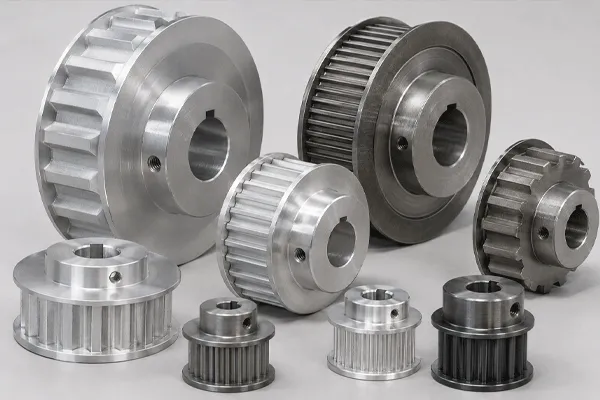
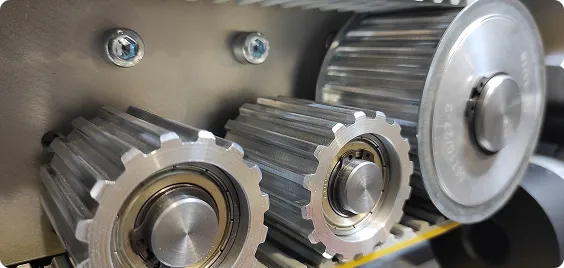
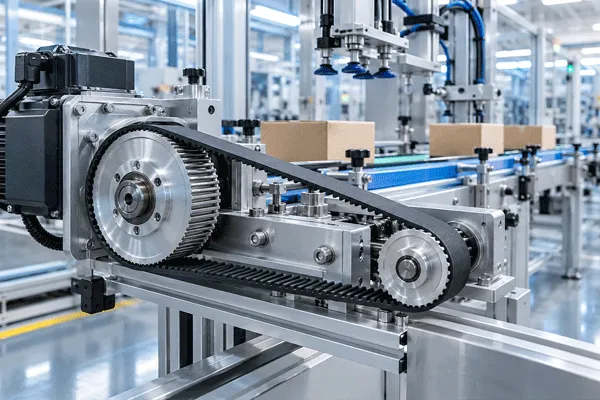
A timing belt pulley is a toothed pulley designed to mesh with a matching timing belt. Unlike a flat belt or friction-based V-belt drive, a synchronous timing system uses positive tooth engagement. The belt teeth enter the pulley grooves, allowing the driver and driven shafts to move at a controlled speed ratio without normal belt slip.
This makes timing belts and pulleys useful where accurate motion matters. Common examples include industrial automation, packaging machinery, CNC equipment, conveyors, textile machines, medical devices, robotics, and 3D printers.
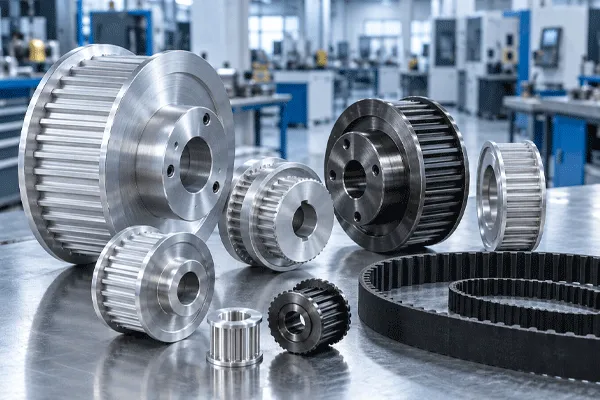
A pulley may look simple, but its performance depends on several details:
- tooth profile and pitch;
- number of teeth;
- belt width;
- outside and pitch diameter;
- bore tolerance;
- keyway or locking method;
- flange design;
- hub geometry;
- material;
- surface treatment;
- concentricity and runout.
That is why the choice of timing pulley manufacturer matters. A pulley with the right nominal dimensions but poor tooth accuracy can reduce the performance of the entire synchronous drive.
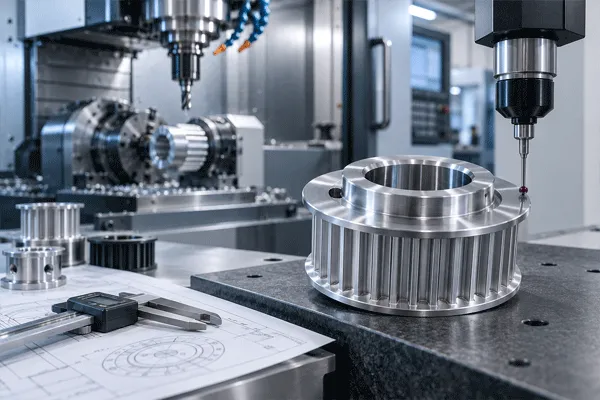
For precision machinery, buyers should think beyond “Can this pulley fit the shaft?” The better question is: Can this pulley run accurately with the designated pulley pair and belt under the real speed, torque, and duty cycle of the machine?
Top 10 Timing Belt Pulley Manufacturers to Consider in 2026
There is no single official global ranking of the top 10 timing belt pulley manufacturers. Company size, regional availability, stock depth, engineering capability, pricing, and custom manufacturing strength vary greatly.
The following companies are therefore presented without ranking. They are representative manufacturers or major suppliers with established timing pulley or synchronous-drive product capabilities.
| Manufacturer |
Main Strength |
Useful For |
| KTD / Qingdao Ivanos |
Standard and custom precision timing pulleys, OEM manufacturing |
Global OEMs, custom industrial projects |
| B&B Manufacturing |
Broad timing pulley inventory and custom machining |
OEMs, distributors, U.S. industrial buyers |
| SDP/SI |
Precision small mechanical components and broad pulley profiles |
Robotics, instrumentation, compact machinery |
| Gates |
Established synchronous power transmission systems |
Belt-drive system matching |
| Martin Sprocket & Gear |
Heavy industrial synchronous sprockets and MTO capability |
Industrial power transmission |
| MISUMI |
Configurable industrial components and broad metric selection |
Automation and machine builders |
| Optibelt |
Timing belt and matching pulley systems |
General industrial applications |
| BRECOflex |
Polyurethane timing belts and high-precision custom pulleys |
Motion control and positioning |
| Megadyne |
Belt-drive systems and timing pulley products |
General industrial transmission |
| WM Berg |
Small precision timing pulleys and custom mechanical components |
Medical, aerospace, motion control |
The goal of this guide is not to declare one company the “best.” Instead, it helps buyers understand which manufacturing model is appropriate for their application.
1. KTD: Custom Timing Pulley Manufacturer for Industrial Power Transmission
KTD, operated by Qingdao Ivanos Transmission Machinery Co., Ltd., focuses on precision power transmission components including timing pulleys, timing belts, industrial gears, Poly V pulleys, chain sprockets, and conveyor components.
Its timing pulley range covers common industrial tooth systems and multiple material options. KTD states that its standard and custom timing pulleys can use aluminum, carbon steel, stainless steel, engineering plastics, and other materials depending on the application.
For custom work, the company supports profiles such as HTD, GT, T, and AT together with custom:
- bore dimensions;
- keyways;
- hubs;
- flange structures;
- tooth profiles;
- materials;
- surface treatments;
- balancing requirements.
KTD’s public manufacturing information also describes H6 and H7 bore tolerance capability and CNC machining for non-standard components. This makes it especially relevant to OEM buyers that need more than timing pulley stock.
For example, a machine builder may require an HTD pulley with a non-standard bore, lightweight hub, special keyway, and black anodized finish. In this case, the ability to provide custom engineering and manufacturing can be more valuable than choosing a standard catalog part.
KTD is therefore most relevant when the buyer needs a China-based timing belt pulley manufacturer for drawing-based production, prototype development, batch manufacturing, or integrated power transmission applications.
2. B&B Manufacturing: Timing Pulley and Power Transmission Supplier
B&B Manufacturing® is a U.S.-based manufacturer and supplier of precision mechanical and power transmission products.
Its catalog includes:
- timing pulleys;
- synchronous belts;
- V-belt sheaves;
- bushings;
- roller chain sprockets;
- spur gears;
- timing pulley flanges.
B&B also provides custom manufacturing. Stock components can be modified with different bores, hubs, flanges, set screws, keyways, and other features.
This combination is useful for a distributor or OEM that sometimes needs standard products and sometimes needs modified parts.
The company supports metric and imperial timing pulley profiles, including several common trapezoidal and synchronous profiles. For buyers comparing pulley manufacturers in the world, B&B is particularly relevant to projects that value U.S. inventory availability and custom machining.
Its broader portfolio of sprockets, gears, belts, bushings, and sheaves also makes B&B useful when a buyer needs several related transmission components from one supplier.
3. SDP/SI: Precision Timing Pulleys for Motion Control
Stock Drive Products / Sterling Instrument, commonly known as SDP/SI, has a strong position in precision mechanical components.
Its current timing pulley range includes metal and plastic pulleys with profiles such as:
- MXL;
- XL;
- L;
- T-series;
- HTD;
- GT;
- miniature timing profiles.
Materials include aluminum, steel, acetal, nylon, and polycarbonate depending on the product.
This variety makes SDP/SI particularly suitable for small and medium-sized precision mechanical systems where engineers need detailed dimensional options.
The company also supplies belts, shaft components, gears, pulley stock, grooved pulleys, commercial flat belts, V-belts, and other drive products.
Its product range demonstrates an important point: a good belt pulley manufacturer or supplier should understand more than one pulley diameter. The belt profile, tooth count, flange style, material, bore, and shaft connection all influence the final drive.
For compact automation, medical instrumentation, positioning equipment, and similar motion control applications, this level of selection can be valuable.
4. Gates: A Major Name in Synchronous Power Transmission
Gates is one of the most recognized names in belt-driven power transmission.
Its portfolio includes timing belts, timing belt pulleys, sprockets, sheaves, tensioners, and other drive components. This makes Gates especially useful as a reference point when engineers design a complete belt system rather than purchasing a pulley in isolation.
The main lesson for buyers is simple:
Do not choose a pulley tooth profile without confirming its compatibility with the belt.
An HTD belt, for example, needs a corresponding pulley geometry. The same principle applies to other synchronous profiles.
A mismatched timing belt pulley may physically appear close enough, yet the tooth engagement can still be wrong. That can increase noise, heat, belt wear, or tooth stress.
For engineering teams, manufacturers with strong belt-system knowledge can be useful when calculating the entire belt drive rather than sourcing separate components from unrelated specifications.
Top 10 Timing Belt Pulley Manufacturers in the World 2026: How to Choose the Right Timing Pulley Manufacturer
5. Martin Sprocket & Gear: Heavy Industrial Timing Pulley and Sprocket Capability
Martin Sprocket & Gear focuses strongly on industrial power transmission.
Its synchronous product range includes timing belt pulleys and high-torque synchronous sprockets, alongside chain sprockets, gears, sheaves, bushings, and couplings.
Martin also advertises made-to-order capability and multiple bushing arrangements.
Its synchronous pulley documentation includes traditional timing pulley systems as well as higher-torque profiles designed for demanding industrial belts.
For buyers operating heavy machinery, conveyors, processing equipment, and other industrial systems, this broader mechanical transmission background can be important.
A lightweight aluminum pulley suitable for a small positioning machine is not automatically suitable for a large industrial drive.
When comparing pulley manufacturers, always ask whether the supplier regularly works with your required torque level and operating environment.
6. MISUMI: Configurable Timing Pulleys for Automation Equipment
MISUMI is widely used by automation and machine-building engineers because it offers configurable industrial components.
Its timing pulley selection includes profiles such as:
- S2M;
- S3M;
- S5M;
- S8M;
- HTD 3M;
- HTD 5M;
- HTD 8M;
- MXL;
- XL;
- T5;
- T10.
This gives engineers a practical way to select a synchronous pulley that matches their specified belt and machine layout.
MISUMI is particularly useful when engineers already know their design parameters and want a configurable component within an established industrial sourcing system.
For a highly non-standard part, however, buyers should still compare the available configuration limits with a dedicated timing pulley manufacturer that can manufacture directly from drawings.
This illustrates the difference between:
catalog selection and full OEM customization.
Both are useful. They solve different problems.
7. Optibelt: Timing Belts and Matching Pulley Systems
Optibelt offers a broad range of industrial belts and pulley products, including timing belt pulleys.
Its current product catalog lists profiles including 3M, 5M, 8M, 14M, AT5, AT10, H, and L across different pulley families and materials.
This makes Optibelt relevant to buyers who want the timing belt and pulley considered as a matching system.
The company also works across several industries, including:
- packaging;
- transport and logistics;
- textiles;
- compressors;
- food and beverage;
- construction equipment;
- industrial machinery.
For buyers, this is a reminder that pulley selection should reflect the operating environment.
A clean packaging machine may prioritize quiet operation and accurate positioning. A heavy industrial machine may prioritize torque capacity, robust mounting, and durability.
The same word—“pulley”—can describe very different engineering requirements.
8. BRECOflex: Precision Timing Pulleys for Polyurethane Timing Belts
BRECOflex specializes in polyurethane timing belt systems and matching pulleys.
Its pulley range covers several timing belt tooth configurations, and it offers both stock and fully customized timing pulleys.
Custom options can include:
- aluminum;
- steel;
- stainless steel;
- engineered plastics;
- custom bores;
- keyways;
- mounting holes;
- surface treatments;
- modified flanges.
BRECOflex’s 2026 customization information also lists T, AT, imperial, HTD, STD, and other specialized timing profiles.
This makes the company particularly relevant to applications requiring accurate motion or linear positioning.
The basic engineering principle is worth remembering: the synchronous belt and pulley work as a matched tooth system.
Precision positioning does not come from the pulley alone.
It comes from the relationship between:
belt pitch + tooth geometry + pulley accuracy + shaft mounting + tension + machine structure.
Top 10 Timing Belt Pulley Manufacturers in the World 2026: How to Choose the Right Timing Pulley Manufacturer
9. Megadyne: Timing Pulley and Belt Drive Products
Megadyne provides a broad industrial belt-drive portfolio.
Its metal drive component range includes timing pulleys, V pulleys, sprockets, bearings, couplings, gears, and related transmission products.
Megadyne describes its timing pulleys as products designed to match belt pitch, belt width, and tooth form, with common options including prebored and taper-lock configurations.
This is useful for general industrial transmission applications where a buyer wants access to related drive products rather than sourcing each component from a completely different company.
The company is also a useful comparison point for buyers evaluating a belt pulley manufacturer against a broader belt-drive systems supplier.
Neither model is automatically better.
The correct choice depends on whether your priority is:
- fast standard supply;
- engineering support;
- custom geometry;
- system integration;
- regional availability;
- or competitive price.
10. WM Berg: Precision Timing Pulleys and Custom Mechanical Components
WM Berg manufactures timing pulleys for precision mechanical applications.
Its current timing pulley range includes several materials, including anodized aluminum, polycarbonate, acetal, and other engineered materials. The company also manufactures custom timing pulleys and timing pulley bar stock.
The company’s broader portfolio includes:
- precision gears;
- timing belts;
- V-belt pulleys;
- grooved pulleys;
- shafts;
- hubs;
- chain sprockets;
- roller chain components.
WM Berg is particularly relevant to smaller precision equipment, healthcare, aerospace, and motion control applications requiring compact components.
For buyers looking for the best timing pulley manufacturers, WM Berg also demonstrates why material selection matters.
An aluminum pulley, plastic pulley, and stainless steel pulley may all have the same nominal tooth count, but their weight, corrosion resistance, inertia, wear behavior, and cost can be very different.
How Do You Choose the Right Timing Pulley Manufacturer?
The right timing pulley manufacturer should be selected according to your technical and sourcing requirements—not only the supplier’s country or quoted price.
Start with the actual application.
A purchasing team should provide the supplier with enough information to understand the complete synchronous drive.
Essential RFQ information
| Specification |
Why It Matters |
| Belt profile |
Determines pulley tooth geometry |
| Pitch |
Must match the timing belt |
| Number of teeth |
Determines diameter and drive ratio |
| Belt width |
Determines pulley face width |
| Bore |
Must match the shaft |
| Keyway / mounting method |
Controls torque transfer |
| Hub design |
Affects installation and strength |
| Flange requirement |
Helps guide the belt |
| Material |
Controls weight, wear and corrosion |
| Surface treatment |
Influences corrosion and wear resistance |
| Speed |
Affects balance and runout requirements |
| Torque/load |
Influences material and structure |
| Quantity |
Affects manufacturing method and price |
| Drawing/tolerance |
Defines critical dimensions |
KTD’s own engineering guide similarly identifies belt profile and pitch, tooth count, face width, flange configuration, hub geometry, bore, material, and surface treatment as key fields for a custom pulley RFQ.
Do not send only a picture and ask:
“What’s your price?”
That creates uncertainty for both sides.
A clear drawing usually leads to a clearer quotation.
Why Are Precision and Tooth Profile So Important?
A timing drive is a synchronous system.
This means the pulley tooth and belt tooth must engage correctly.
If the pitch or tooth geometry is wrong, the belt may not seat correctly. Even a small mismatch repeated across many teeth can affect smooth running.
Important pulley quality factors include:
tooth accuracy → concentricity → bore tolerance → radial runout → axial runout → surface finish
These are especially important in high-speed automation and accurate positioning systems.
KTD, for example, states that its timing pulley manufacturing supports H6/H7 bore tolerances and precision hobbed profiles. Its product page also describes control of radial and axial runout for high-speed stability.
For an ordinary low-speed machine, the tolerance requirements may be less demanding.
For robotics, CNC positioning, medical equipment, or precision 3D printers, they can become much more important.
Do not pay for precision your application does not need—but do not remove precision your machine depends on.
Which Timing Pulley Materials Should You Choose?
There is no universal best material.
Aluminum
Aluminum gives a good balance of low mass, machinability, and corrosion resistance.
It is common in automation and other high-speed systems because lower rotating mass can help reduce inertia.
Carbon Steel
Steel offers greater strength and wear resistance for more demanding mechanical loads.
KTD’s custom steel timing pulleys, for example, can be produced with custom bores, keyways, hubs, tooth profiles, and surface treatments for industrial drives.
Stainless Steel
Stainless steel can be useful when corrosion resistance or cleanliness matters.
Typical examples include food equipment, medical machinery, humid environments, and washdown equipment.
Engineering Plastics
Nylon, POM, polycarbonate, and other engineering plastics can reduce weight and noise in suitable light-duty applications.
The correct material therefore depends on:
speed + torque + environment + inertia + wear + cost
A professional timing belt pulley manufacturer should help you evaluate these factors rather than simply recommend the most expensive material.
Custom vs Standard Timing Pulleys: Which Should You Buy?
A standard timing pulley is usually the easiest choice when the shaft, pitch, tooth count, belt width, and installation space already match catalog dimensions.
Advantages include:
- faster sourcing;
- lower unit price;
- proven dimensions;
- easier replacement.
Custom manufacturing becomes useful when the standard component forces compromises.
You may need customization for:
- a non-standard bore;
- special keyway;
- integrated shaft;
- lightweight structure;
- unusual hub;
- special flange;
- corrosion-resistant material;
- dynamic balancing;
- unusual diameter;
- special surface finish.
KTD’s custom services specifically cover timing pulleys from small precision parts to large-diameter industrial pulleys, including HTD, GT2, T and AT profiles with custom bores, keyways and related features.
The best solution is not always “custom.”
The best solution is the simplest design that meets the operating requirement reliably.
Timing Pulley vs Roller Chain Sprockets: Which Drive Is Better?
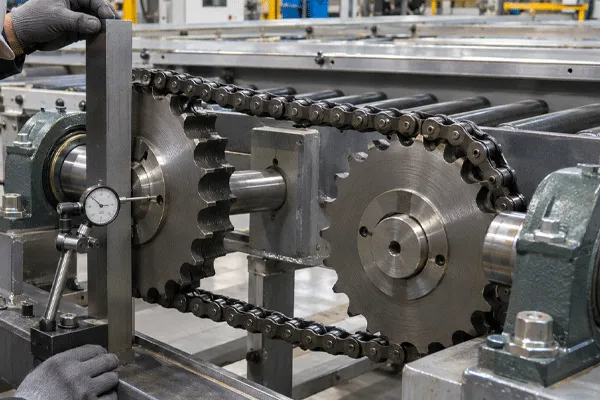
Timing pulleys and roller chain sprockets both provide positive drive, but their characteristics differ.
| Factor |
Timing Belt Drive |
Roller Chain Drive |
| Lubrication |
Usually not required |
Usually required |
| Noise |
Generally lower |
Generally higher |
| Weight |
Often lower |
Often higher |
| Precision synchronization |
Very good |
Good |
| Heavy shock loads |
Application dependent |
Often strong |
| Maintenance |
Relatively low |
More maintenance possible |
| Clean environments |
Well suited |
Lubrication can be a concern |
A timing pulley is often attractive for clean, precise and relatively quiet equipment.
A roller chain may be a better choice in another heavy industrial application.
This is why strong power transmission components suppliers often cover both technologies.
KTD, B&B, Martin, SDP/SI, and WM Berg all provide products across multiple mechanical transmission categories rather than only one belt wheel design.
Why Consider a China Timing Pulley Manufacturer?
For international OEM buyers, a China timing pulley supplier can offer advantages when the project needs customization combined with volume manufacturing.
This is especially relevant for:
- OEM machinery;
- industrial automation;
- textile equipment;
- packaging logistics;
- conveyor equipment;
- compressors;
- custom production machinery.
The key is to distinguish a simple trader from a manufacturer with engineering and manufacturing capability.
For example, KTD operates as a China-based industrial transmission component manufacturer and offers drawing-based production, CNC machining, custom timing pulleys, gears, sprockets, belts, and related drive components.
A serious B2B buyer should verify:
factory capability → machining equipment → material control → inspection → drawing review → sample validation → batch consistency → export support
A low quotation means little if the pulley causes machine downtime six months later.
For OEM projects, total cost matters more than purchase price alone.
Frequently Asked Questions About Timing Pulley Manufacturers
What does a timing pulley manufacturer produce?
A timing pulley manufacturer produces toothed pulleys designed to engage with synchronous or timing belts. Depending on the supplier, products may include standard pulleys, custom timing pulleys, pulley stock, flanges, hubs, sprockets, gears, and complete drive products.
What information should I send to a timing belt pulley manufacturer?
Send the timing belt profile and pitch, number of pulley teeth, belt width, bore size, mounting method, flange configuration, hub dimensions, material, surface treatment, quantity, operating speed, and preferably a dimensioned drawing.
Which timing pulley profile should I choose?
The profile must match the belt and application. Common families include HTD, GT, T, AT, MXL, XL, L, and other metric or imperial systems. Do not select a pulley profile independently from the timing belt.
Are aluminum or steel timing pulleys better?
Neither is always better. Aluminum is lighter and works well for many high-speed and automation applications. Steel offers higher strength and can suit heavier loads. Stainless steel can be useful when corrosion resistance is important.
Can a timing pulley manufacturer make OEM parts from drawings?
Yes. Many manufacturers provide OEM and custom production. KTD, B&B Manufacturing, BRECOflex, WM Berg, and other suppliers listed in this guide publicly offer custom timing pulley capabilities.
Who are the best timing pulley manufacturers in 2026?
There is no authoritative universal ranking. Representative manufacturers and suppliers include KTD, B&B Manufacturing, SDP/SI, Gates, Martin Sprocket & Gear, MISUMI, Optibelt, BRECOflex, Megadyne, and WM Berg. The best supplier for your project depends on required profile, tolerance, material, quantity, engineering support, location, customization, and delivery requirements.
Key Things to Remember When Selecting a Timing Pulley Manufacturer
- A timing belt pulley must match the belt profile, pitch, width, and system geometry.
- Do not choose a supplier based on price alone.
- There is no official universal ranking of the top 10 timing pulley manufacturers.
- Compare real manufacturing capability, not marketing claims.
- Check tooth profile accuracy, bore tolerance, runout, and surface finish.
- Confirm whether you need a standard catalog pulley or a fully custom design.
- Aluminum, steel, stainless steel, and engineering plastics serve different applications.
- HTD, GT, T, AT, MXL, XL, L, and other profiles are not automatically interchangeable.
- Ask whether the supplier can support drawings, DFM, samples, and OEM production.
- Consider delivery stability and batch consistency for long-term projects.
- Look at the complete timing belt and pulley system rather than treating the pulley as an isolated part.
- For high-precision industrial automation, motion control, packaging, medical equipment, and similar machinery, manufacturing accuracy becomes especially important.
- For custom projects, send a complete drawing and operating information to reduce quotation errors and unnecessary back-and-forth.
- The right supplier should provide a pulley that fits not only your shaft, but your complete mechanical power transmission system.
A good timing pulley is a small component with a large job. It must transfer motion accurately, support the required speed and torque, and keep working cycle after cycle.
For global OEMs and industrial machine builders, KTD provides custom and standard timing pulleys, timing belts, gears, sprockets, and related synchronous drive components. When a standard catalog pulley cannot meet the required bore, tooth profile, material, hub, flange, or installation geometry, drawing-based customization gives engineers another path to a reliable drive solution.












 09:38