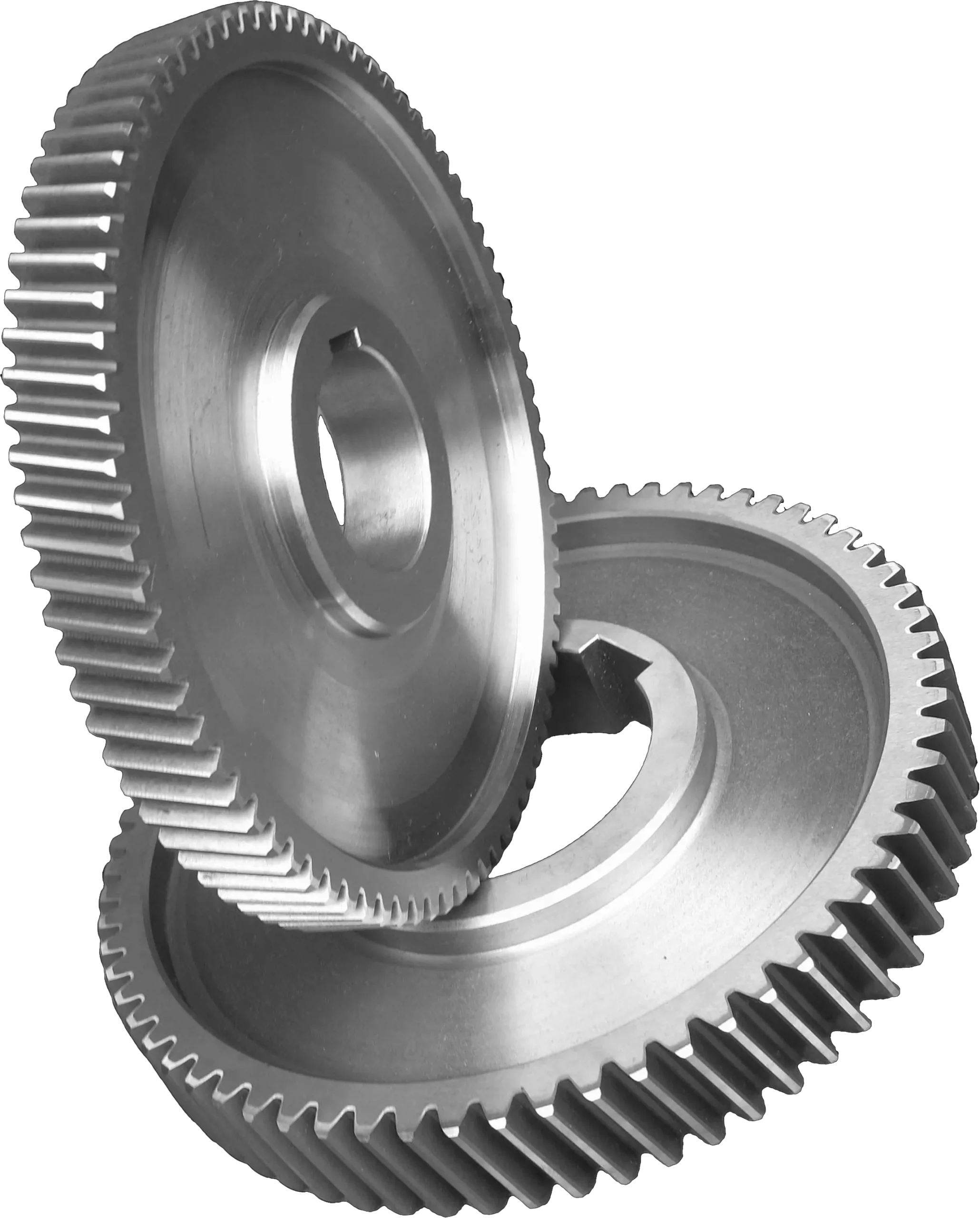
A worn or mismatched sprocket can make a chain jump, vibrate, lose power, and fail early. The problem may spread to bearings, shafts, and nearby equipment. A properly selected chain sprocket keeps the drive aligned and transfers motion with stable speed and torque.
A sprocket is a toothed wheel designed to engage with a chain and transmit rotary motion between shafts. Chain sprockets are used in motorcycles, conveyors, agricultural machinery, industrial equipment, tracked vehicles, lifting systems, and selected trailer mechanisms. Unlike a gear, a sprocket normally transfers power through a roller chain rather than directly meshing with another toothed wheel.
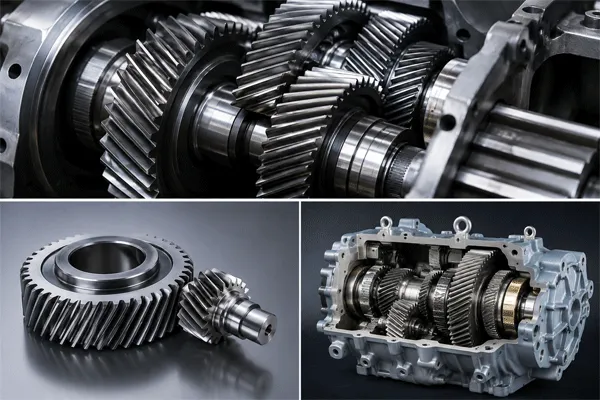
What Is a Chain Sprocket? Roller Chain and Motorcycle Sprockets Explained
Article Outline
- What is a chain sprocket?
- How do sprockets work with roller chain?
- What is the difference between a sprocket and a gear?
- What are the main types of sprockets?
- What are Type A, B, C, and D sprockets?
- How do pilot bore and taper bush sprockets differ?
- How does a motorcycle sprocket ratio affect performance?
- Where are sprockets used in machinery and vehicles?
- How do you choose the right sprocket?
- What causes sprocket and chain wear?
- How should a chain drive be maintained?
- Where may sprockets appear in semi-trailer systems?
- Frequently asked questions
- Key points to remember
What Is a Chain Sprocket?
A sprocket is a toothed wheel that engages with the links or rollers of a chain. As the sprocket rotates, its teeth enter the spaces between the chain rollers and pull the chain around its circumference.
Most power transmission sprockets work as part of a chain drive. One sprocket connects to the driving shaft, such as the output shaft of a motor. A second sprocket connects to the driven shaft. The chain passes around both sprockets and carries force from one shaft to the other.
A basic system includes:
- A drive sprocket
- A driven sprocket
- A compatible roller chain
- Two shafts
- Bearings
- A tensioning method
- Lubrication
- A protective guard
The drive sprocket receives torque from the motor or gearbox. Its teeth engage with the links of a chain and move it forward. The chain then rotates the second sprocket and the equipment connected to it.
The ASME B29.1 standard covers precision power transmission roller chains, attachments, and sprockets. It defines dimensional requirements for chain components and sprocket-tooth profiles so compatible products can operate together.
How Do Sprockets Work With a Roller Chain?
A roller chain contains inner links, outer links, pins, bushings, and rollers. The rollers are free to turn around the bushings. When the chain engages a sprocket, each roller sits in the curved space between two sprocket teeth.
The sprocket teeth push against the chain rollers. This action converts shaft rotation into chain movement. At the driven sprocket, the moving chain converts back into rotary motion.
Motor or Gearbox
       ↓
Drive Sprocket
       ↓
Roller Chain Movement
       ↓
Driven Sprocket
       ↓
Machine or Vehicle Mechanism
A chain and sprocket system creates positive power transfer. Unlike a smooth belt that may slip under some conditions, the chain mechanically engages the teeth on a sprocket. Correctly sized sprockets and chains can therefore maintain a predictable speed relationship.
However, the chain does not move in a perfectly smooth circle. Its links form a series of straight sections around the sprocket. This creates a small speed variation called the polygonal or chordal effect. A sprocket with more teeth generally produces smoother chain movement than a very small sprocket.
U.S. Tsubaki explains that chain pitch is measured from the center of one roller pin to the center of the next. The chain pitch and the sprocket tooth spacing must match for proper engagement.
What Is the Difference Between a Sprocket and a Gear?
A sprocket and a gear may both look like a wheel with teeth, but they operate differently.
A gear usually transmits motion by directly meshing with another gear. The gear teeth contact each other. A sprocket normally engages a chain, track, or similar linked component.
Sprocket vs Gear Comparison
| Feature |
Sprocket |
Gear |
| Main mating component |
Chain or track |
Another gear |
| Direct tooth-to-tooth contact |
Usually no |
Yes |
| Distance between shafts |
Can be relatively large |
Usually limited by gear geometry |
| Direction changes |
Depends on chain routing |
Depends on gear arrangement |
| Slip |
Positive engagement |
Positive engagement |
| Common uses |
Conveyors, motorcycles, machinery |
Gearboxes, transmissions, reducers |
| Lubrication need |
Chain and tooth contact |
Gear tooth contact |
| Tension adjustment |
Usually required |
Not normally required in the same way |
The main difference between a sprocket and a gear is therefore the component that receives the teeth. A gear tooth contacts another gear tooth. A sprocket tooth enters the space around a chain roller or track link.
Sprockets are often easier to use when motion must travel between two shafts separated by a practical distance. A gear train may require several gears to cover the same distance.
A chain drive can also tolerate a limited amount of contamination and harsh operation. Still, dust, water, misalignment, and poor lubrication can cause fast wear.
What Are the Main Types of Sprockets?
There are many different types of sprockets. The correct design depends on chain size, shaft mounting, load, speed, required maintenance, and available space.
Roller Chain Sprockets
Roller chain sprockets are the most common type of sprocket used for industrial transmission. Their teeth are shaped to engage standard roller chain.
They are found in conveyors, agricultural equipment, production machinery, motorcycles, lifting devices, and other power transmission systems. Tsubaki identifies roller chain designs as the most common sprocket category for transferring movement through chains formed by rollers, pins, and links.
Single-Strand Sprockets
A single-strand sprocket has one row of teeth for one chain strand. It is common in light- and medium-duty equipment.
Multiple-Strand Sprockets
Double-, triple-, or multiple-strand sprockets have two or more parallel rows of teeth. They work with duplex, triplex, or other multi-strand chains where higher torque and power capacity are required.
Tsubaki notes that multiple-strand sprockets are commonly used when an application requires greater torque or power.
Double-Pitch Sprockets
Double-pitch chain sprockets work with conveyor chains that have a longer pitch than standard transmission chains. They are often used in lower-speed conveying applications.
Idler Sprockets
Idler sprockets do not normally transmit the main driving torque. Their purpose is to guide the chain, control the chain path, increase wrap around another sprocket, or reduce slack in a long chain section.
Split Sprockets
A split sprocket can be installed around a shaft without removing other equipment from the shaft end. This can simplify replacement in large conveyors and tightly installed machinery.
Tracked-Vehicle Sprockets
Tracked vehicles use large drive sprockets that engage the links or drive lugs of a track. Excavators, bulldozers, tanks, and other tracked machines use these components to convert drivetrain torque into track movement.
Unlike standard industrial chain sprockets, tracked-vehicle sprockets must handle impact, mud, abrasive soil, and heavy shock loads.
What Are Type A, B, C, and D Sprockets?
Industrial sprockets are often classified by hub design.
| Sprocket Type |
Hub Configuration |
Typical Characteristic |
| Type A |
No hub extension |
Flat plate design |
| Type B |
Hub on one side |
Common shaft-mounted design |
| Type C |
Hub on both sides |
Greater support around the bore |
| Type D |
Detachable hub |
Replaceable or separately mounted hub |
Type A Sprockets
Type A sprockets are flat and have no hub extension on either side. They may be mounted to a flange, drum, plate, or another fabricated component.
Type B Sprockets
Type B sprockets have a hub on one side. This is a common type for general machinery because the hub provides space for a bore, keyway, and setscrew.
Type C Sprockets
Type C designs have hubs on both sides. The wider hub arrangement can provide extra support for the bore in selected heavy-duty applications.
Type D Sprockets
Type D sprockets use a detachable bolt-on hub attached to a sprocket plate. This can simplify replacement or allow one hub configuration to work with different sprocket plates.
Martin Sprocket’s engineering data defines these four construction styles as Type A with no hub, Type B with a hub on one side, Type C with hubs on both sides, and Type D with a detachable hub.
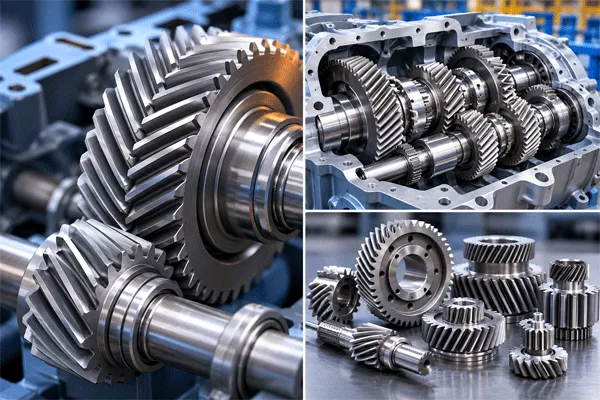
What Is a Chain Sprocket? Roller Chain and Motorcycle Sprockets Explained
How Do Pilot Bore and Taper Bush Sprockets Differ?
The bore is the central opening that fits over the shaft. Sprockets are available with several bore and mounting options.
Pilot Bore Sprockets
Pilot bore sprockets come with a small unfinished central hole. A machine shop enlarges and finishes the bore to suit the required shaft.
The final work may include:
- Boring to the shaft diameter
- Cutting a keyway
- Drilling and tapping setscrew holes
- Checking runout
- Balancing where required
Pilot bore designs offer flexibility for custom machinery, but they require accurate machining before installation.
Finished Bore Sprockets
Finished bore sprockets are supplied with the final bore size, keyway, and setscrew arrangement. They can reduce preparation time when a standard shaft size is used.
Taper Bush Sprockets
Taper bush sprockets use an interchangeable tapered bushing. As the bushing is tightened, it grips the shaft and centers the sprocket.
Benefits may include:
- Easier mounting
- Easier removal
- Reduced machining
- Broad shaft-size compatibility
- Reliable shaft grip
- Simplified maintenance
Taper bush and quick-detachable designs are useful when operators need faster installation or when one sprocket size must fit different shafts.
Martin’s technical data explains that taper-bushed sprockets use an interchangeable tapered bushing that provides a positive grip on the driven shaft.
How Does the Number of Teeth Affect Sprocket Performance?
The number of teeth affects speed, torque, chain articulation, sprocket diameter, and wear.
In a system with two sprockets, the speed ratio can be estimated as:
Driven Shaft Speed
=
Driving Shaft Speed
×
Driving Sprocket Teeth
÷
Driven Sprocket Teeth
For example, a 15-tooth drive sprocket turning at 1,000 rpm drives a 45-tooth sprocket:
1,000 × 15 ÷ 45 = 333.3 rpm
The driven shaft turns more slowly, but available torque rises in an idealized system before losses are considered.
A very small sprocket saves space, but it makes the chain bend more sharply. This can increase articulation, vibration, tooth loading, and wear.
A larger sprocket generally provides:
- Smoother operation
- Lower chain articulation
- Reduced polygonal effect
- More tooth engagement
- Potentially longer chain life
- Greater space requirement
Martin’s sprocket engineering guide lists input power, shaft speeds, sprocket sizes, shaft diameters, center distance, operating load, and lubrication among the key data required when selecting a roller chain drive.
How Does a Motorcycle Chain Sprocket Work?
A motorcycle chain system normally uses a front sprocket on the transmission output shaft, a rear sprocket on the wheel, and a motorcycle chain connecting them.
The front sprocket drives the chain. The chain then rotates the rear sprocket and the rear wheel of a motorcycle.
The sprocket ratio is:
Final Drive Ratio
=
Number of Rear Sprocket Teeth
÷
Number of Front Sprocket Teeth
For example:
Rear Sprocket: 45 teeth
Front Sprocket: 15 teeth

45 ÷ 15 = 3.00:1
A larger rear sprocket increases the numerical ratio. This normally improves acceleration and wheel torque but increases engine speed at a given road speed and may reduce theoretical top speed.
A smaller rear sprocket lowers the ratio. This may reduce engine speed during cruising but can also reduce acceleration and make low-speed operation less responsive.
The same general effect occurs when changing the front sprocket:
| Change |
General Effect |
| Smaller front sprocket |
More acceleration, higher engine rpm |
| Larger front sprocket |
Lower engine rpm, less acceleration |
| Larger rear sprocket |
More wheel torque |
| Smaller rear sprocket |
Taller overall gearing |
Motorcycle sprocket changes must remain compatible with chain pitch, chain length, clearance, adjustment range, and the manufacturer’s safety requirements. An extreme ratio change may affect chain angle, speedometer readings on some models, swingarm clearance, and drivetrain wear.
Motorcycles are one of the common vehicle applications for sprocket assemblies identified by U.S. Tsubaki.
Where Are Sprockets Used in Machinery and Vehicles?
Sprockets are used across a wide range of applications because they can transmit power over a useful distance and operate with predictable speed ratios.
Common applications include:
- Conveyor systems
- Agricultural machinery
- Packaging lines
- Food-processing equipment
- Textile machinery
- Printing equipment
- Mining equipment
- Material-handling systems
- Bicycles and motorcycles
- Tracked vehicles
- Industrial doors
- Lifting systems
- Assembly equipment
- Production lines
- Automated warehouses
Conveyor Systems
A conveyor may use sprockets to drive roller chain, engineering chain, tabletop chain, or another linked conveying component.
The sprocket and chain must match exactly. Standard roller chain sprockets should not be used with an incompatible conveyor chain merely because the pitch appears similar.
Agricultural Equipment
Harvesters, seeders, balers, manure systems, and feed equipment may use industrial chain sprockets because chain drives tolerate moderate contamination and can transmit torque between separated shafts.
Mining and Construction Machinery
Heavy equipment may use specialized chain and sprocket systems under dusty, abrasive, and shock-loaded conditions. Hardened teeth, sealing, lubrication, and frequent inspection become important.
Manufacturing Equipment
Factory systems use sprockets for timing, indexing, conveying, lifting, feeding, and transferring products between processes.
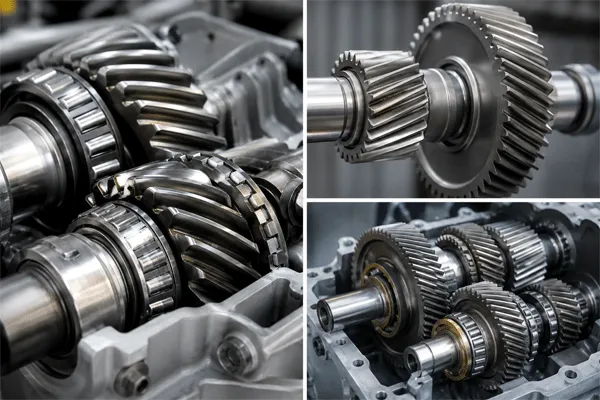
What Is a Chain Sprocket? Roller Chain and Motorcycle Sprockets Explained
How Do You Choose the Right Sprocket?
Choosing the right sprocket begins with the chain and application data. A wheel that looks similar may not mesh correctly with the installed chain.
At minimum, confirm the following:
| Selection Factor |
Why It Matters |
| Chain standard |
Ensures dimensional compatibility |
| Chain pitch |
Must match tooth spacing |
| Roller diameter |
Affects tooth-pocket geometry |
| Number of strands |
Determines tooth-row count |
| Number of teeth |
Controls ratio and operating smoothness |
| Input power |
Helps size the chain drive |
| Shaft speed |
Affects chain speed and wear |
| Driven speed |
Establishes the required ratio |
| Torque |
Affects tooth and hub loading |
| Shaft diameter |
Determines bore size |
| Keyway |
Transfers torque between shaft and hub |
| Center distance |
Affects chain length and wrap |
| Duty cycle |
Distinguishes occasional and continuous operation |
| Shock load |
Requires a suitable service factor |
| Environment |
Influences materials and lubrication |
| Mounting method |
Pilot bore, finished bore, QD, or taper bush |
| Lubrication |
Affects chain and sprocket life |
Renold’s chain selection process uses input power, driving sprocket speed, sprocket tooth counts, chain length, and shaft center distance as core selection data.
The drive sprocket should not be selected only to make the assembly smaller. Too few teeth can create rough operation and rapid wear.
Also confirm whether the system needs:
- Hardened sprocket teeth
- Stainless steel
- Coated carbon steel
- Multiple chain strands
- A split design
- A removable bushing
- Corrosion-resistant parts
- Food-grade lubrication
- An idler or chain tensioner
For high-power or safety-critical applications, a qualified mechanical engineer or chain-drive specialist should verify the complete design.
What Causes Chain and Sprocket Wear?
Chain and sprocket wear usually develop together. As the chain’s pins and bushings wear, the effective chain pitch grows. This is often described as chain elongation, although the side plates do not simply stretch like rubber.
The worn chain no longer sits correctly in the sprocket tooth pockets. Load moves toward the tips or sides of the teeth. Over time, the tooth profile develops a hooked or sharp shape.
Common causes include:
- Poor lubrication
- Chain misalignment
- Incorrect tension
- Abrasive dust
- Water or chemical exposure
- Excessive load
- Shock loading
- Worn bearings
- Bent shafts
- Wrong chain pitch
- Damaged teeth
- Poor sprocket runout
- Mixing new and badly worn components
Typical warning signs include:
- Hooked sprocket teeth
- Chain jumping
- Unusual noise
- Vibration
- Stiff chain links
- Rust
- Hot bearings
- Uneven chain tension
- Metal particles near the drive
- Rapid adjustment loss
A new chain should not normally be installed on heavily worn sprockets. The damaged tooth profile may cause the new chain to wear quickly.
Renold recommends monitoring chain wear because wear-related elongation affects the safety and performance of roller chain drive systems.
How Should a Chain and Sprocket System Be Maintained?
Good maintenance improves efficient power transmission and reduces unplanned downtime.
Keep the Sprockets Aligned
The sprocket faces should run in the same plane unless the system is specifically designed otherwise. Misalignment pushes the chain sideways and causes uneven tooth and plate wear.
Set Correct Chain Tension
A chain that is too tight increases bearing and shaft loads. A chain that is too loose may whip, jump teeth, strike guards, or leave the sprocket.
The correct sag depends on the drive layout, center distance, speed, and manufacturer guidance.
Apply Lubricant to the Correct Area
Oil must reach the pin-and-bushing joints inside the roller chain. Applying oil only to the outside of the rollers may not protect the most important wear surfaces.
Martin classifies common lubrication methods as manual application, oil bath or slinger, and circulated oil stream, with selection depending on chain speed and operating conditions.
Inspect the Entire Mechanical System
Check:
- Chain wear
- Sprocket teeth
- Shaft alignment
- Key and keyway
- Setscrews
- Bushings
- Bearings
- Guards
- Lubrication
- Tensioners
- Mounting bolts
- Supporting frame
The purpose of maintenance is to prevent uneven load distribution and identify faults before a new set of teeth or a new chain is damaged.
Where May Sprockets Appear in Semi-Trailer Systems?
A conventional semi-trailer does not use a motorcycle-style chain drive to power its road wheels. However, sprockets and chains may appear in selected auxiliary equipment, loading systems, and trailer-production machinery.
Possible applications include:
- Moving-floor unloading mechanisms
- Conveyor-floor trailers
- Mechanical winches
- Chain-operated tarpaulin systems
- Selected landing-gear mechanisms
- Vehicle-loading platforms
- Self-loading equipment
- Cable and hose handling systems
- Agricultural trailer conveyors
- Factory welding and assembly lines
- Painting-line conveyors
- Trailer component handling equipment
Not every mechanism uses sprockets. A trailer may instead use hydraulic cylinders, wire ropes, worm gears, planetary gearboxes, rack-and-pinion drives, or direct electric actuators.
As a professional semi-trailer manufacturer, we evaluate the complete working condition before selecting a mechanism. Cargo weight, operating frequency, road conditions, contamination, maintenance access, safety, and local spare-parts availability all matter.
For heavy-duty fleet projects, the buyer should ask:
- What load must the mechanism move?
- Is the load steady or shock-loaded?
- Will dust, mud, or water reach the drive?
- Can the chain be lubricated safely?
- Is a protective guard included?
- How will the operator adjust tension?
- Are replacement parts locally available?
- Has the mechanism been tested under load?
Case Study: Chain Drive for a Trailer Loading System
Consider a vehicle-loading trailer with a chain-operated platform. The original system uses small sprockets to save space.
During repeated loading cycles, the operator notices:
- Jerky platform movement
- Rapid chain wear
- High tooth loading
- Frequent tension adjustment
- Noise under heavy load
- Uneven movement between the two sides
The problem is not solved by installing a stronger chain alone. The engineering team reviews the whole chain sprocket system.
The revised design considers:
- Larger sprockets with more teeth
- A suitable chain pitch and strand count
- Better shaft alignment
- Synchronized left and right drives
- Improved bearing support
- A practical tensioning system
- Guards around moving components
- Accessible lubrication points
- Limit switches and overload protection
- A defined inspection schedule
The improved system distributes torque more evenly and reduces sharp chain articulation. Maintenance also becomes easier.
A chain drive is only as reliable as its weakest part—chain, sprocket, shaft, bearing, tensioner, or supporting frame.
This same principle applies to moving floors, conveyors, winches, and production equipment used in heavy-duty trailer operations.
How Does Trailer Engineering Affect Component Selection?
Semi-trailer buyers often focus first on payload and price. Those points are important, but reliable operation also depends on how the frame, axles, suspension, braking system, hydraulic equipment, electrical system, and auxiliary mechanisms work together.
For OEM and ODM trailer projects, we review:
- Cargo type
- Rated payload
- Loading method
- Unloading method
- Axle configuration
- Suspension type
- Tire requirements
- Tractor compatibility
- Local road conditions
- Legal dimensions
- Brake standards
- Hydraulic functions
- Working environment
- Required spare parts
- Maintenance capability
A port container chassis has different requirements from a mining dump trailer. A tanker differs from a side curtain trailer. A removable gooseneck lowboy needs a different loading mechanism from a flatbed semi-trailer.
When a chain drive is part of the design, we examine torque, speed, sprocket ratio, chain type, guarding, lubrication, service access, and emergency operation. The goal is not simply to install a sprocket. It is to build a dependable transport system.
Frequently Asked Questions
Is a sprocket the same as a gear?
No. A gear normally meshes directly with another gear. A sprocket engages a chain or track. Both transfer motion, but their tooth geometry and mating components are different.
What is the most common type of sprocket?
The roller chain sprocket is a common type in industrial power transmission. It works with roller chain in conveyors, agricultural equipment, motorcycles, factory machinery, and other chain-driven systems.
How do I identify a replacement sprocket?
Check the chain number or pitch, number of teeth, number of chain strands, bore diameter, keyway, hub style, shaft mounting method, outside dimensions, and material. Do not order from outside diameter alone.
What happens when I use a larger rear sprocket on a motorcycle?
A larger rear sprocket raises the final drive ratio. It generally improves acceleration and wheel torque but increases engine rpm at a given road speed and may reduce theoretical top speed.
Should I replace the chain and sprockets together?
If the chain and sprockets are both worn, replacing them as a set is usually best. A badly worn sprocket can quickly damage a new chain, while a worn chain can damage new sprocket teeth.
Why does a chain keep jumping off its sprocket?
Possible causes include poor alignment, too much chain slack, worn teeth, chain elongation, bent shafts, damaged bearings, incorrect pitch, insufficient chain wrap, or a weak tensioning system.
Key Points to Remember
- A sprocket is a toothed wheel designed to engage a chain or track.
- A chain drive transfers motion between separated shafts.
- Roller chain sprockets are widely used in machinery, conveyors, agriculture, and motorcycles.
- A sprocket is not the same as a gear.
- Chain pitch, roller size, and sprocket tooth form must match.
- The number of teeth controls speed ratio and affects chain smoothness.
- Type A sprockets have no hub; Type B has one hub; Type C has two hubs; Type D uses a detachable hub.
- Pilot bore sprockets require final machining.
- Taper bush sprockets simplify shaft installation and removal.
- Motorcycle front and rear sprocket sizes affect acceleration, engine rpm, and wheel torque.
- Poor lubrication and alignment cause rapid chain and sprocket wear.
- New chains should not normally run on badly worn sprockets.
- Sprockets may appear in trailer loading, moving-floor, winch, tarp, and factory conveyor systems.
- Reliable design requires correct chain, sprockets, shafts, bearings, guards, lubrication, and supporting structure.
- Heavy-duty trailer selection should always reflect cargo, payload, roads, regulations, and the real operating method.
Planning a customized semi-trailer for container logistics, mining, construction machinery, liquid transport, powder transport, vehicle delivery, or heavy-duty fleet operations? Send us your cargo type, rated payload, axle requirements, road conditions, loading and unloading method, destination market, and preferred trailer configuration. We can prepare an OEM or ODM proposal with structural design, component selection, production, inspection, and export support.












 15:42
15:42