A wrong belt choice can cause slip, heat, noise, bearing stress, and unstable output. The problem becomes worse when buyers confuse a synchronous belt with a cogged v-belt. The solution is simple: match the drive type to torque, timing, speed, load, and maintenance needs.
A synchronous belt is usually better when you need exact timing, no slippage, high efficiency, and stable transmission. A cogged v-belt is better when you need flexible installation, lower cost, smooth operation, and compatibility with standard v-belt sheaves. The best choice depends on your application, pulley design, load, environment, and maintenance plan.
Article Outline
What Is the Difference Between a Synchronous Belt and a Cogged Belt?
How Does a Synchronous Belt Work in a Drive System?
What Is a Cogged V-Belt and Where Is It Used?
Synchronous Belt vs V-Belts: Which Has Better Efficiency?
Which Belt Type Handles Torque and Load Better?
How Do Pulley, Sheave, and Sprocket Design Affect Belt Performance?
Which Belt Drive Is Quieter and Easier to Maintain?
Which Application Should Use a Synchronous Belt?
Which Application Should Use Cogged V-Belts?
How Should Buyers Choose the Right Belt for Industrial Transmission?
What Is the Difference Between a Synchronous Belt and a Cogged Belt?
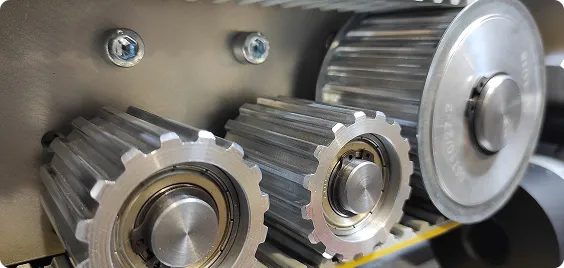
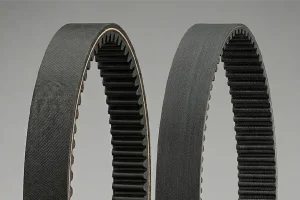
The main difference is how the belt transfers power. A synchronous belt, also called a timing belt, has a tooth profile that matches the grooves of a pulley or sprocket. This creates positive engagement, so the belt and pulley move together without slip. That is why synchronous belt drives are common in equipment that needs exact motion control.
A cogged belt is different if we are talking about a cogged v-belt. This type of v-belt has notches or cogs on the inner side. These cogs improve flexibility, reduce bending heat, and help the belt wrap around smaller diameter sheaves. But it still works mainly by friction against the sheave sidewall, so some slippage can happen under poor tension or heavy load.
This is why the term cog belt can confuse buyers. In some markets, people use “cog belt” to mean synchronous belt. In other cases, they mean a raw edge cogged v-belt. When we help B2B buyers choose belts for machinery, we always confirm the tooth shape, pulley type, drive speed, shaft distance, and transmission requirement before recommending a component.
How Does a Synchronous Belt Work in a Drive System?
A synchronous belt works through tooth engagement. The belt tooth fits into the pulley groove, so the belt does not depend on friction alone. This makes the drive stable, repeatable, and suitable for systems where the driven shaft must follow the motor shaft at a fixed ratio.
This is the key reason synchronous belt drives are used in automation equipment, 3D printers, medical devices, packaging machines, textile machinery, CNC systems, and precision conveyor systems. The belt can control position, reduce slippage, and keep timing accurate during continuous operation.
Another benefit is lower tension demand. Compared with many traditional v-belts, synchronous belts can run with lower installation tension, which may reduce stress on the bearing and shaft. Industry sources also describe synchronous belts as useful where precise registration is required and where the tooth profile must match the pulley groove closely.
What Is a Cogged V-Belt and Where Is It Used?
A cogged v-belt is a modified v-belt. It keeps the classic trapezoid shape, but the inner surface has a cog or notch design. This allows the belt to bend more easily around the sheave. In many cases, it can replace a wrapped v-belt without changing the existing pulley system.
The cogged structure helps reduce heat buildup because the belt bends with less resistance. The U.S. Department of Energy notes that cogged belts can run cooler, last longer, and improve efficiency compared with standard v-belts in suitable applications.
For many industrial machines, a cogged v-belt is a practical option. It is often used in fans, pumps, compressors, air handling units, agricultural machines, and general power transmission systems. It is not usually chosen for exact timing, but it is useful when buyers want a balance of cost, availability, and performance.
Synchronous Belt vs V-Belts: Which Has Better Efficiency?
In many precision drive systems, the synchronous belt has better long-term efficiency because it avoids speed loss from slippage. Since it uses positive engagement between the belt tooth and pulley groove, it can maintain a fixed speed ratio more reliably than friction-based v-belts.
Traditional v-belts can be efficient when installed correctly. However, their performance depends heavily on pulley size, sheave wear, alignment, belt tension, transmitted torque, and load matching. The U.S. Department of Energy states that v-belt drive efficiency can be 95% or more at installation, but it can drop over time if slippage occurs and the belt is not re-tensioned.
Here is a simple comparison:
| Factor |
Synchronous Belt |
Cogged V-Belt |
| Power transfer |
Tooth engagement |
Friction and wedging action |
| Slip risk |
Very low |
Possible under poor tension |
| Timing accuracy |
Excellent |
Not suitable for exact timing |
| Pulley/sheave type |
Timing pulley or sprocket |
V-belt sheave |
| Installation tension |
Usually lower |
Must be tensioned correctly |
| Cost |
Often more expensive |
Usually lower |
| Best use |
Precision drive and timing |
General industrial transmission |
If the application needs exact motion, the synchronous belt is usually the better option. If the system only needs reliable power transfer with simple maintenance, cogged v-belts may be enough.
Which Belt Type Handles Torque and Load Better?
The answer depends on the load, pulley diameter, belt width, tooth profile, and drive design. A synchronous belt can handle high torque well when the tooth profile and pulley are correctly selected. Because the belt and pulley engage mechanically, the drive can transmit torque without relying on extra tension to prevent slip.
A cogged v-belt can also handle strong loads, especially when multiple belts are used together. But because it depends on friction and wedge force, it needs correct tension. If the belt is too loose, slippage can occur. If it is too tight, it can overload the shaft and bearing.
For buyers, this matters because a cheaper belt can become expensive if it causes bearing wear, motor overload, heat, noise, or unplanned shutdowns. As a China-based precision power transmission components manufacturer, we usually ask customers for motor power, speed, pulley diameter, shaft distance, load condition, and working environment before selecting the belt type.
How Do Pulley, Sheave, and Sprocket Design Affect Belt Performance?
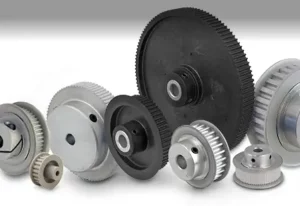
The pulley, sheave, or sprocket is not a small detail. It decides how well the belt can engage, wrap, and transmit power. A synchronous belt needs a matching timing pulley. If the tooth pitch, width, or profile is wrong, the belt may wear quickly or create noise.
For v-belts, the sheave groove is just as important. The belt sidewall must contact the sheave correctly. If the sheave groove is worn, shiny, damaged, or misaligned, the belt may slip, heat up, or fail early. Maintenance guides for v-belt drives commonly stress sheave inspection, alignment, and correct tension as key steps for stable operation.
A common mistake is only replacing the belt while ignoring the pulley or sheave. In real factory operation, the belt is only one component in the full transmission system. The motor, shaft, bearing, pulley, belt material, installation tension, and guard design all work together.
Which Belt Drive Is Quieter and Easier to Maintain?
A cogged v-belt can be quiet and simple in many general machines. It does not require a toothed pulley, and it can often fit existing v-belt sheaves. This makes replacement easier for maintenance teams, especially when the machine is already designed for v-belts.
A synchronous belt may require more careful pulley alignment and tooth matching, but it does not need frequent re-tensioning in the same way friction-based drives often do. It is also helpful when the application cannot accept slip. In other words, the synchronous belt may need more accurate design at the beginning, but it can provide more stable performance later.
Noise depends on speed, belt width, tooth shape, alignment, load, and cover design. A poorly aligned synchronous belt can be noisy. A poorly tensioned v-belt can also be noisy. Good design is still the real answer.
Which Application Should Use a Synchronous Belt?
Choose a synchronous belt when the application needs accurate movement. This includes automation equipment, conveyor positioning systems, packaging machines, textile machinery, CNC machines, robotics, 3D printers, medical equipment, and other machines where timing matters.
A synchronous belt is also a strong option when the drive must avoid slippage. For example, if the driven shaft must match the motor position exactly, a friction belt is usually not ideal. The tooth profile helps the belt engage with the pulley and keep the transmission ratio stable.
Typical synchronous belt applications include:
- Precision conveyor indexing
- Servo motor drive systems
- Medical equipment motion control
- 3D printer X/Y axis movement
- Packaging line positioning
- Textile machine transmission
- Automation equipment timing systems
If your machine has strict timing, stable speed, and repeatable positioning requirements, synchronous belt drives are often the better engineering choice.
Which Application Should Use Cogged V-Belts?
Choose cogged v-belts when the machine needs flexible, economical, and reliable power transmission but does not require exact timing. A cogged v-belt is especially useful when the drive uses smaller sheaves or when the belt needs better heat reduction compared with a standard wrapped belt.
Common applications include fans, pumps, compressors, blowers, agricultural equipment, HVAC systems, light industrial machines, and many general motor-to-shaft drives. In these systems, a small amount of slip may be acceptable, and the lower cost can be attractive.
Cogged v-belts are also a good option when the buyer wants to improve an existing v-belt drive without redesigning the full pulley system. The belt can often provide better bending capability and cooler operation while keeping the same basic drive layout.
Synchronous Belts vs V-Belts: Quick Selection Guide
Here is a simple buyer-focused comparison:
| Buyer Requirement |
Better Option |
Reason |
| Exact timing |
Synchronous belt |
No slip, positive engagement |
| Low initial cost |
Cogged v-belt |
Usually more economical |
| Existing v-belt sheave |
Cogged v-belt |
Easier replacement |
| High positioning accuracy |
Synchronous belt |
Tooth engagement controls movement |
| Smaller pulley diameter |
Cogged v-belt or selected synchronous belt |
Depends on design and wrap |
| Lower bearing load |
Often synchronous belt |
Lower tension may be possible |
| Heavy shock load |
Depends on design |
Need torque and load calculation |
| Easy field maintenance |
Cogged v-belt |
Simple replacement in many machines |
| Long-term stable speed |
Synchronous belt |
Less speed loss from slippage |
| General industrial drive |
Cogged v-belt |
Practical and cost-effective |
The best choice is not always the most expensive belt. The best choice is the belt that fits the machine.
How Should Buyers Choose the Right Belt for Industrial Transmission?
Start with the machine requirement, not the belt catalog. Ask these questions first:
Does the application need exact timing?
Is slip acceptable?
What is the motor power and speed?
What torque does the driven shaft need?
What is the pulley or sheave diameter?
Is the load steady or shock-heavy?
What is the working environment?
How often can the belt be maintained?
Is the buyer replacing an existing belt or designing a new drive?
If the answer is “we need exact timing and no slippage,” choose a synchronous belt. If the answer is “we need a reliable, easy-to-replace belt for a general drive,” a cogged v-belt may be enough.
For custom projects, our role as a precision power transmission components manufacturer is not only to supply belts. We also help match timing pulleys, v-belt sheaves, industrial gears, poly V pulleys, sprockets, chains, conveyor rollers, and custom machined components. That helps B2B customers reduce selection errors and improve full-system performance.
Small Case Study: Conveyor Roller Drive Selection
A conveyor system builder needed a belt drive for a light-duty transport line. At first, the buyer asked for a cogged belt because they wanted a flexible and economical option. After reviewing the application, we found that the conveyor needed repeatable positioning during stop-start movement.
In this case, a synchronous belt was a better choice. The tooth engagement helped reduce position drift, while a matching timing pulley improved motion control. The buyer avoided later problems with slippage, inconsistent product spacing, and extra maintenance.
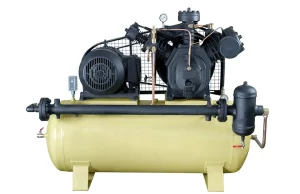
In another project, an air compressor manufacturer needed a replacement belt for a standard motor-driven system. The drive did not require exact timing. A cogged v-belt was the better option because it matched the existing sheave, reduced bending heat, and kept replacement simple.
The lesson is clear: the application decides the belt.
FAQs About Synchronous Belts, Cogged Belts, and V-Belts
Is a synchronous belt the same as a cog belt?
Sometimes yes, but not always. Some people use “cog belt” to describe a synchronous timing belt with teeth. Others use it to describe a cogged v-belt with notches on the inner side. Always confirm the belt shape, tooth profile, and pulley type before ordering.
Are synchronous belts better than v-belts?
Synchronous belts are better for timing, no-slip transmission, and accurate movement. V-belts are often better for simple, economical, general-purpose power transmission. The better choice depends on the machine design, load, speed, and maintenance needs.
Do cogged v-belts slip?
Yes, cogged v-belts can slip because they still depend on friction and wedging action. Correct tension, sheave condition, and alignment are important. If the drive cannot accept slip, a synchronous belt is usually a better choice.
Why are synchronous belts more expensive?
A synchronous belt often needs a matching timing pulley or sprocket, more precise tooth design, and better alignment. The belt itself may also cost more. However, it can reduce slippage, improve efficiency, and support precise operation, which may lower long-term cost.
Can I replace a v-belt with a synchronous belt?
Not directly in most cases. A synchronous belt needs a matching toothed pulley, while a v-belt uses a sheave. To replace a v-belt with a synchronous belt, the pulley system and drive design usually need to be changed.
Which belt lasts longer?
It depends on the application. A synchronous belt may last longer in a clean, well-aligned precision drive. A cogged v-belt may last longer than a standard wrapped v-belt in some high-bending or heat-sensitive applications. Poor alignment, wrong tension, overload, and bad pulley condition can shorten the life of any belt.
Key Takeaways
A synchronous belt is best for timing, no-slip movement, and precision drive systems.
A cogged v-belt is best for general transmission, flexible installation, and cost-effective replacement.
The word cog belt can mean different things, so confirm whether the buyer means a timing belt or a cogged v-belt.
Synchronous belt drives use tooth engagement; v-belts use friction and wedge action.
V-belt efficiency depends on tension, sheave condition, pulley size, alignment, and load.
Cogged v-belts can run cooler and bend better than standard wrapped v-belts in many applications.
The pulley, sheave, sprocket, shaft, and bearing are part of the full drive system.
For B2B buyers, the safest selection method is to share machine data before ordering: speed, torque, load, pulley diameter, shaft distance, environment, and maintenance plan.
The best belt is not simply the strongest or most expensive one. It is the belt that fits the application, design, and long-term performance target.












 17:17
17:17