Wrong belt selection can create noise, slippage, poor efficiency, and early downtime. In compact machines, the problem gets worse fast. The solution is to use a drive system that handles high power, high speed, and small pulley diameters without sacrificing durability.
A poly V belt is used for compact, high-speed power transmission in automotive and industrial systems. It is commonly used in car accessory drives, pumps, washing machines, textile machinery, HVAC units, fitness equipment, conveyors, and other machines where smooth running, small pulleys, and efficient power transmission matter.
Outline
What is a poly V belt, and how is it different from a V belt?
How does the poly V profile work with pulley grooves?
What is poly V used for in automotive application systems?
Why is poly V so common in industrial machinery and manufacturing?
Why does a poly V belt improve efficiency in compact design?
What advantage does poly-v offer over traditional v-belts?
Which belt profiles, dimensions, and matching rules matter most?
How do durability, flexibility, and resistance to wear affect belt life?
What can engineers learn from real industrial belt case studies?
How should you choose a reliable supplier or manufacturer?
What is a poly V belt, and how is it different from a V belt?
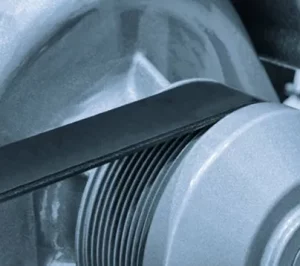
A poly v belt, also called a poly-v, multi-rib, or poly vee belt, is a power transmission belt that combines the flexibility of a flat belt with the high power capability of a v belt. Official manufacturer literature describes it as a multi-ribbed V-belt with several ribs running lengthwise along the belt, rather than one large wedge section like many standard v-belts.
That design changes the whole transmission behavior. Instead of relying on one larger wedge section, the poly v belt uses multiple longitudinal ribs to increase contact with the pulley. This gives the drive more flexibility, more surface contact, and better performance where space is limited, pulley diameters are small, or operating speed is high.
For an engineer, the biggest difference is practical: a standard v belt is often fine for simple drives, but a poly v system is usually better when you need higher efficiency, smoother running, and a more compact design. That is why modern machine builders keep choosing this belt drive format across more industries.
How does the poly V profile work with pulley grooves?
Hutchinson explains that a poly v belt transmits torque by contact between the belt rib flanks and the pulley grooves. In simple terms, each rib fits into a corresponding groove, so the load is shared across many ribs instead of one larger section. That creates strong matching between the belt and pulley profile and helps the system run steadily.
This larger contact pattern is one of the main reasons poly v systems work so well. Optibelt states that the numerous ribs create a large contact surface area with the pulley, producing less slippage, smoother running, and high efficiency. Gates adds that Micro-V multi-ribbed belts offer very high power capacity per rib and improved performance on small diameter pulleys.
From a design point of view, the profile matters as much as the material. Gates lists common industrial belt profiles such as PJ, PK, PL, and PM, each with its own rib spacing and dimension range, while Hutchinson references ISO profile standards for Poly V construction. That means proper pulley selection is not optional. It is the foundation of reliable power transmission.
What is poly V used for in automotive application systems?
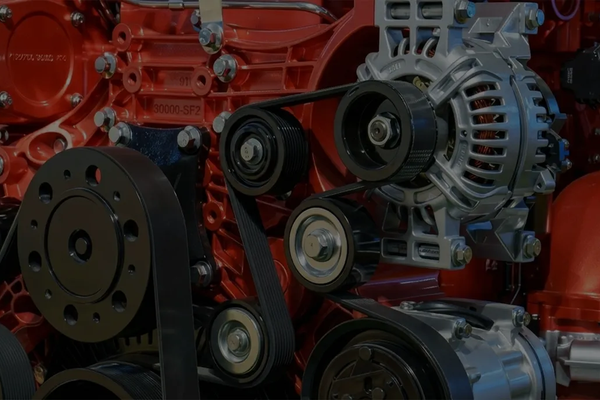
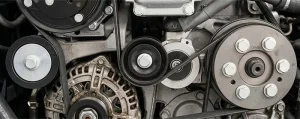
In automotive systems, the most common application is the front-end accessory drive. Hutchinson states that its Poly V belt is used in FEAD systems and can drive multiple accessories at the same time, including the alternator, A/C compressor, power steering pump, water pump, and fan. That makes the poly v design ideal for modern vehicles where one belt must serve several functions around the engine.
This multi-accessory role is one reason the format became so important. Gates notes in its industrial catalog that it created the multi-ribbed belt that changed automotive transmission, while SKF’s auxiliary drive information shows multi-V belt kits in passenger vehicles where the auxiliary belt may drive the water pump or alternator pulley. In other words, poly v belt design supports the growing demand for smaller, lighter, and more efficient accessory drives.
For B2B buyers serving vehicle systems, the big advantage is clear: one flexible, high-performance drive element can manage multiple loads while staying compact and efficient. That is why Poly V remains a trusted solution in both OE-style and replacement automotive markets.
Why is poly V so common in industrial machinery and manufacturing?
Gates says its Micro-V belts are designed to cover a wide range of industrial applications, including washing machines, textile machinery, vacuum cleaners, lawn mowers, garden machinery, pump installations, medical equipment, HVAC, fitness equipment, and conveyor applications. Continental also describes multi V-belts as quiet-running power transmission elements for a broad range of applications.
That spread across various industries happens because poly v belts solve several real machine problems at once. They can run quietly, handle high belt speed, and work with small pulleys and wraparound drives. In industrial machinery, that matters when builders need compact layouts, low vibration, and more output from a smaller drive package.
In manufacturing environments, machine builders also care about availability, maintenance intervals, and easy integration with standard pulleys. Gates specifically says the belts operate in standard pulleys built to DIN 7867 or ISO 9982 cross-section standards, which helps reduce custom drive complications. That is useful for OEMs and system integrators who need scalable, repeatable solutions.
Why does a poly V belt improve efficiency in compact design?
One of the strongest reasons to use a poly v belt is efficient power transmission in a smaller package. Optibelt explains that a V-ribbed belt combines the flexibility of a flat belt with the high power transmission of a V-belt, making it ideal when high power must be moved in a small space. Continental also highlights multi V-belts for high gear ratios, high belt speeds, and small pulley diameters.
The technical logic is simple. More ribs mean a larger contact area and better load sharing. That gives the system more grip, less slip, and more stable running without making the drive physically large. Optibelt even states that ribbed belts can deliver high efficiency over 95% in the mill-drive example it presents.
For designers working in compact housings, medical equipment, 3D printer systems, HVAC modules, or automation units, this matters a lot. When space is limited, a traditional v belt may simply take too much room. A poly v drive can often do the job more efficiently and with less vibration.
What advantage does poly-v offer over traditional v-belts?
The biggest advantage is balance. A poly-v belt keeps the flexibility of a flat construction while delivering the wedge-based load transfer of a v belt. Optibelt summarizes this directly, and Gates adds benefits such as high flexibility, reduced heat buildup, improved rib crack resistance, and enhanced load-carrying capacity on small diameter pulleys.
Compared with some traditional v-belts, a ribbed design can offer smoother operation, less slippage, and higher usable performance in compact drives. Continental says multi V-belts run extremely quietly, while Optibelt highlights smoother running and lower vibration. In applications where a machine must run steadily and quietly, that can be a major performance gain.
There is also a maintenance benefit. Optibelt notes that ribbed belts in its mill-drive example support low maintenance and longer service life, and Gates highlights long life due to extra load-carrying capacity. For buyers focused on lower maintenance and uptime, that is often the deciding factor.
Which belt profiles, dimensions, and matching rules matter most?
A poly v system only works well when the belt and pulley are properly matched. Gates lists PJ, PK, PL, and PM sections, each with different rib pitch and effective length ranges. Hutchinson adds that its Poly V profile follows ISO standards and emphasizes controlled manufacturing accuracy and stable belt length over time.
In real projects, that means buyers need to check more than just belt length. They should confirm rib count, profile family, pulley width, pulley condition, and whether the drive uses flat back idlers, reverse idlers, or fixed center distances. Continental even offers variants for fixed center distances and double-sided use, which shows how broad the application range can become when the profile is selected correctly.
For industrial OEMs, this is where engineering discipline matters. Correct profile and matching reduce noise, improve service life, and help the drive run smoothly from the first start-up. A wrong profile can damage the pulley grooves, increase heat, and destroy the efficiency you expected.
How do durability, flexibility, and resistance to wear affect belt life?
Durability in a poly v belt depends on material, cord design, operating tension, and the environment. Gates says its Micro-V construction uses special rubber compounds, improved undercord stability, and polyester tensile construction for fatigue and shock resistance. Hutchinson describes EPDM rubber ribs with high resistance to mechanical stress, oil, fluid, ozone, and environmental influences.
That matters because belts rarely fail in perfect lab conditions. They fail in dust, heat, moisture, repeated bending, or misalignment. Optibelt highlights resistance to wear in dusty, dirty mill environments, and Continental’s agriculture material emphasizes reliable operation in dirt, dust, moisture, sun, rain, drought, and cold. Those are exactly the kinds of conditions where a durable industrial belt becomes valuable.
A good belt should also stay flexible over time. Hutchinson says belt stiffness and length remain stable over time, while Gates points to reduced heat build-up and improved rib crack resistance. So, for buyers asking whether poly v is truly durable, the answer is yes—when the system is correctly sized, aligned, and tensioned.

What can engineers learn from real industrial belt case studies?
A useful example comes from Optibelt’s milling case study. The company reports that a food-processing mill experienced belt failures after only 1000 hours, but after changing to the optibelt OMEGA RB solution, belt life doubled to over 2000 hours and annual savings reached about $750 per machine. That is a small but real industrial proof point for how the right belt drive selection can improve uptime.
The engineering lesson is not just “buy a better belt.” It is to review the whole drive system: pulley size, reverse bending, load, environmental contamination, and expected operating speed. Optibelt specifically notes issues such as back-bend idlers and explains why the one-piece construction performed better. That is the kind of technical detail a smart engineer should always review before standardizing a drive.
This is also why professional design tools exist. Continental and SKF both provide digital tools for designing and evaluating multi V-belt or general belt drive systems, which shows how important precision is in these drives. Good component selection is part engineering, part experience, and part supplier expertise.
If you are sourcing for industrial OEMs, automation integrators, or distributors, choosing the right supplier or manufacturer matters as much as choosing the right belt. As your uploaded brief makes clear, this topic is aimed at global B2B buyers looking for standard and custom timing pulleys, timing belts, industrial gears, poly V pulleys, sprockets, chains, and conveyor roller solutions from a China-based precision power transmission components manufacturer.
From a buyer’s view, a strong supplier should offer more than product availability. They should support pulley and belt matching, custom widths or rib counts where needed, consistent material quality, and clear technical support. This is especially important for machinery manufacturers, industrial distributors, conveyor system builders, air compressor manufacturers, textile machinery companies, 3D printer brands, and medical equipment manufacturers—the exact customer groups described in your brief.
In real sourcing decisions, I suggest checking six things:
- product range and standard profile coverage
- custom manufacturing capability
- matching pulleys and related components
- quality control and dimensional consistency
- response speed and communication
- after-sales technical support
That is how buyers build trust in a long-term partner, not just in a single high-quality part.
Typical poly V application map
Here is a practical view of where poly v fits best:
| Application area |
Why poly V works well |
Example uses |
| Automotive accessory drives |
Multiple accessories on one compact drive |
alternator, water pump, A/C, fan |
| Home appliances |
Smooth, compact, efficient operation |
washing machines, vacuum cleaners |
| Industrial machinery |
High speed and small pulleys |
textile machinery, fitness equipment |
| HVAC and pumps |
Quiet running and space-saving layout |
HVAC blowers, pump installations |
| Conveyor and processing |
Stable transmission and compact geometry |
conveyor applications, general industrial lines |
| Harsh industrial environments |
Resistance to wear, dust, and vibration |
mills, agriculture-related systems |
These examples are drawn from official manufacturer application lists and case materials.
FAQs
What is poly V used for?
A poly v belt is used for compact, efficient power transmission in automotive and industrial drives. Common uses include car accessory systems, washing machines, textile machinery, HVAC units, pumps, medical equipment, fitness equipment, and conveyor systems.
Is a poly V belt better than a V belt?
Not always, but it is often better when a machine needs high power in a compact space, small pulleys, smooth running, and high-speed performance. Official manufacturer sources describe ribbed belts as combining flat-belt flexibility with V-belt power transmission.
Why is poly V more efficient?
Its multiple ribs create a larger contact area with the pulley, which improves grip, reduces slippage, and supports smoother running. One Optibelt source cites efficiency over 95% in a mill-drive example.
Can poly V run on small pulleys?
Yes. Gates and Continental both highlight multi-rib belts for small pulley diameters and compact drive packages. That is one of the major reasons engineers choose them in modern machines.
What industries use poly V belts?
Manufacturers list automotive, lawn and garden, agriculture, general industrial processing, energy, paper, washing machines, HVAC, fitness equipment, textile machinery, pumps, and conveyor applications among common uses.
What should buyers check before ordering poly V belts?
Buyers should verify profile, rib count, length, pulley compatibility, operating environment, and whether the supplier can provide matching pulleys, stable quality, and technical support.
Key things to remember
A poly v belt is used where machines need compact, smooth, and efficient power transmission.
It works by using multiple ribs that contact the pulley grooves and spread load across a larger working area.
It is common in automotive accessory drives and many industrial systems.
Major advantages include smooth running, low vibration, good efficiency, and strong performance on small pulleys.
Proper profile and pulley matching are critical for long belt life.
In harsh environments, material quality and resistance to wear matter just as much as the design.
For B2B buyers, the right supplier should offer not only belts, but also matching components, manufacturing consistency, and technical support.












 14:41
14:41