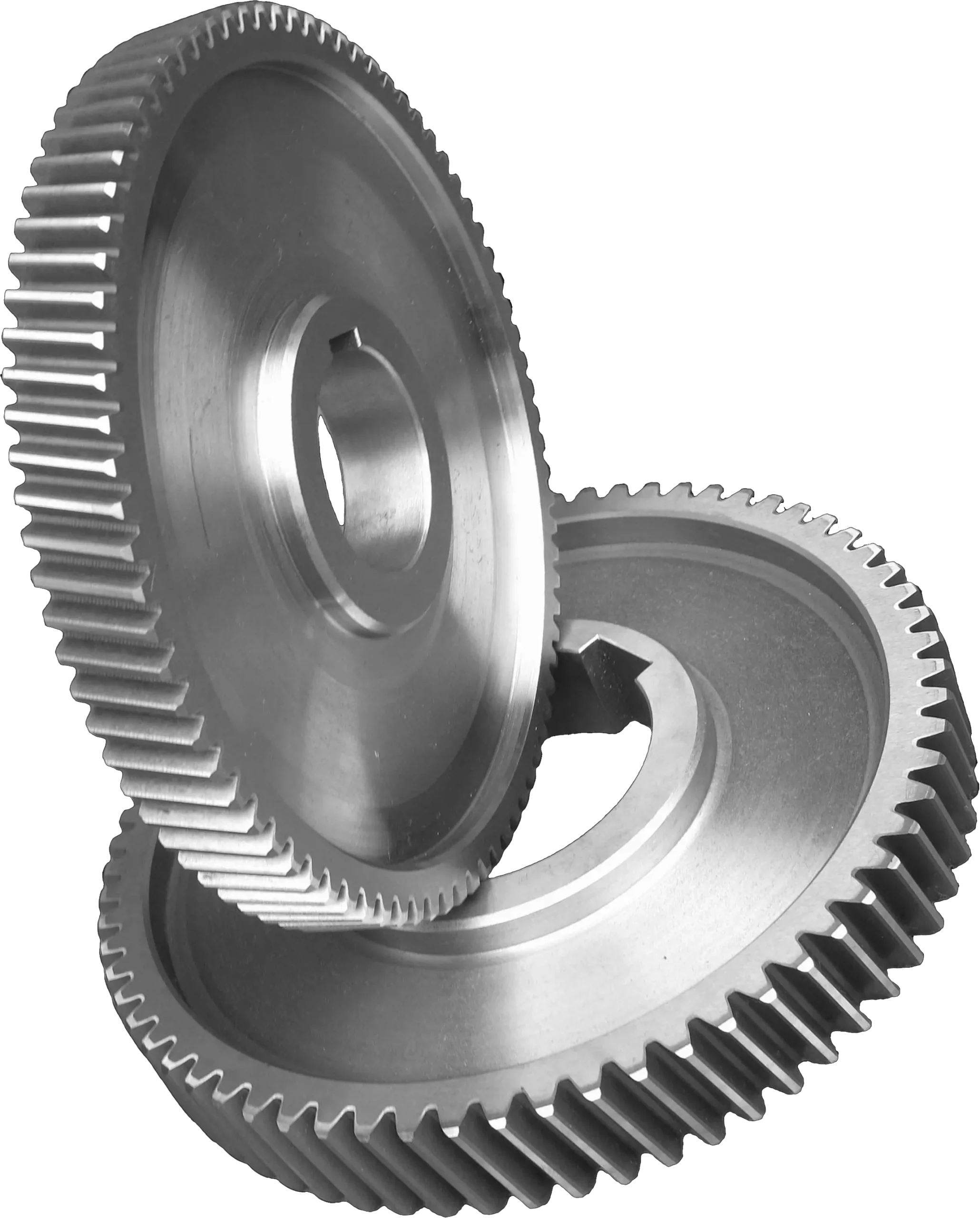
A wrong gear choice can create noise, wear, poor efficiency, and costly downtime. That problem grows fast in automation, conveyors, compressors, and medical devices. The fix is simple: understand where each spur gear works best, and match the gear to the load, speed, and layout.
A spur gear is used in many kinds of machinery that need reliable motion and power transfer between parallel shafts. It is one of the most common gear types because it has straight teeth, a simple design, and is easy to make, inspect, and replace. You will find spur gear applications in gear reducers, conveying systems, machine tools, robotics, food equipment, and many other industrial applications.
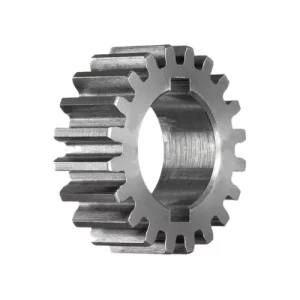
Precision Spur Gear
Outline
1. What Is a Spur Gear and How Does This Gear Work?
2. Where Is the Spur Gear Used in Modern Machinery?
3. Why Are Spur Gears Used for Parallel Shafts?
4. Spur Gear vs Helical Gear: Which Gear Fits the Job Better?
5. What Are the Main Spur Gear Applications in Industrial Applications?
6. How Do Gear Teeth, Number of Teeth, and Shaft Position Affect Performance?
7. What Are the Advantages of Spur and the Benefits of Spur Gear Design?
8. When Should You Choose Custom Spur Gears Instead of Standard Gear Sizes?
9. What Materials and Manufacture Methods Matter for Spur Gear Quality?
10. How Do You Choose a Spur Gear Manufacturer for Global B2B Projects?
What Is a Spur Gear and How Does This Gear Work?
A spur gear is the simplest type of gear used to transmit rotary motion and torque between parallel shafts. KHK describes spur gears as cylindrical gears used for transmission of rotation and power on parallel axes, while AGMA’s core rating standard covers the pitting resistance and bending strength of internal and external spur and helical involute gear teeth operating on parallel axes.
In plain language, a spur gear has straight teeth that run parallel to the gear axis. When two gears mesh, the gear teeth engage directly and transfer power from one shaft to another. Because the tooth line is straight and the geometry is easy to understand, this gear is often the first choice in compact reducers, machine drives, and many other gear systems.
From our side as a China-based precision power transmission components manufacturer, we see this every day: buyers choose a spur gear when they want a practical, repeatable, and cost-effective solution for motion control. That is why spur gears are one of the most widely used types of gears in industrial design.
Where Is the Spur Gear Used in Modern Machinery?
The short answer is: almost everywhere reliable rotary motion is needed at moderate speed and on parallel shafts. KHK notes that spur gears are widely used in gear reducers, conveying systems, machine tools, food processing machinery, robots, and many other machines. NASA’s spur-gear dynamics study also notes that gears have the widest application in mechanical engineering because of their compact size, constant transmission ratio, and operating simplicity.
That wide range of applications is why this gear shows up in automation lines, textile equipment, packaging machines, air compressors, medical devices, and motion modules. In these systems, a spur gear may increase or decrease speed, multiply torque, or keep motion synchronized across a drive train. Because gears are unlikely to slip like belts can, they are often chosen where timing and repeatability matter.
A few common places where spur gears are used include:
- conveyor and indexing drives
- gear reducers and speed reducers
- machine tools and feed systems
- robotics and automation modules
- packaging and food processing machinery
- printers, 3D printers, and compact motion assemblies
- aircraft accessory or reduction drives in selected designs
Why Are Spur Gears Used for Parallel Shafts?
A spur gear is ideal when motion must pass between parallel shafts. KHK’s gear reference states that for transmission of rotation and power by parallel axis, spur, helical, and internal gears are generally used. That makes spur the most direct answer when the input and output shaft layout is simple and the design team wants a dependable gear set without extra axial complexity.
Another key point is force direction. In standard spur designs, gears only produce radial forces during normal engagement, unlike a helical gear, which also creates axial thrust because of its angled tooth form. That means a spur gear can simplify bearing selection and housing design in many systems. For OEM buyers, that often helps reduce cost and shorten development time.
This is also why spur gears are usually chosen for clean, straight drive paths. When a designer needs motion between parallel to the axis shafts, a spur gear often offers the quickest route from concept to production.
Spur Gear vs Helical Gear: Which Gear Fits the Job Better?
This is one of the most important selection questions. A spur gear has straight teeth and a simple design. A helical gear has angled teeth and usually runs more quietly under higher load. KHK notes that helical gears are used where quieter operation and higher strength are needed, while spur remains the more basic and direct option for parallel-axis motion. AGMA also groups spur and helical gear rating together in its main tooth-capacity standard because both are core industrial gear families.
In our project work, we usually explain it this way: choose a spur gear when you want easier manufacturing, simpler inspection, and strong value in lower speed or moderate-speed service. Choose a helical design when noise, load sharing, and smoother engagement matter more than simplicity. Both are valuable, but they solve slightly different problems.
Here is a simple comparison:
| Factor |
Spur gear |
Helical gear |
| Tooth form |
Straight teeth |
Angled teeth |
| Shaft arrangement |
Parallel shafts |
Usually parallel shafts |
| Noise level |
Higher at speed |
Lower, smoother |
| Axial thrust |
Minimal |
Present |
| Manufacture |
Easy to manufacture |
More complex |
| Cost |
Often more cost-effective |
Often higher |
So, if you ask for the advantages of spur, the answer is not that spur is always better. It is that spur is often the smarter gear when the job values simplicity, price control, and easy service.
What Are the Main Spur Gear Applications in Industrial Applications?
Real spur gear applications are much broader than many buyers think. KHK’s application page and spur gear catalog both show use across reducers, conveyors, robots, and general industrial applications. NASA’s study also reinforces that gear drives remain central in mechanical power systems because they provide compact and consistent transmission behavior.
A spur gear can be found in:
- speed reducers and compact gearboxes
- conveyor system drives
- textile and printing machinery
- precision actuators and medical equipment
- automation equipment and robotics
- compressor and blower drives
- rack-and-pinion systems for applications such as steering and linear motion conversion
MIT teaching material on rack-and-pinion also explains that a round spur gear, the pinion, can work with a rack to transform rotary motion into linear motion and vice versa. That is a great example of how gears can also be used not only to turn another shaft, but to create controlled straight-line movement.
How Do Gear Teeth, Number of Teeth, and Shaft Position Affect Performance?
A gear is never just a round wheel with teeth. The number of teeth, tooth shape, pressure angle, pitch circle, material, and shaft spacing all affect how the set performs. AGMA’s standard makes this clear by focusing on pitting resistance, bending strength, and the many factors that affect tooth capacity in real applications.
The teeth of a spur gear determine how the pair will mesh, how much torque it can transmit, and how much stress on the gear teeth builds during service. More teeth can change ratio and smoothness. Fewer teeth can help package size, but they also influence contact behavior. Good spur gear design always balances ratio, load, size, and manufacturability.
Here is a simple design view:
| Design item |
Why it matters |
| Number of teeth |
Sets ratio and tooth engagement |
| Pressure angle |
Affects force direction and strength |
| Pitch circle |
Defines base geometry and center distance |
| Shaft position |
Controls alignment and backlash |
| Material |
Affects wear and load capacity |
When mating spur gears are chosen correctly, the result is reliable motion and power transfer. When the geometry is wrong, even a high-quality gear can fail early.
What Are the Advantages of Spur and the Benefits of Spur Gear Design?
The main benefits of spur design come from clarity and efficiency. A spur gear is a common type of gear with a simple design and easy manufacturing path. It is usually the first type of gear engineers learn because the tooth direction and axis of rotation relationship are easy to visualize.
The biggest advantages of spur include:
- direct motion between parallel shafts
- high efficiency in well-aligned systems
- easy inspection and replacement
- strong value for standard reducers and OEM drives
- simple ratio selection with two gears or multi-stage gear systems
- practical scaling from small instruments to larger industrial assemblies
In our own manufacturing work, we also value how spur gears are cost-effective in volume production. Because the tooth form is straightforward, the manufacture path is well understood, quality control is repeatable, and custom adaptation is often easier than with more complex gear types.
When Should You Choose Custom Spur Gears Instead of Standard Gear Sizes?
Standard parts are great when the ratio, bore, face width, and module already fit the job. But many OEMs need custom spur gears because real machines are rarely built around catalog convenience. A custom gear may be required for specific shaft diameters, special hub forms, tighter backlash, controlled position, or unique material needs.
This is especially true for automation integrators, 3D printer brands, textile equipment makers, and medical device manufacturers. In those sectors, the specific gear must often match a compact housing, light weight target, or unusual reduction path. Sometimes the answer is a standard external gear. Sometimes it is a special pinion, an internal ring, or a compact assembly where internal gears help save space. KHK notes that internal gears mesh with external gears and are common in planetary arrangements; these kinds of gear assemblies are more compact in many designs.
A few signs you may need custom work:
- special bore, keyway, or hub geometry
- unusual ratio or number of teeth
- noise or backlash limits
- corrosion-resistant or high-quality materials needs
- compact multi-stage gear systems
- OEM branding and repeat export documentation
What Materials and Manufacture Methods Matter for Spur Gear Quality?
Good gear performance starts with correct material and process. AGMA’s rating framework and related references show how material quality, heat treatment, accuracy, and application conditions all affect tooth strength and life. The standard even warns that proper evaluation depends on real experience in designing, manufacturing, and operating gear units.
That matters because a spur gear may look simple, but poor process control can ruin it. Tooth accuracy, bore concentricity, hardness, and surface condition all influence how two external gears mesh together. NASA’s study also highlights how geometric deviations from manufacturing, assembly, and deformation can raise dynamic load, noise, and risk of fatigue failure.
As a spur gear manufacturer serving global B2B customers, we focus on more than cutting teeth. We focus on how the gear will run in real service: the mesh, the load path, the shaft fit, and the target life. That is why material choice, heat treatment, grinding or hobbing route, and inspection standards should all be reviewed before mass production.
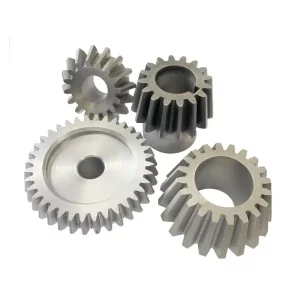
Spur Gear
How Do You Choose a Spur Gear Manufacturer for Global B2B Projects?
A good supplier should do more than quote a drawing. The right partner should understand gear design, load cases, export quality control, and custom adaptation. If your machine uses a spur gear in a reducer, feeder, or conveyor, the supplier should ask about torque, speed, center distance, duty cycle, lubrication, and environment.
For B2B buyers, I suggest checking five things:
| Check item |
Why it matters |
| Technical review ability |
Helps prevent wrong gear selection |
| Process capability |
Supports accuracy and repeatability |
| Material and heat treatment control |
Protects tooth life |
| Custom support |
Needed for OEM and special custom spur gears |
| Export and documentation |
Helps global compliance and delivery |
In our experience, the best projects start with a practical discussion, not just a price list. A buyer may ask for a spur gear, but the real need may be a full matched set with a pinion gear, hub change, and better tooth finish. That is where a supplier adds value.
FAQs About Spur Gear and Gear Applications
Where is the spur gear used most often?
A spur gear is used most often in reducers, conveyors, robots, machine tools, packaging systems, and many other machines that transfer motion between parallel shafts. KHK specifically lists reducers, conveying systems, machine tools, food machinery, and robots among common uses.
Why are spur gears used so widely?
Because a spur gear has a simple design, works well on parallel shafts, and is relatively easy to produce and inspect. NASA also notes that gears have wide use because of compact size, constant transmission ratio, and operating simplicity.
What is the difference between a spur gear and a helical gear?
A spur gear has straight teeth, while a helical gear has angled teeth. Spur is simpler and often more economical. Helical usually runs more smoothly and quietly but adds axial thrust and more complexity.
Are spur gears good for high-speed applications?
They can be, but noise and dynamic load become more important as speed rises. NASA’s research on spur gear dynamics shows that dynamic behavior, damping, and contact ratio strongly affect performance and stress.
Can spur gears be used for steering systems?
Yes, in rack-and-pinion arrangements. KHK notes rack-and-pinion use in steering, and MIT teaching material explains that a pinion spur gear with a rack converts rotary motion into linear motion.
When should I choose custom spur gears?
Choose custom spur gears when standard catalog sizes do not fit your bore, ratio, backlash, material, or packaging needs, or when your OEM system needs a special hub, module, or compact assembly layout.
Key Takeaways
A spur gear is one of the widely used types of gears for transmitting motion between parallel shafts.
Common spur gear applications include reducers, conveyors, machine tools, robots, and food processing equipment.
A spur gear has straight teeth, a simple design, and is usually easier to produce than a helical gear.
Spur designs are often a strong choice for lower speed or moderate-speed drives where simplicity and value matter.
Tooth geometry, number of teeth, material, and shaft alignment all affect gear life and performance.
Custom spur gears are useful when OEMs need special bores, ratios, compact packaging, or tighter quality targets.
The right spur gear manufacturer should support both standard supply and engineering-level customization.












 08:57
08:57